

Coastal Homeowners: Stop Lock Corrosion, Make 316 Stainless Default

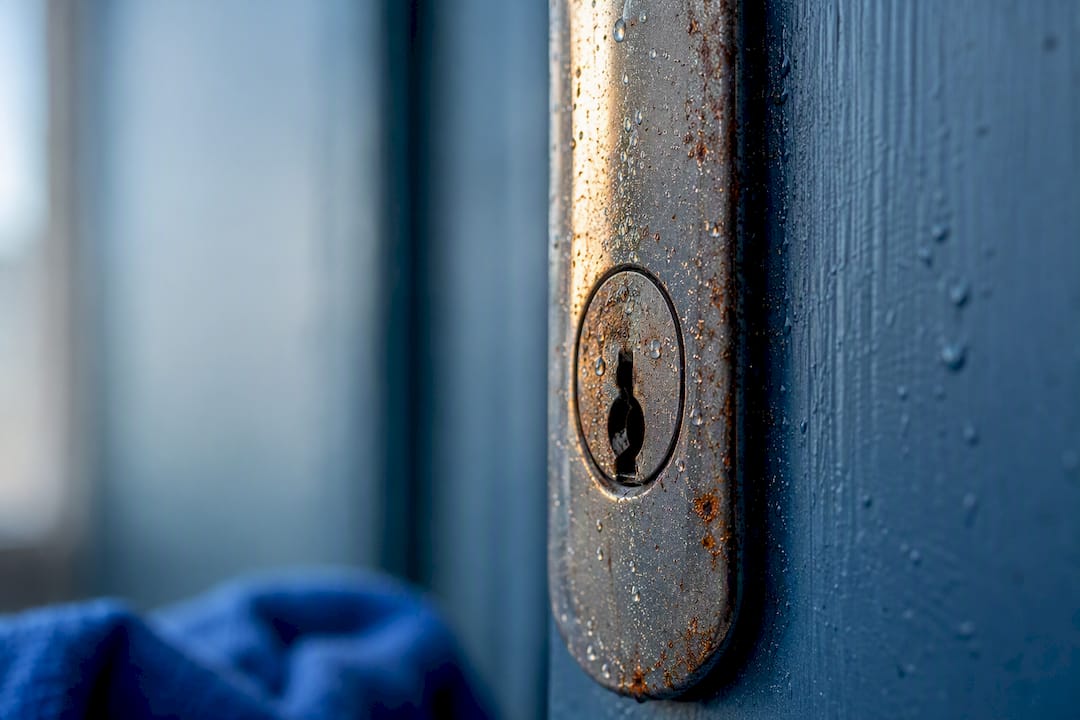
Salt air will shorten a standard door lock’s useful life dramatically. Inland hardware typically lasts 15 to 20 years, but coastal exposure often cuts that to 3 to 5 years, and homes within a mile or two of open water can see failure in under a year. The fastest defenses are a fresh-water rinse after salt exposure and a dry PTFE or silicone lubricant; marine-grade 316 stainless hardware, installed correctly, is what actually closes the gap. If you’re near Homestead or anywhere along the Miami-Dade coastline, some locksmiths in the Miami-Dade area see this pattern constantly and can tell you within minutes whether a lock is salvageable.
TL;DR:
Hardware within 1 to 2 miles of open water often fails in less than a year, despite being rated for 15 to 20 years inland.
Regular maintenance, including monthly salt rinses and quarterly lubrications, significantly extends lock lifespan in coastal environments.
Using marine-grade 316 stainless steel hardware with appropriate finishes and proper installation offers the best corrosion resistance.
Early signs like gritty keys or green residue indicate the need for professional inspection before internal damage causes failure.
A professional checkup can determine whether cleaning, rebuilding, or full replacement with marine-grade hardware is necessary.
Table of Contents
Why Salt Air Destroys Lock Hardware
Salt is hygroscopic. It pulls moisture out of humid coastal air and holds onto it, forming a thin electrolyte film on any metal surface it touches. That film is what turns ordinary humidity into an active corrosion engine. Once salt water bridges two points on a metal surface, it completes a tiny electrical circuit, and the metal starts giving up electrons. That’s corrosion in progress, not just surface staining.
The keyway is the weak point most homeowners never think about. Every time a key goes in and out, it drags airborne salt particles past the pins, springs, and tumblers deep inside the cylinder. Those internal parts are usually cheaper zinc alloy or plated steel, even on locks with an attractive brass or nickel exterior. A homeowner sees a shiny faceplate and assumes the lock is fine, while the internals are already pitting.
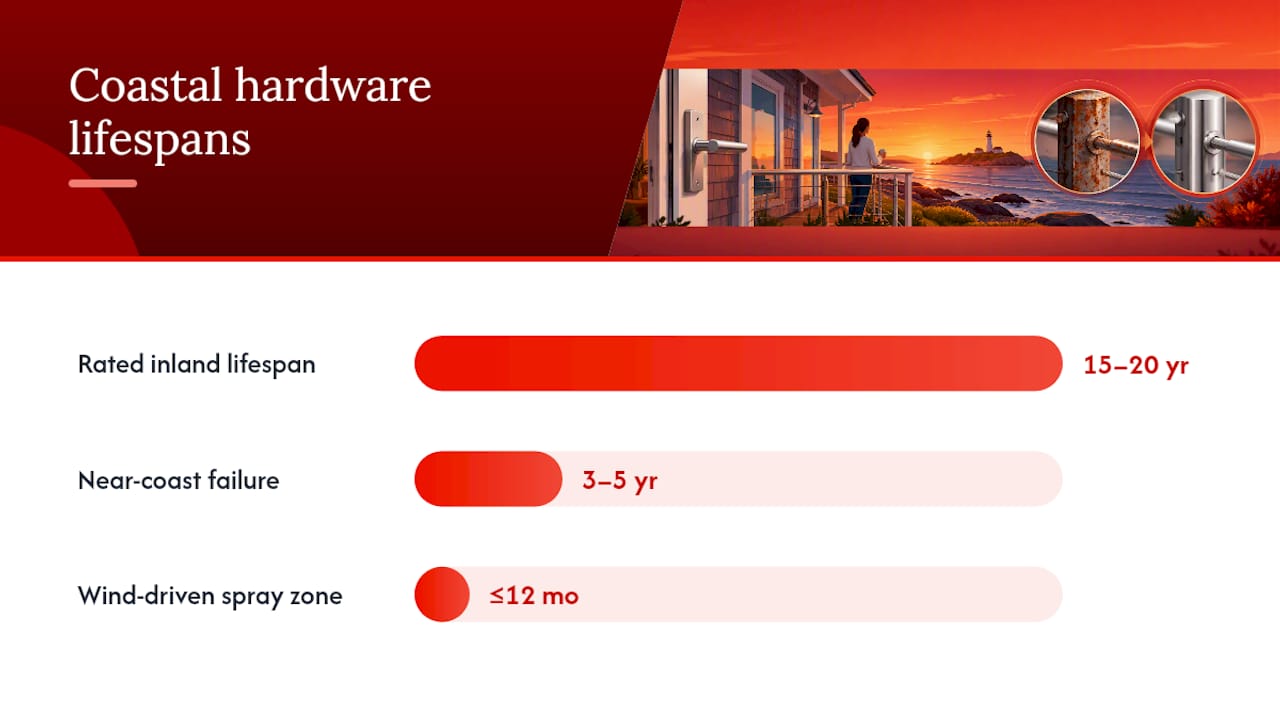
Research on marine metal exposure draws a clear line around the highest-risk zone: properties within 1 to 2 miles of open water, directly in the path of wind-driven spray, see the fastest failures. Beyond that band, out to roughly 5 miles, corrosion still runs well ahead of inland rates, just not as violently.
A few things make coastal corrosion worse than people expect:
Wind-driven salt spray reaches doors that never see direct rain contact.
Humidity keeps the salt film wet for hours after exposure, extending the reaction time.
Air conditioning cycles pull in salt-laden outdoor air even through weatherstripped doors.
South Florida’s storm season adds repeated soaking events on top of daily ambient exposure.
Coastal exposure by the numbers: hardware rated for 15 to 20 years inland commonly fails in 3 to 5 years near the coast, and in the highest-exposure spray zone, failure inside 12 months isn’t unusual. A good-looking exterior finish tells you almost nothing about what’s happening inside the cylinder.
Corrosion Types and the Warning Signs Worth Watching
Not all corrosion looks the same, and knowing which type you’re dealing with tells you how urgent the problem is.
Pitting corrosion shows up as small, localized craters, often starting where a scratch or manufacturing flaw broke the metal’s protective layer. It’s deceptive because the surface around a pit can look nearly intact while the pit itself burrows deep.
Galvanic corrosion happens when two different metals touch in the presence of moisture, essentially turning the hardware into a tiny battery. This is common where a stainless deadbolt meets a steel strike plate or aluminum door frame without any isolation between them.
Crevice corrosion develops in tight, low-oxygen gaps, under washers, inside mounting plates, or wherever water gets trapped and can’t evaporate. It’s often the most damaging type because it’s invisible until the hardware physically stops working.
Watch for these signs, and act on them early:
Green or white residue around the keyhole or strike plate (often still fixable with cleaning and lubrication).
A key that feels gritty or requires extra wiggling (early stage, usually reversible).
Visible rust streaks running down from screw heads or hinges (moderate, needs attention soon).
A deadbolt that partially throws but won’t fully seat (advanced, often not reversible).
If a key sticks or a bolt resists, stop and don’t force it. Forcing a corroded mechanism is the single fastest way to snap a key inside the cylinder or shear an internal pin, turning a maintenance job into an emergency lockout.
Best Materials and Finishes for Coastal Locks
Material choice is the single biggest factor in how long coastal hardware survives, and grade matters more than most buyers realize.
316 stainless steel contains added molybdenum, which gives it meaningfully better resistance to chloride pitting than the more common 304 stainless. Marine hardware specialists treat 316 as the baseline for anything permanently exposed to salt air, not an upgrade. Solid brass is a reasonable alternative for interior-facing or covered entries; it resists corrosion well on its own but will patina and needs occasional polishing to stay presentable.
Finish matters almost as much as base metal:
PVD (physical vapor deposition) coatings add a hard, thin protective layer over brass or stainless and hold color better than standard plating, though they can’t fix a poor base alloy underneath.
Electropolishing and passivation strip surface contaminants and rebuild the passive oxide layer that gives stainless its corrosion resistance, which matters most around welds and machined edges where that layer often gets damaged during manufacturing.
Powder coating protects exterior housings well but does nothing for internal cylinder components, since it’s a surface-only barrier.
Be wary of chrome-plated or die-cast zinc hardware marketed as “weather resistant.” Plating is a thin skin over a base metal that corrodes fast once that skin scratches or chips, which happens constantly with routine key use.
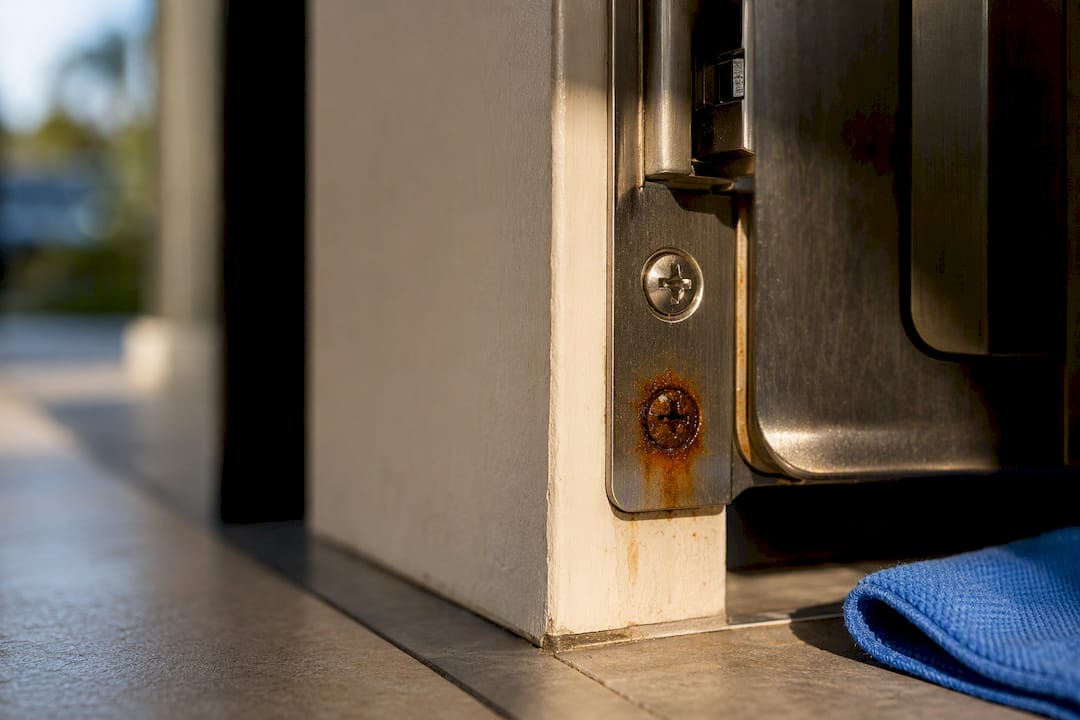
Pro Tip: Check the fasteners, not just the lockset. A 316 stainless deadbolt mounted with standard steel screws creates a galvanic pairing right at the mounting point, and that’s often where the first visible rust shows up, not on the lock itself.
Emerging coating technologies, including MOF-based self-healing polymers and nanoparticle-enhanced alloys, are moving from lab research toward premium commercial hardware, and they’re worth asking about if you’re planning long-term ownership of a heavily exposed property.
Your Coastal Lock Maintenance Schedule
A repeatable routine does more to extend hardware life than any single product purchase. Here’s the cadence that actually works.
Monthly: Wipe down all exterior lock hardware with a cloth dampened in fresh water to dissolve accumulated salt film, then dry thoroughly with a clean cloth. Never let hardware air-dry outdoors, since that just gives the salt film more time to sit wet against the metal.
Quarterly: Apply a dry PTFE or silicone lubricant directly into the keyway and moving mechanism. Oil-based lubricants attract dust, sand, and grit, which turns into an abrasive paste that accelerates wear instead of preventing it.
Annually: Inspect for pitting on the faceplate, test the deadbolt throw for smooth full extension, check mounting screws for rust bleed, and confirm weatherstripping around the door still seals tightly. If the bolt hesitates or the key feels rough despite regular lubrication, that’s your signal to call a professional before the mechanism fails completely.
After every named storm or major salt event: Rinse hardware with fresh water as soon as it’s safe to go outside. Salt left to dry after a storm surge bonds to the metal far more aggressively than routine ambient exposure.
Pro Tip: Keep a small bottle of dry PTFE lubricant by the door you use most. A 10-second squirt after a rainy or windy week takes less time than finding your keys, and it’s the cheapest insurance you’ll buy all year.
Installation and Design Choices That Prevent Corrosion
Even the best hardware fails early if it’s installed poorly. Trapped water, mismatched metals, and bad fastener choices routinely undo the benefit of a quality lockset.
Good installers and property managers watch for a few specific design details:
Mounting plates and strike plates should never sit flush against a surface without a drainage path; horizontal ledges where water can pool are the first place crevice corrosion starts.
Weather seals around the door slab reduce how much salt-laden air reaches the cylinder in the first place.
Dissimilar metals need isolation. A stainless bolt against an aluminum frame should get a nylon washer or compatible gasket, not direct metal-to-metal contact.
Fasteners should match the base hardware alloy. Stainless screws for stainless hardware, always.
Welded or machined stainless components should be passivated or electropolished after fabrication, since raw welds are where pitting tends to initiate first.
Design factor | Risk if ignored | Fix |
Horizontal mounting ledges | Water pooling, crevice corrosion | Add drainage slope or gasket |
Mixed metal contact | Galvanic corrosion at contact point | Insulating washer or matched alloy fasteners |
Unfinished welds on stainless | Pitting at weld seams | Post-weld passivation or electropolish |
Gaps around door slab | Salt-laden air reaching cylinder | Quality weatherstripping |
For larger commercial installations, ask about material traceability documentation confirming the alloy grade actually matches the spec sheet. It’s a small ask that prevents a costly surprise a few years down the line, and you can see how this plays out on heavier-duty storefront hardware in our storefront door lock repair guide.
Repair or Replace? A Homeowner’s Triage Guide
Not every corroded lock needs to be torn out. The right call depends on where the damage sits and how far it’s progressed.
Service it if: the key turns but feels gritty, the bolt throws slowly, or you see light green residue around the keyway. A locksmith can typically strip the cylinder, clean out corrosion buildup, and relubricate it, often for far less than a full replacement.
Replace it if: the key breaks or gets stuck partway, the deadbolt won’t fully seat or fails to throw at all, or internal pitting has visibly deformed the pins or springs. At that stage, a stuck or failing mechanism usually means the internal components are too degraded to reliably rebuild.
When you call a locksmith about coastal corrosion, ask these questions directly:
What alloy is the replacement hardware made from, specifically 316 or 304 stainless?
Does the finish include passivation or electropolishing, or is it just plated?
What warranty applies to hardware installed in a high-salt-exposure zone?
Will the technician isolate the new hardware from any dissimilar-metal contact points?
A qualified technician should answer all four without hesitation. If they can’t, that’s a sign to call someone else.
What Actually Matters Here
Most guides treat corrosion prevention as a checklist item, something to knock out once and forget. That’s the wrong mental model for anyone living within a few miles of the water. Coastal salt exposure is a continuous chemical process, not a one-time risk, and treating marine-grade 316 stainless as your default choice, rather than an upgrade you talk yourself out of, is the single decision that saves the most money over a decade of ownership.
The maintenance cadence matters more than people expect too: a monthly rinse and quarterly PTFE lubrication genuinely changes the outcome, and skipping it is why so many “premium” locks fail just as fast as cheap ones. If you can see pitting on the internal pins during an inspection, that hardware is done. No amount of lubricant reverses metal loss. For deeper troubleshooting on specific symptoms, our door won’t lock resource walks through failure patterns we see constantly across Homestead and the greater Miami-Dade coastline.
— Julio Borroto
Get Your Coastal Hardware Inspected Before It Fails
Some local locksmith services are a practical alternative to waiting for a lock to fail completely: instead of guessing whether that gritty deadbolt still has a year left in it, a technician can tell you on the spot whether it needs cleaning, rebuilding, or full marine-grade replacement. Some teams work 24/7 and may typically arrive within 20 to 30 minutes for urgent calls in the Miami-Dade area.
If your exterior locks have been sticking, grinding, or showing rust bleed around the screws, that’s exactly the kind of coastal corrosion this guide covers, and it’s worth a professional look before a bolt seizes completely. Whether you need a strip-and-clean service, a full deadbolt and door lock installation with proper 316 stainless hardware, or emergency lockout help because a key finally snapped in a corroded cylinder, schedule a visit through Progressive Locksmith - Cerrajero Miami and get a straight answer on repair versus replacement before it becomes an emergency.
Sources
FAQ
How Do You Stop a Lock From Rusting?
Rinse exterior hardware with fresh water regularly to remove salt film, dry it thoroughly, and apply a dry PTFE or silicone lubricant every few months instead of oil-based sprays. Choosing 316 stainless steel hardware from the start prevents most rust problems before they begin.
Will Rubbing Alcohol Unfreeze a Lock?
Rubbing alcohol can help displace moisture in a lock that’s stuck from humidity or light ice, since it evaporates cleanly without leaving residue. It won’t reverse corrosion damage, and it shouldn’t replace a proper dry lubricant for ongoing coastal maintenance.
What Are the Three Types of Corrosion Affecting Locks?
Pitting corrosion creates small, deep craters that weaken metal from tiny points. Galvanic corrosion occurs when two different metals touch in moisture, and crevice corrosion develops in tight, trapped-water gaps like under washers or mounting plates.
How Long Should a Door Lock Last?
Standard hardware typically lasts 15 to 20 years inland, but coastal exposure commonly cuts that to 3 to 5 years, with failure in under a year possible in the highest-exposure spray zones near open water. Marine-grade 316 stainless hardware with proper installation closes much of that gap.
Is Marine-Grade Hardware Worth the Extra Cost?
In high-exposure coastal zones, yes: the upfront cost of 316 stainless hardware is usually lower than the combined cost of repeated emergency locksmith visits and premature replacements. Progressive Locksmith - Cerrajero Miami can help you weigh the cost against your specific exposure level and property location.
Recommended
Comments