

Door Closer Adjustment in Miami: Fast, Code-Aware Service

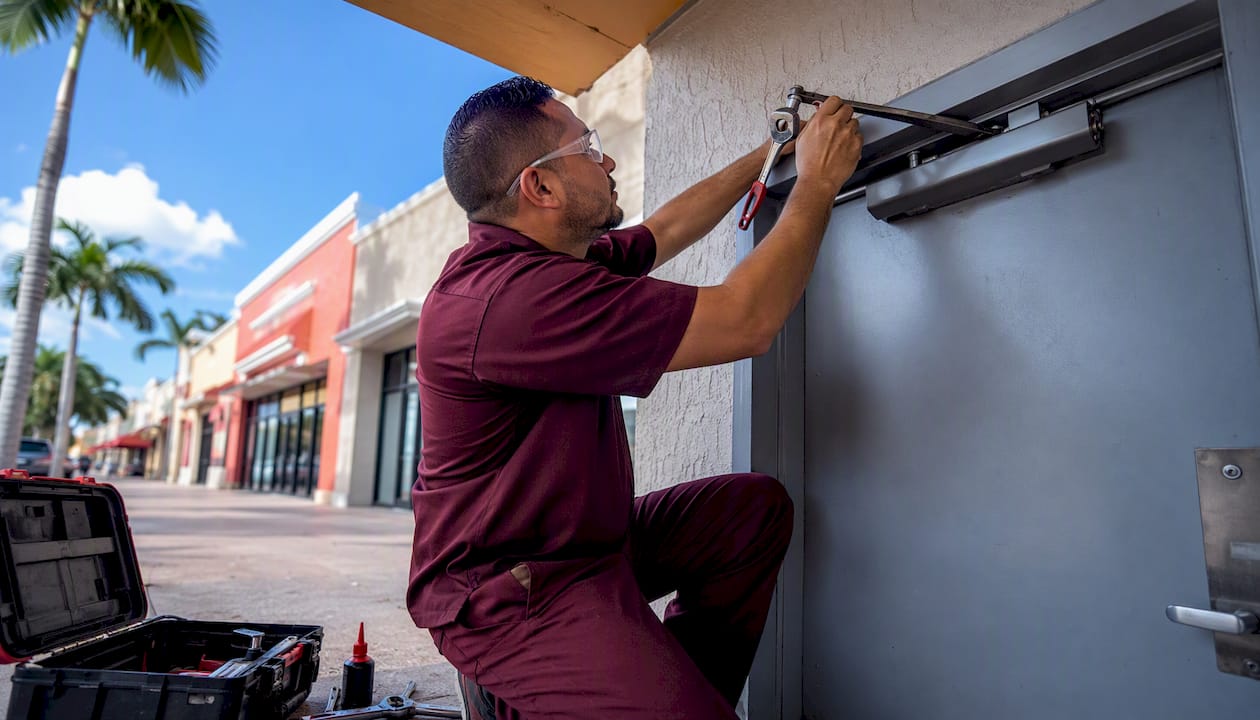
Call a licensed locksmith for any door closer adjustment that involves a fire door, a leaking closer, or an ADA compliance concern. For most commercial and heavy residential doors in Miami-Dade County, a professional visit from Progressive Locksmith Cerrajero typically takes a moderate amount of time from arrival to final test, covering diagnosis, valve calibration, and documentation. Typical service costs include a diagnostic or service call fee, labor, and minor parts if needed.
Here is what a technician checks the moment they arrive:
Valve labels and access: Confirms the S (sweep), L (latch), BC (back-check), and DA (delayed action, if present) valves are accessible and unmarked by prior over-tightening.
Hinge condition and door weight: A sagging or heavy door changes closer performance regardless of valve settings.
Latch and strike alignment: Misaligned strike plates cause repeated latching failures that no amount of valve turning will fix.
Oil leaks: Visible oil around the closer body means seal failure. That closer needs replacement, not adjustment.
Building pressure and stack effect: Miami’s HVAC-driven air pressure differences between interior and exterior spaces directly affect how hard the latch valve must work.
The ADA National Network states that a door’s swing from 90° to approximately 12°–15° should take no less than 5 seconds. Doors closing faster than that create accessibility and safety risks. A pro measures this on-site before touching a single valve.
Do not attempt adjustments on fire-rated or egress doors yourself. Those doors require certified work to stay code-compliant. If you see oil on the closer, stop and call a pro immediately.
Contact Progressive Locksmith Cerrajero directly to schedule service or request emergency response across Miami-Dade County.
Table of Contents
Locksmithfromiami’s Door Closer Calibration Service for Miami-Dade

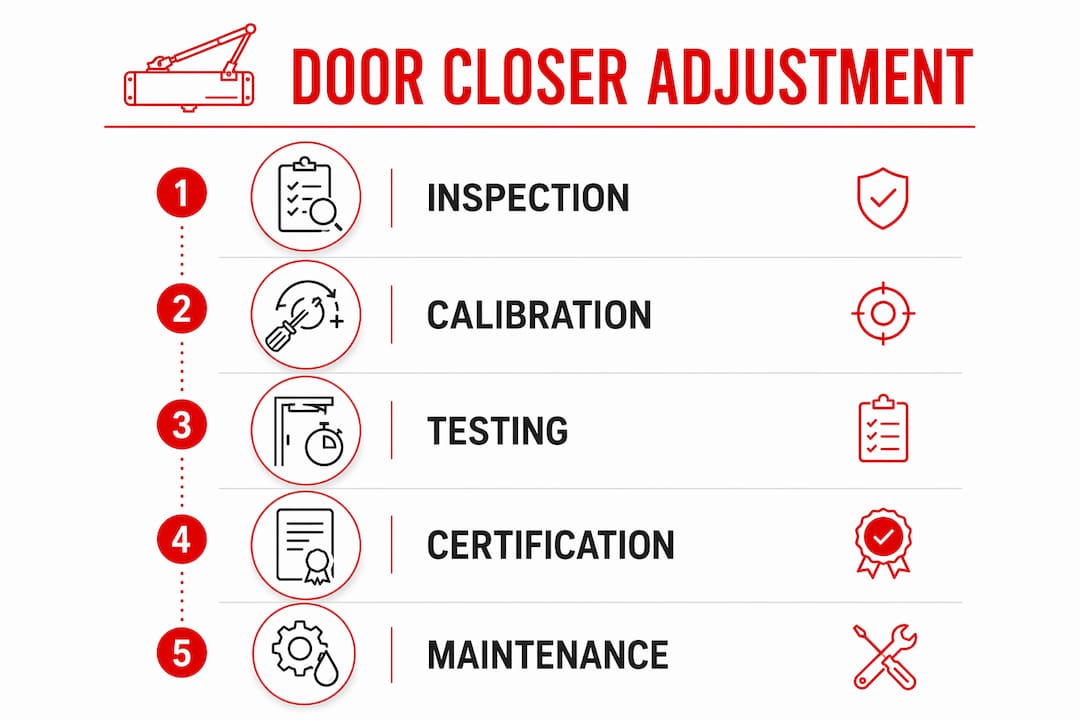
When you call Locksmithfromiami, you get a technician who treats closer adjustment as a full system diagnosis, not just a few turns of a hex key. The full service scope covers on-site diagnosis, spring power sizing, valve calibration across all four control zones, hinge and strike checks, and documented before-and-after settings for your records.
What the technician measures and documents:
Close time in seconds from 90° to near-closed, verified against the 5-second accessibility benchmark
Opening force in pounds where ADA compliance is relevant (interior doors commonly target 5 lbs or less)
Valve positions before and after adjustment, logged for seasonal follow-up
Any non-closer work identified: hinge shimming, strike repositioning, or frame issues
Typical appointment breakdown:
Arrival and diagnosis: 5–15 minutes
Adjustment cycles and testing (1/8-turn increments per valve, tested from 30°, 60°, and 90°): 10–25 minutes
Final documentation: 5–10 minutes
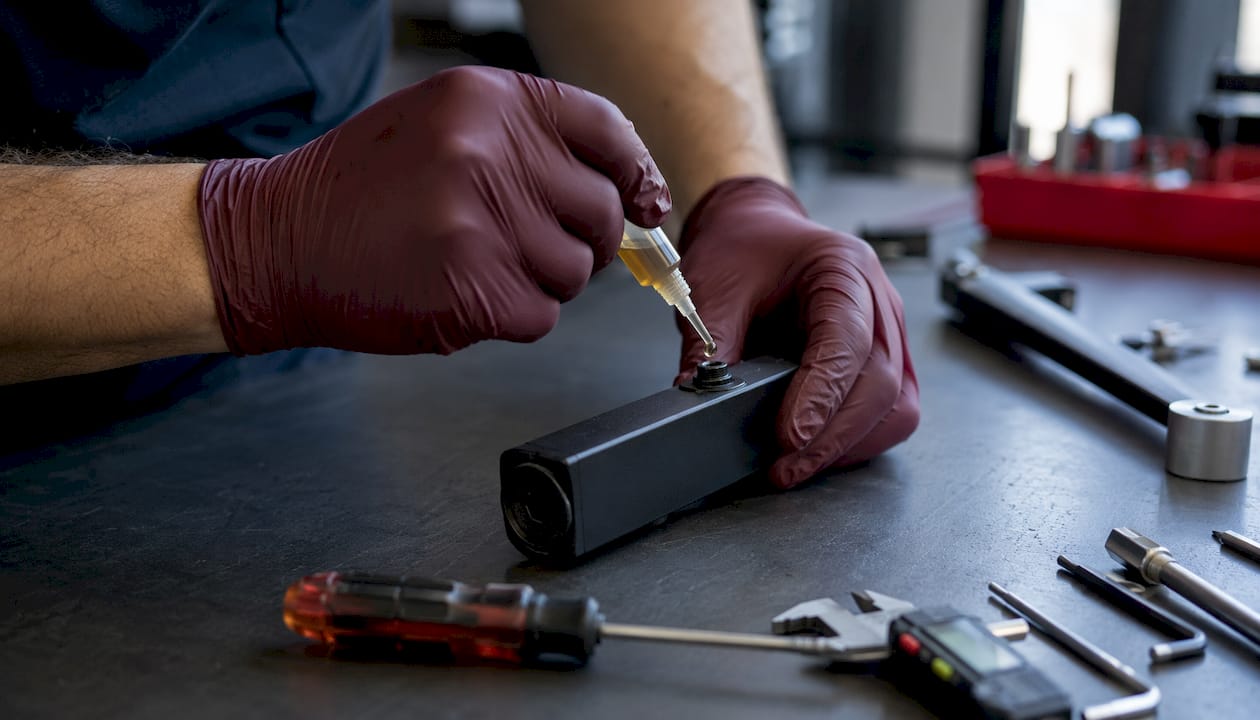
Hydraulic fluid viscosity shifts with Miami’s seasonal temperature changes, so periodic tune-ups are recommended during different times of the year to maintain performance If the closer shows oil seepage or a broken arm, the technician will recommend replacement rather than continued adjustment, since removing valves entirely risks permanent hydraulic failure.
Technicians do not adjust fire-rated or egress doors without the required certifications. If your door falls into that category, the visit will include a clear compliance recommendation and a scheduled path forward.
Before you hire any locksmith, ask: Are you licensed and insured? Do you provide a written estimate? What warranty covers the adjustment work? Locksmithfromiami answers yes to all three.
Book online or by phone. Have your door’s handing (which side the hinges are on), any recent service history, and access instructions ready for a faster visit. For same-day service across Miami-Dade, call now.
Key Takeaways
A licensed locksmith is the right call for any door closer adjustment involving fire doors, oil leaks, ADA compliance, or persistent slamming that valve turns alone cannot resolve.
Point | Details |
ADA close-time standard | A door must take at least 5 seconds to swing from 90° to near-closed per ADA National Network guidance. |
1/8-turn rule | Adjust each valve in 1/8-turn increments; clockwise decreases speed/force, counterclockwise increases it. |
Oil leak means replace | Visible oil around the closer body signals seal failure; adjustment will not fix it. |
Seasonal maintenance | Biannual tune-ups (early summer and mid-winter) keep hydraulic fluid viscosity consistent in Miami’s climate. |
Locksmithfromiami | Provides on-site diagnosis, valve calibration, ADA timing checks, and documented settings for Miami-Dade customers. |
Recommended
Comments