

Measure First: 2-3/8" vs 2-3/4" Backsets and When to Call a Locksmith

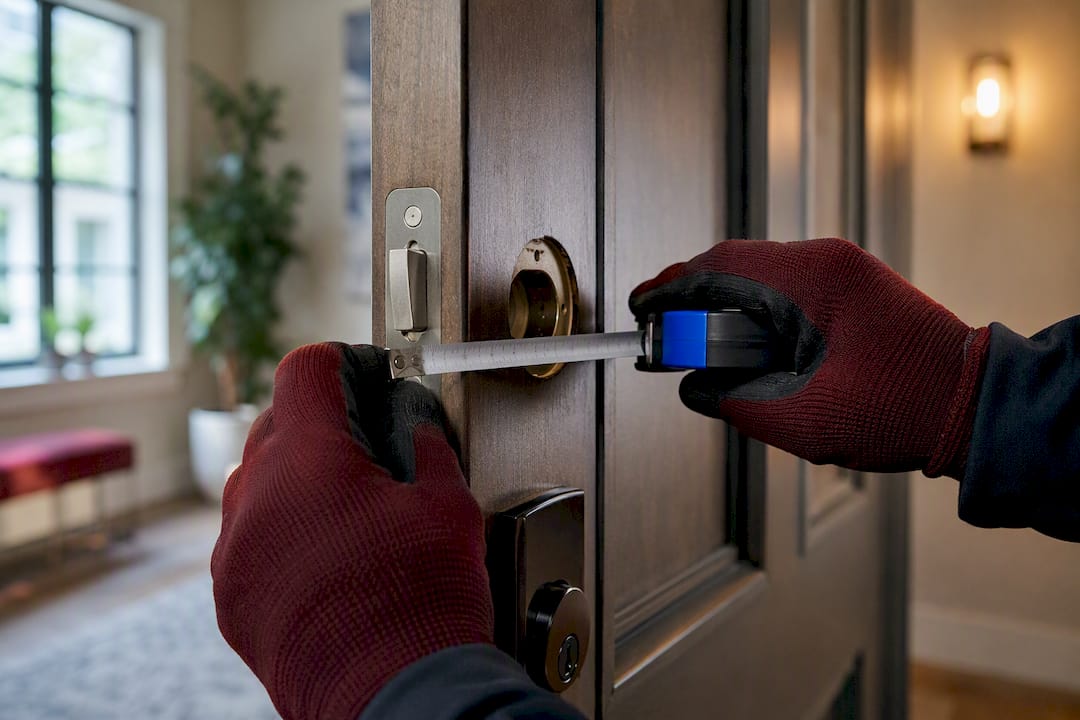
Backset is the horizontal distance from the edge of your door to the center of the bore where the knob or lock cylinder sits. Almost every residential door in the U.S. uses one of two sizes: 2-3/8" or 2-3/4". Measure your door before you buy new hardware, and if you’re not sure which size you have, grab an adjustable latch so you’re covered either way.
TL;DR:
Most residential doors in the U.S. use either a 2-3/8" or 2-3/4" backset, so measuring is essential before purchasing hardware.
Mismatched backset measurements can cause latch failure, deadbolt binding, knob sticking, or visible misalignment of the escutcheon plate.
Adjustable latches are common and help accommodate either standard size, but deadbolts often have a fixed backset requiring confirmation before buying.
Proper measurement involves checking the distance from the door edge to the center of the bore or latch, ideally with a tape measure held squarely.
Problems from incorrect backset measurement are often fixable by adjusting strike plates, replacing latches, or re-drilling, but severe cases may need professional locksmith intervention.
Table of Contents
What Door Lock Backset Explained Actually Means
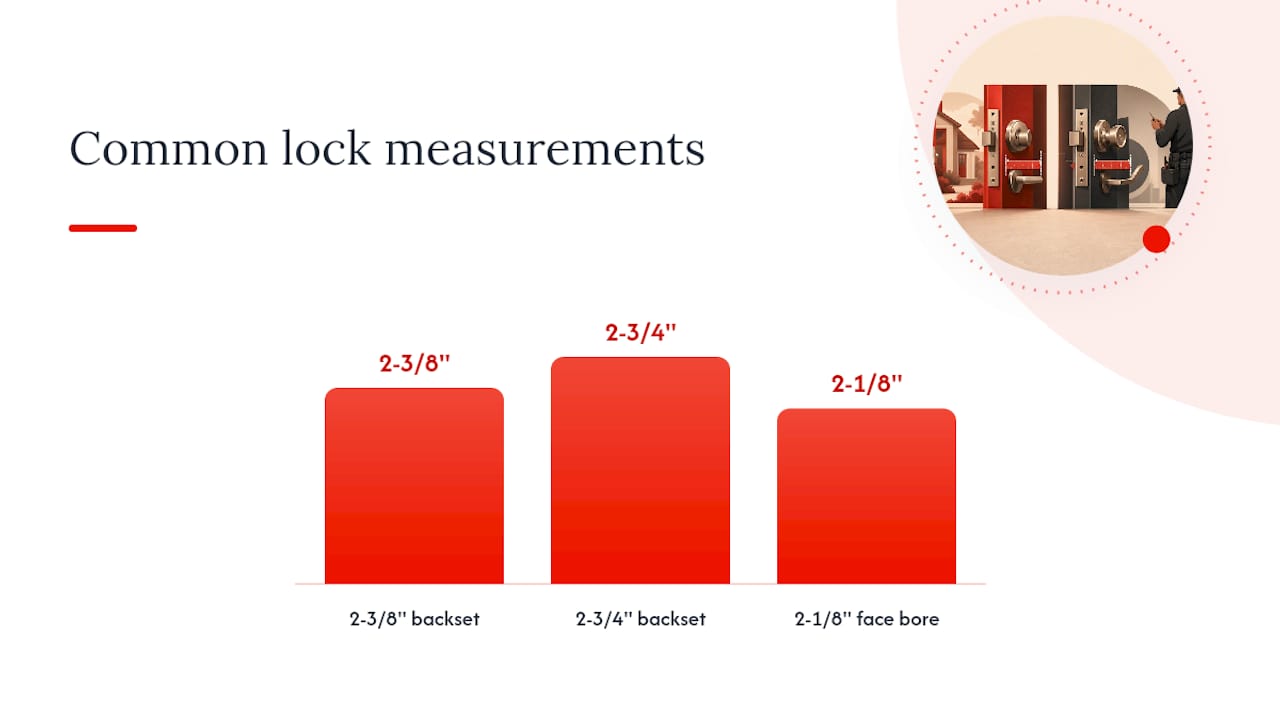
Backset tells you where the centerline of your lock or spindle sits relative to the door’s edge, and it works hand in hand with the 2-1/8" bore, the round hole drilled through the door face where the lock body sits. Get the backset wrong and the bore lines up in the wrong spot, which throws off everything downstream: the latch won’t reach the strike plate cleanly, a deadbolt may not throw far enough to seat in the frame, and the whole assembly can look crooked even if it technically fits.
The consequences show up fast once hardware goes in. A latch bolt that’s too short for the backset rattles loose or slips out of the strike hole. A deadbolt with the wrong backset either can’t extend fully into the frame or binds against the door edge on its way out. Locksmiths see this constantly on quick DIY swaps where someone ordered a knob without measuring first.
Mismatched backset typically causes:
Latch failure: the bolt doesn’t reach or seat in the strike plate
Weak security: a deadbolt that can’t fully extend leaves the door easier to force
Binding and sticking: the knob or lever drags against the frame during operation
Visible gaps: the escutcheon plate sits crooked or doesn’t cover the bore cleanly
Lowe’s guide to determining backset notes that residential doors commonly use 2-3/8" or 2-3/4" backsets, and matching that measurement to your hardware is what makes the latch or bolt engage the way it should.
Common Backset Sizes and Which Doors Use Them
Two numbers cover the overwhelming majority of homes: 2-3/8" and 2-3/4". The 2-3/8" size shows up most often on interior doors and doors with narrower stiles, since it puts the bore closer to the edge. The 2-3/4" size is standard on many exterior doors and is what most deadbolts ship pre-set to, since exterior doors tend to have wider stiles that can accommodate it.
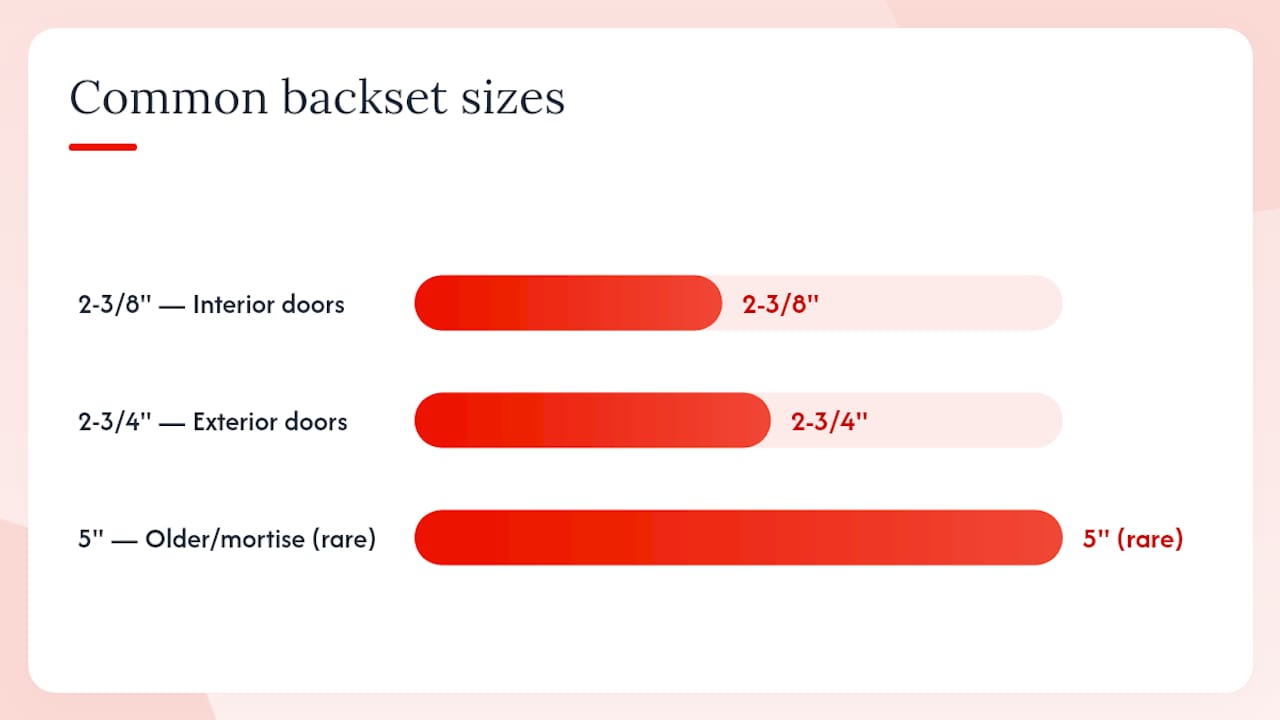
Commercial buildings lean almost universally toward 2-3/4", partly because commercial door stock runs wider and partly because it pairs better with heavier-duty mortise and cylindrical lock bodies. Occasionally you’ll run into a larger backset on older commercial or institutional doors, along with mortise lock variants that don’t follow the tubular-lock playbook at all.
Quick sizing snapshot:
Backset | Typical use |
2-3/8" | Interior doors, narrow stiles |
2-3/4" | Exterior doors, most deadbolts |
5" (rare) | Older commercial or mortise setups |
Door manufacturers commonly pre-bore interior doors at 2-3/8", while exterior doors and deadbolt hardware skew toward 2-3/4". If your stile is on the narrow side, that alone can rule out the larger size regardless of what you’d prefer. The rule of thumb: measure first, and when the number falls between the two standards or you’re just not confident, buy adjustable.
How to Measure Backset Step by Step
You don’t need specialty tools for this. A tape measure and a pencil handle almost every situation; a small caliper helps if you want a more precise reading on an existing bore, and a drilling jig or template becomes essential if you’re boring a brand-new hole.
On an installed door:
Open the door fully so the edge is easy to reach.
Find the flat edge of the door where the latch or bolt exits.
Measure from that edge to the center of the bore hole (not the edge of the hole).
Round to the nearest standard, usually 2-3/8" or 2-3/4".
On a removed latch or lock:
Lay the latch faceplate flat.
Measure from the edge of the faceplate to the center of the spindle hole.
Compare that number against the same two standard sizes.
On a new or unbored door:
Check the door specs. Many pre-hung and slab doors ship pre-bored at 2-3/8" already.
If you’re boring fresh, mark your chosen backset distance from the edge first.
Use a drilling template or jig to center a 2-1/8" bore accurately at that mark.
Drill the face bore, then the edge bore for the latch, following the jig’s guide holes.
Once hardware is in, verify before you call it done. Close the door and check that the latch lines up with the strike plate opening without forcing it. Throw the deadbolt fully and confirm it extends into the frame without binding. If you have the parts handy, dry fit the knob or lever on the door before final assembly to catch backset problems before you’ve committed to drilling.
Pro Tip: Keep the tape measure square to the door edge when you take the reading. A measurement taken at even a slight angle can read a quarter inch off, which is enough to land you on the wrong standard size.
Door Stile Width and Other Installation Limits
Stile width, the vertical strip of solid wood or material running along the door’s edge, decides how much backset room you actually have. A narrow stile around 4-1/2" often physically can’t accommodate a 2-3/4" backset; the bore would land too close to the panel or glass insert. Wider stiles, closer to 5-1/2", give you room for either standard.
Hinge backset is a separate measurement entirely and gets confused with lock backset constantly. It refers to the distance from the door edge to the hinge, and it needs to be compatible with your door prep regardless of which lock backset you choose. Getting this mixed up is a common source of ordering mistakes on custom doors.
Narrow-stile doors (common on some French doors and older interior units) frequently only accept 2-3/8"
Wide-stile exterior doors usually have flexibility for either standard
Custom, prehung, or millwork doors should be checked against manufacturer specs, not assumed
Hinge backset and lock backset are different measurements, and both matter when you’re ordering hardware or a new door
If you’re comparing door styles altogether, stile and frame construction varies a lot between barn, sliding, and bifold designs, which is worth knowing before you assume a backset will transfer from one door type to another.
Adjustable Latches, Deadbolts, and Special Cases
Most tubular knob and lever sets today ship with an adjustable latch, meaning you can slide or twist a mechanism inside the latch body to set it for either 2-3/8" or 2-3/4" before installing. That single feature saves a lot of return trips to the hardware store.
Deadbolts play by different rules. Many deadbolts ship with a fixed backset, so check the packaging or product specs before you buy rather than assuming it adjusts like your knob did. Mortise locks and older commercial hardware sometimes use backsets outside the usual two, including 2-1/2" or 5", so don’t assume standard sizing applies.
Adjustable latches cover both standard sizes and reduce the risk of a bad order
Deadbolts are frequently fixed at one backset, so confirm the spec sheet first
Mortise locks and some legacy commercial hardware can require nonstandard backsets
Smart locks and handlesets need their mounting plate checked against your bore spacing, not just the backset alone
Pro Tip: If you’re replacing a knob and a deadbolt at the same time, measure both bores separately. It’s common for a deadbolt installed years ago to have a different backset than the knob below it.
Fixing a Backset Mismatch: Symptoms and Solutions
A few telltale signs point straight to backset trouble. The latch won’t catch consistently, the knob or lever binds when turning, the deadbolt can’t fully throw into the frame, or the decorative escutcheon plate sits crooked and doesn’t cover the bore. Any one of these is worth checking against your measured backset before assuming the hardware itself is defective.
Some fixes are simple. Swapping in an adjustable-latch unit solves most knob and lever mismatches instantly. A misaligned strike plate can often be re-positioned or replaced with a slightly offset plate to correct minor gaps. For more stubborn cases, a door that won’t latch despite a strike plate adjustment usually needs the bore re-mortised or a retrofit kit installed.
Other situations call for professional help: a stile too narrow for the backset you need, a lock that requires mortise work, or a deadbolt that simply won’t lock no matter how you adjust the strike. Before that visit, have your measurements, a couple of photos of the bore and door edge, and the door type (interior, exterior, prehung, commercial) ready to go.
Latch won’t catch: check strike plate alignment first, then backset
Deadbolt won’t fully throw: verify backset matches bolt length before assuming a defect
Knob binds: often an adjustable latch set to the wrong position
Escutcheon misaligned: usually a backset or bore-spacing mismatch, not a bad screw job
When It’s Time to Call a Locksmith
Some backset problems are a five-minute fix. Others aren’t, and knowing the difference saves you a wasted trip to the hardware store. Emergency lockouts, mortise lock work, commercial hardware with failed bolt alignment, and any situation involving a stile too narrow for standard hardware are all better handled by a professional than by trial and error.
When a locksmith arrives, expect them to check the backset, inspect the door prep, and confirm strike plate alignment before touching any hardware. On most calls, that evaluation takes just a few minutes and tells them exactly what fix is needed, whether that’s a strike plate adjustment, a re-mortised bore, or a full hardware swap.
Professional locksmith services handle residential and commercial lock issues with technicians available 24/7 for lockouts and hardware failures that can’t wait. For routine backset and hardware work, the residential and commercial locksmith services page covers installation, repair, and upgrades. If you’re locked out right now, the emergency lockout service is built for exactly that.
Before you call, jot down your door’s backset measurement if you’ve already taken one, snap a couple of photos of the bore and door edge, and know whether you have a preferred hardware brand or style in mind. It shortens the visit and gets your door working right the first time.
The Backset Number Nobody Checks Until It’s Too Late
Most hardware returns and failed installations trace back to one skipped step: nobody measured before buying. It’s such a small number, an inch and change, that homeowners assume any lock will fit any door. It won’t, and the industry’s own data backs that up. Common pre-purchase mistakes with doorknobs and levers trace directly to backset errors more than almost any other spec.
Here’s the part that surprises people: adjustable latches exist specifically because manufacturers know customers guess wrong constantly. That’s not a knock on anyone’s measuring skills. It’s a design response to a real, recurring problem. If you take one thing from this whole topic, it’s that spending sixty seconds with a tape measure before you order hardware beats returning a knob that looked identical to the one you took off but somehow doesn’t sit right.
The harder cases, narrow stiles, mismatched hinge prep, mortise locks that don’t follow any of the standard rules, are where DIY confidence should give way to a professional look. Not because the measurement itself is complicated, but because fixing a bore that’s already drilled wrong costs a lot more than getting it right the first time.
— Julio Borroto
Sources
Recommended
Comments