

1996–2015 Cars: US Immobilizer Key Programming DIY or Call a Locksmith

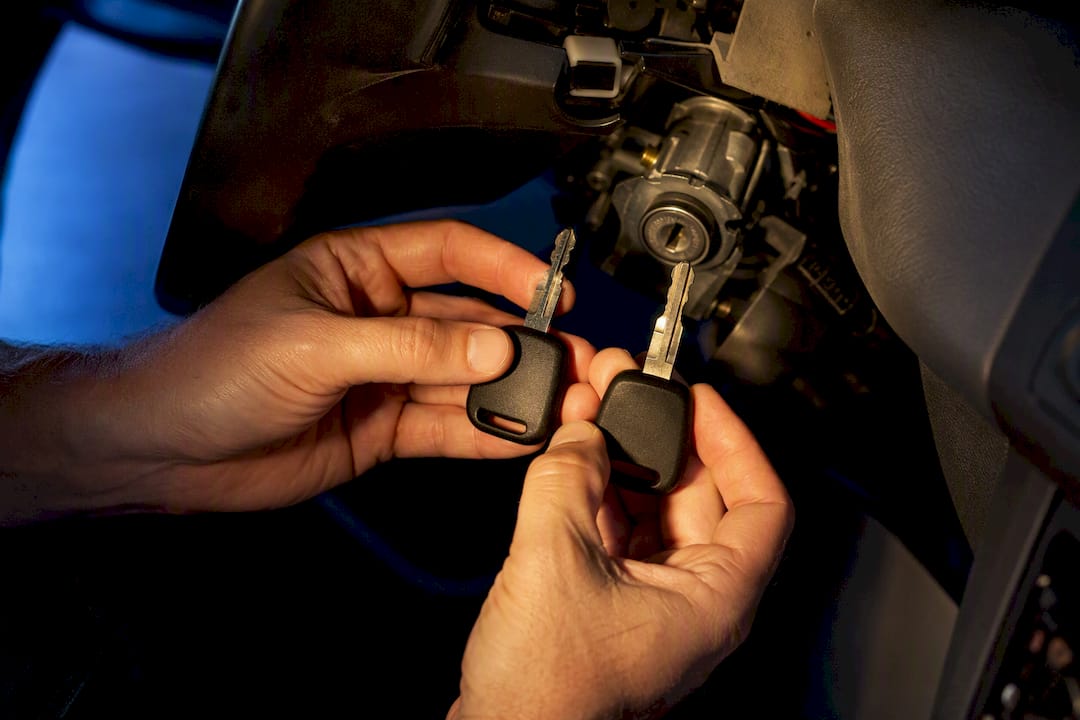
You can program a second or third key yourself on many vehicles built between roughly 1996 and 2015 using nothing but the ignition and a spare key. Lost all your keys, own a newer smart-key vehicle, or hit a security lockout? You need a programmer, a dealer passcode, or a locksmith. Before you try anything, grab your VIN, owner’s manual, and proof of ownership.
TL;DR:
Most vehicles from 1996 to 2015 support on-board key programming if they have at least one functional key and the correct procedure from the manual.
DIY programming for newer smart-key or push-button start vehicles is usually impossible without dealer tools or locksmith intervention to avoid risking system erasure.
Attempting lost-all-keys resets requires dealer or locksmith access using manufacturer-specific passcodes, with strict proof of ownership, VIN verification, and documentation.
Consumer OBD dongles can program keys quickly but cannot recover lost keys or handle complex resets, making professional help necessary in those cases.
Confirm all key functions and engine start with each newly programmed key, and contact a professional if programming fails, or if you encounter security system lockouts or erasure behaviors.
Table of Contents
Can You Program This Key Yourself? Checking Compatibility First
Whether you can do this in your driveway depends almost entirely on your vehicle’s age and immobilizer design, not your mechanical skill. Many vehicles from roughly 1996 to 2015 support on-board key programming through ignition cycling or button sequences, no scan tool required. Domestic trucks, older Toyotas, Hondas, and Fords from that window are usually the most forgiving. Newer vehicles, especially those with proximity or push-button start, and most luxury brands, generally lock owners out of DIY programming entirely and route everything through encrypted dealer systems.
Before you attempt any on-board method, confirm you meet the baseline requirements:
You have at least one working key already programmed to the vehicle.
You have the owner’s manual or a verified sequence for your exact year, make, and model.
Your new key or fob has the correct FCC ID and a fresh battery.
You are prepared to program every fob you own in the same session.
That last point matters more than most people realize. If you only have one key and it’s lost or damaged, on-board programming usually will not work at all. Single-key programming on many vehicles requires proof of ownership and a locksmith or dealer to unlock the process, since the system has no existing key to “vouch” for the new one. Attempt the wrong sequence, or run out of patience mid-cycle, and some immobilizers respond by erasing every key currently programmed. That is not a rare glitch. It is documented behavior across multiple manufacturer procedures, and it is the single biggest reason to read your specific steps twice before turning the ignition once.
Step-by-Step: Common On-Vehicle Programming Procedures
Every manufacturer writes its own sequence, but the logic behind most on-board procedures follows a similar pattern: you’re proving to the immobilizer that you already possess an authorized key, then feeding it a new one while that trust window is open.
For programming a second or third key on a compatible vehicle:
Insert the working key into the ignition and turn it to the “on” position without starting the engine.
Turn the key off, then repeat this on/off cycle the number of times specified for your model (commonly several cycles).
Watch for a confirmation signal. Usually this is the security light shifting from steady to blinking, or the door locks cycling once.
Remove the working key and insert the new, unprogrammed key within the timing window of several seconds.
Turn the new key to “on.” A successful read triggers another lock cycle or a security light change.
Turn the key off, remove it, and test the vehicle by starting the engine with the new key alone.
For single-key programming where the manufacturer allows it, the process is similar but tighter on timing, and you’ll typically need to call the dealer or a locksmith first so they can confirm your ownership and, in some cases, supply a code before you start. Do not attempt a timing-based single-key method on a vehicle you cannot prove you own. Locksmiths verify this for a reason.
For push-button start and proximity fobs, the pairing sequence usually involves pressing a start button a set number of times within a short window, sometimes combined with a door open/close cycle, followed by pressing a button on the new fob itself. A confirmation chime or lock-cycle tells you the module accepted the fob.
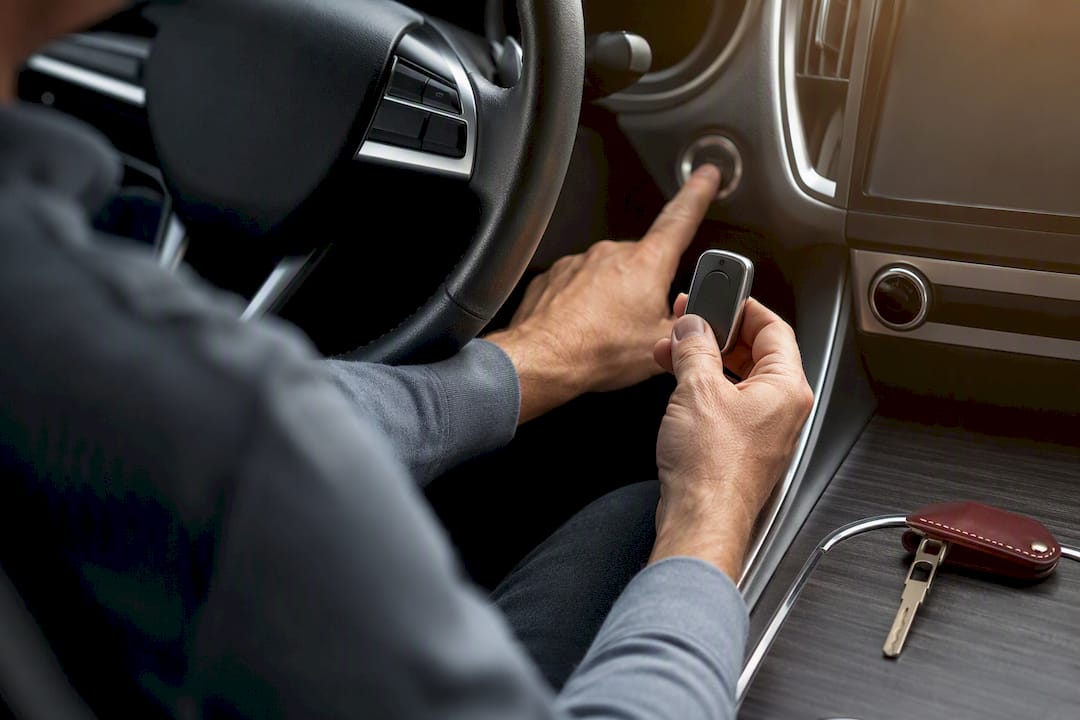
Pro Tip: Program every key you own in one sitting, not one at a time over separate days. Many immobilizer systems treat a new programming session as a reset event, and the fob you didn’t bring back to the car may get silently dropped from memory.
If your vehicle doesn’t show the expected confirmation after two clean attempts, or if it shows signs of erasing existing keys, stop immediately. Go back to your owner’s manual or call a professional before you make the situation worse. Continuing to guess at timing windows on an immobilizer that’s already behaving oddly is how a $40 key job turns into a $400 module replacement.
OBD Dongles vs. Professional Programming Tools
When on-board sequences don’t apply to your vehicle, or you’d rather skip the ignition-cycling entirely, an OBD-II dongle is the next tier up. Consumer kits like PairMyKey plug directly into your OBD port and walk you through programming via a phone app, with the whole process often finishing in under 15 minutes. You pay per use or per activation rather than owning a full diagnostic rig.
That convenience has real limits, though:
Dongles typically can’t perform lost-all-keys recovery, since that requires a manufacturer-level passcode.
Some manufacturers still require dealer approval even when a dongle technically supports the vehicle.
Most consumer dongles are single-use or limited-use per activation, unlike a shop’s reusable tool.
Warranty coverage on certain late-model vehicles can be affected by non-dealer programming, so check first.
Professional-grade tools go further. Locksmith and shop-grade hardware from vendors like Autel can link new key data directly to the body control module, something that requires manufacturer subscriptions and proprietary access most consumer dongles simply don’t have. A DIY on-board sequence costs nothing but time. A dongle activation runs a modest per-use fee and takes minutes. A locksmith visit costs more but covers scenarios, like lost-all-keys or module linking, that no dongle touches.
Lost-All-Keys and Immobilizer Reset: The Dealer Path
Lose every key to your car and you’re not looking at a DIY fix. You need an authorized reset, and the workflow is deliberately locked down.
Dealers and licensed locksmiths use manufacturer diagnostic platforms, often called TIS or GTS+ depending on the brand, to generate a unique seed number tied to your specific VIN. That seed produces a passcode, and on many platforms a shop manager has to approve the transaction before the reset can proceed. It’s not a technician clicking a button alone.
Here’s what actually happens during that reset, and why it carries real consequences:
The system wipes every key currently registered to the immobilizer, including keys you didn’t bring with you.
Any key not physically present and reprogrammed during the session is permanently gone from memory.
The passcode workflow generates a one-time credential tied to your VIN, not reusable for a different vehicle.
Most shops require your VIN, a valid photo ID, and proof of registration or title before starting.
That documentation requirement isn’t bureaucratic friction. Manufacturers built this process specifically to keep stolen vehicles from being re-keyed by anyone other than the verified owner. A locksmith who skips that step is either cutting corners or not equipped to do the job right.
Verifying Your Programming Worked
Don’t assume success just because the sequence finished without an error. Confirm it.
Test every lock and unlock function from each fob, including trunk release if your key has one.
Start the engine with each key individually, not just the one you programmed last.
Watch the security or immobilizer light. It should go dark within a few seconds of ignition, not stay lit or flash continuously.
If a fob fails, swap in a fresh battery before assuming the programming itself failed.
If starting fails across all keys, or the security light won’t clear, scan for stored codes with an OBD reader before attempting the sequence again.
A weak fob battery causes more false “programming failures” than any other single issue. A blinking security light after a completed cycle usually means the vehicle hit its maximum key count or a timing step got missed, not that the hardware is broken.
When to Call a Locksmith or Dealer
Some situations aren’t worth the gamble. Call a professional if you’re dealing with lost-all-keys, an encrypted smart key system, a failed DIY attempt that triggered a lockout, or a body control module that needs replacement alongside the key work.
Before you call, have your VIN, a photo ID, and proof of ownership ready. It speeds up every legitimate shop’s process. When you do call, ask direct questions:
Have they programmed keys on your specific make and model before?
Do they offer mobile service, or do you need to bring the car in?
What’s the estimated price and how soon can they get there?
Pro Tip: Ask for a firm price range on the phone before a technician arrives. Locksmith pricing for key programming often runs well below dealer rates, but exact costs shift with your vehicle’s security system, so get the range in writing, not a vague “it depends.”
What I’ve Learned Handling These Calls Every Week
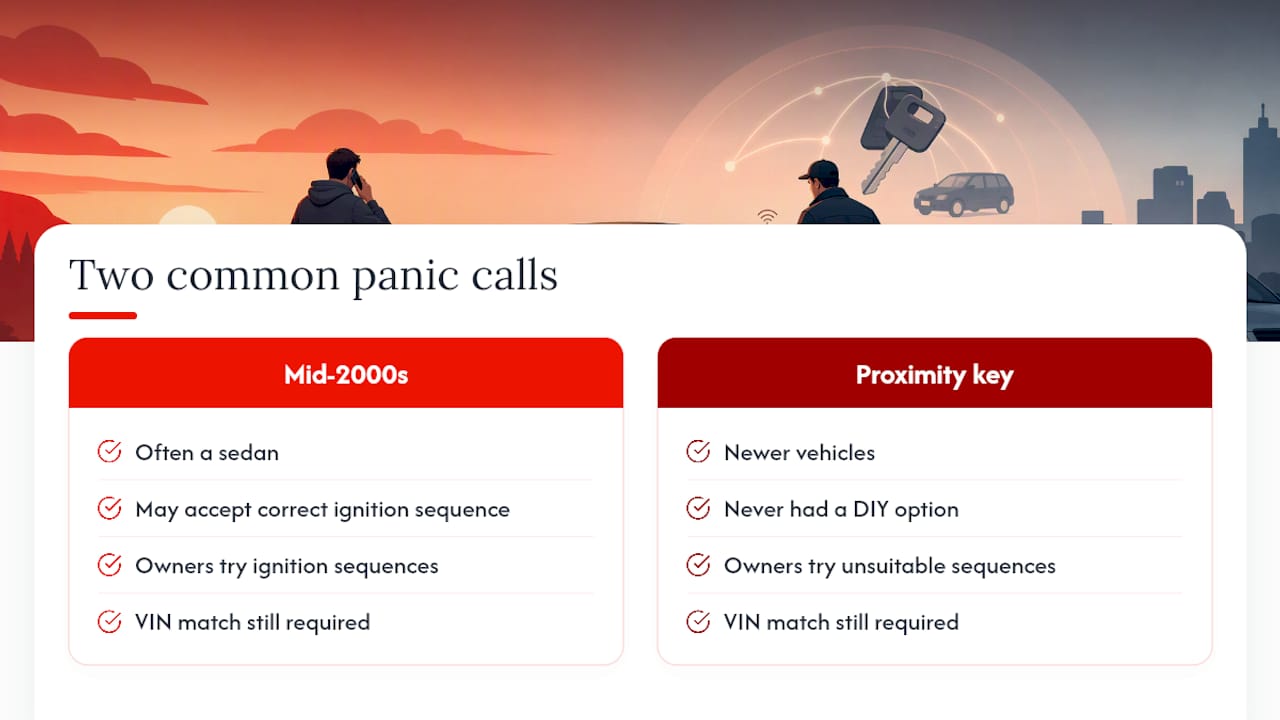
Most panic calls fall into one of two buckets: someone with a mid-2000s sedan who just needed the right ignition sequence, and someone with a newer proximity-key vehicle who never had a DIY option to begin with. The frustrating part is how many DIY guides blur that line and leave owners of the second group trying sequences that were never built for their car.
Proof of ownership isn’t a formality we enforce because we enjoy paperwork. A VIN match against a title or registration is often the only thing standing between a legitimate locksmith call and someone re-keying a car that isn’t theirs. We check every time, no exceptions.
— Julio Borroto
Mobile Key Programming When You’d Rather Not DIY It
Mobile locksmith services can come to you, which matters most on the day you’re standing in a driveway with zero working keys and no way to drive anywhere for help. Mobile immobilizer resets and key programming can be done on-site across many locations in the Miami-Dade area, day or night.
Have your VIN, a photo ID, and proof of ownership ready before we arrive. It’s the same documentation a dealer would ask for, and having it on hand cuts your wait time down significantly. Whether you’re locked out entirely, need a spare key programmed, or your immobilizer light won’t clear after a DIY attempt gone sideways, our auto locksmith services cover programming, cutting, and emergency lockout response under one call. For the full picture on transponder programming and pricing before you decide DIY versus pro, check our car key programming guide or head straight to our auto locksmith service page to get a technician on the way.
Where to Verify These Procedures Yourself
J.D. Power’s key chip programming guide covers vehicle-year compatibility for on-board methods.
PairMyKey details how consumer OBD dongles handle app-guided programming.
Manufacturer immobilizer reset bulletins explain the dealer seed/passcode workflow in full.
Car Key Go’s blog offers additional procedural background from a UK locksmith perspective.
Sources
Recommended
Comments