

5 Locksmith Questions to Decide Interchangeable Core vs Standard

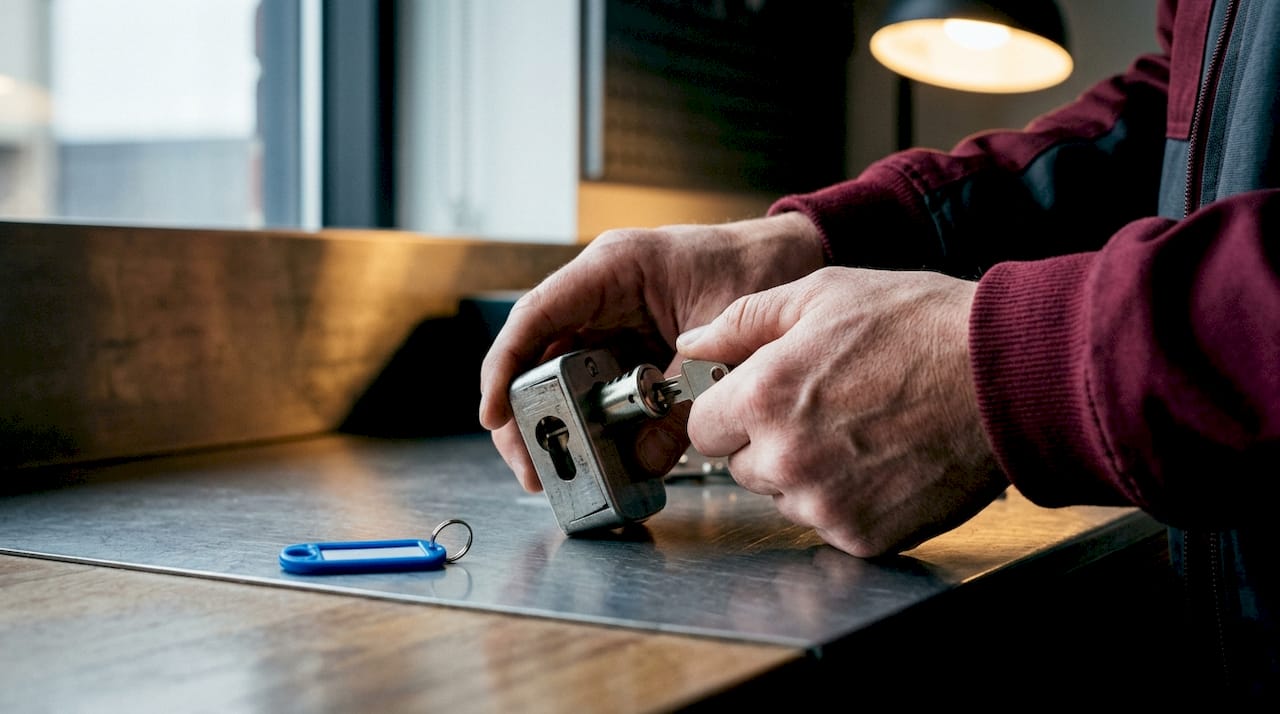
Interchangeable cores (IC) win when you need fast field rekeying and centralized key control, which is why so many commercial buildings and multi-tenant properties run on them. Standard cylinders remain the right call for most homes and vehicles, where a single door or ignition doesn’t justify the added cost. If you’re not sure which one your property actually has, or needs, consider consulting a locksmith for a compatibility check before you buy anything.
TL;DR:
Interchangeable core systems are ideal for buildings with high staff turnover or frequent key changes, offering quick, onsite rekeying in seconds with a control key.
Standard cylinders are more cost-effective initially and suitable for homes or vehicles with low rekeying frequency, but require disassembly or a locksmith for rekeying.
SFIC cores are standardized and compatible across multiple manufacturers, while LFIC cores are usually locked to one brand, influencing choices for master key systems.
Installing or converting to IC hardware typically requires professional locksmith service to ensure proper fit and security, especially in commercial buildings.
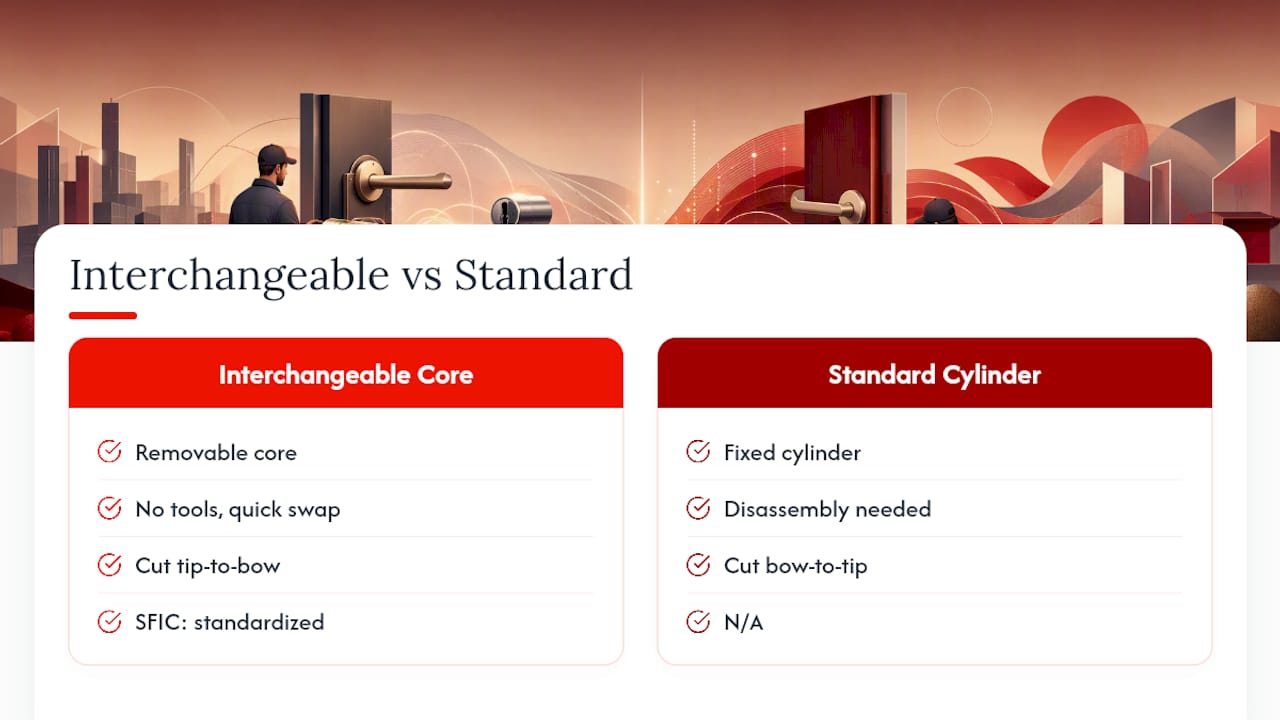
IC keys are cut tip-to-bow, while standard keys are cut bow-to-tip, making the two systems incompatible and requiring a property to choose one system across all doors.
Table of Contents
Interchangeable Core vs Standard: The Quick Comparison
Before you commit to either system, look at how they perform on the factors that matter most: speed, compatibility, cost, and everyday convenience.
Rekeying speed: An interchangeable core comes out with a control key in seconds. A standard cylinder usually needs disassembly or a service call.
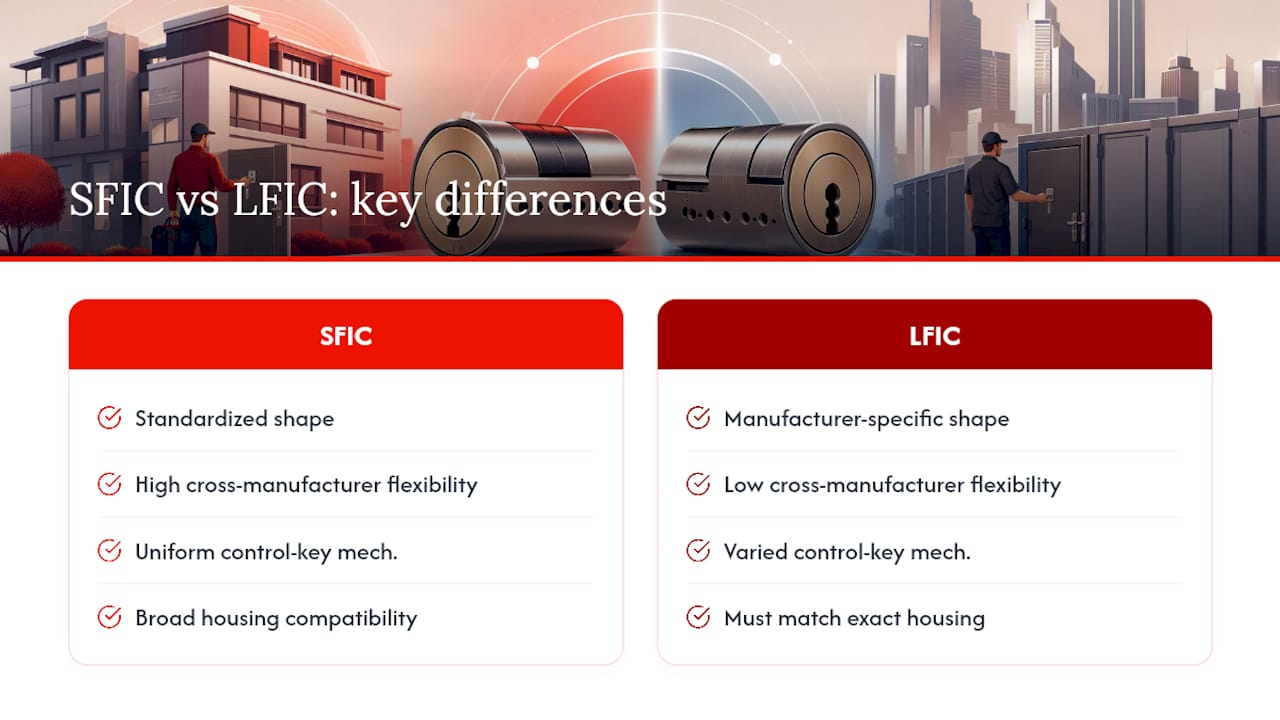
Compatibility: Small Format Interchangeable Cores (SFIC) use a standardized shape that works across many manufacturers. Large Format Interchangeable Cores (LFIC) and most standard cylinders are locked to one manufacturer’s system.
Typical setting: Commercial buildings, apartment complexes, and properties with frequent staff or tenant turnover lean toward IC. Single-family homes and vehicles almost always use standard cylinders.
Upfront cost: Standard cylinders cost less to buy and install on a single door. IC hardware costs more initially but saves money over years of rekeying.
Security profile: Both systems can meet solid pick and bump resistance standards. The real security gap usually comes down to pin count, keyway design, and installation quality, not the core type alone.
If you manage one house or one car, standard is probably fine. If you manage a building, an IC system usually pays for itself.
How Do Interchangeable Cores Actually Work?
An interchangeable core is built to come out of its housing without taking the whole lock apart. Insert a special control key, turn it to a release position, and the entire core pulls straight out. Drop in a new core, turn the control key back, and the door is rekeyed. No screwdrivers, no disassembly, no locksmith standing at the door for twenty minutes.
SFIC cores share a standardized figure-eight shape, which is why they interchange across many manufacturers and lock brands. LFIC cores do the same job but the shape, size, and control-key mechanics vary by manufacturer, so a core from one brand rarely fits another brand’s housing.
Standard cylinders work differently at the key level. A standard key is cut bow-to-tip, the classic pattern most people picture. An IC key is cut tip-to-bow. That single difference in blank orientation is why the two key types are not interchangeable and never will be, no matter how similar they look on a keyring.
Interchangeable Core Benefits and Drawbacks
The interchangeable core system earns its reputation in buildings where keys go missing, employees turn over, and doors number in the dozens.
Pro: Rekey a door in the field in under a minute with a control key, no removal of the lock.
Pro: Keep spare cores on a shelf and swap a compromised one on the spot.
Pro: Works well for master key systems, since a lost sub-key means swapping one core, not repinning the whole building.
Con: Higher upfront hardware and installation cost compared to standard cylinders.
Con: LFIC systems can lock you into one manufacturer’s parts and pricing.
Con: Someone on staff has to manage and secure the control key, which becomes a security liability if it’s lost.
Standard cylinders flip that trade-off. They’re cheaper, available almost everywhere, and fine for a front door or a car ignition. The downside shows up the moment you need to rekey: standard cylinders generally require disassembly or a locksmith visit, which costs more in labor over time even though the parts themselves are cheap.
Pro Tip: If you’re on the fence, count how many times you’ve rekeyed in the last five years. Zero or one, standard cylinders are fine. Three or more, an interchangeable core system will likely save you money and headaches.
Why Aren’t IC and Standard Keys Compatible?
The incompatibility isn’t a design oversight. It’s baked into how each key is cut and how each core reads it. A standard key’s cuts run bow-to-tip; an IC key’s cuts run tip-to-bow. Because IC keys are cut this way, a higher-pin-count IC blank can be cut to operate a lower-pin-count core without extra blade length getting in the way, a flexibility standard keys simply don’t have.
That’s also why a property generally has to commit to one system. Mixing IC and standard hardware across a building means carrying two entirely separate key inventories, which defeats the purpose of centralized key control.
SFIC’s standardized shape gives you cross-manufacturer flexibility that LFIC doesn’t offer. Some LFIC designs use different control-key mechanics such as lateral pins or partial-chamber rotations, so a spare core has to match the exact manufacturer family. That matters most for master key systems, where losing a single key shouldn’t force a rekey of every door in the building. An interchangeable core lets you swap the affected door’s core alone and keep the rest of the master system intact.
Installation, Maintenance, and When to Call a Locksmith
Converting a door to IC hardware usually means installing a new lock cylinder housing built to accept SFIC or LFIC cores, which is a job worth handing to a technician if you’ve never done it. Get it wrong and the core won’t seat properly, which defeats the whole point of fast field rekeying.
Once installed, both systems need basic upkeep: a yearly inspection, a dry lubricant instead of oil-based products that attract grit, and attention to any stiffness when turning the key. Catch a sticky core early and you avoid a jammed lock during an actual emergency.
Some situations don’t wait for a maintenance schedule. Lost keys, signs of tampering, or an employee departure that requires an immediate rekey all call for same-day service. Progressive Locksmith - Cerrajero Miami runs 24/7 for exactly these moments, whether it’s a residential rekey at 2 a.m. or a commercial core swap before a business opens.
When Should You Choose IC Over Standard?
Run through this checklist before you decide:
Count your doors and your turnover rate. One or two doors with rare key changes points to standard. A dozen doors or regular staff turnover points to IC.
Weigh upfront cost against long-term convenience. IC hardware costs more to install but eliminates most rekeying labor. Standard cylinders cost less now but add up in service calls.
Check your existing hardware. Not every door frame or lock body accepts an SFIC housing without modification, so confirm compatibility before you order parts.
Skip IC for vehicles entirely. Interchangeable cores aren’t built for automotive locks or ignitions. If you need a transponder key, fob, or ignition repair, that’s a job for an auto locksmith, not an IC conversion.
What Should You Ask a Locksmith Before You Commit?
Walk into that conversation with the right questions and you’ll get an accurate quote on the first call instead of a second visit.
Does this door or building need SFIC or LFIC, and does the hardware support either?
Who holds the control key, and how is it provisioned and tracked?
Are spare cores kept in stock, and what’s the turnaround if one needs replacing?
What’s the pricing structure: a flat rate per core, or a per-door labor charge?
Is the technician licensed and insured, and what’s the actual emergency response window?
Have your door count, hardware type, and whether you need a master key system ready before the call. It saves time on both ends.
Progressive Locksmith - Cerrajero Miami’s Field Perspective
Most calls we handle split cleanly into two camps: someone locked out needing a fast standard rekey, or a property manager planning a master key system that only an interchangeable core setup can support cleanly. We steer homeowners and single-vehicle owners toward standard cylinders more often than not, simply because the cost doesn’t make sense otherwise. For commercial clients juggling multiple doors and staff turnover, IC earns its keep fast, and our 24/7 availability means neither decision has to wait.
— Julio Borroto
Get the Right Lock System Installed the First Time
Choosing between interchangeable core and standard cylinders is only half the job. Getting it installed correctly, with the right pinning and control-key setup, is what actually protects your property. Progressive Locksmith - Cerrajero Miami handles both ends of that job in Miami and Homestead, from SFIC and LFIC installation for commercial properties to same-day residential rekeys when a standard cylinder is all you need.

Our technicians work bilingual in English and Spanish, run 24/7 for lockouts and emergency rekeys, and quote pricing upfront before any work starts. If you’re mid-decision on which core system fits your doors, or you’ve already got a lock crisis on your hands, request an on-site estimate through our services page and we’ll walk the property with you before you spend a dollar on hardware.
Sources
FAQ
What Is the Main Difference Between IC and Standard Locks?
An interchangeable core comes out and swaps with a control key in seconds, while a standard cylinder usually needs disassembly or a locksmith visit to rekey. That speed difference is the whole reason commercial properties favor IC and homes tend to stick with standard.
Can I Use a Standard Key in an Interchangeable Core Lock?
No. Standard keys are cut bow-to-tip and IC keys are cut tip-to-bow, so the two formats are mechanically incompatible. A property has to commit to one system across its doors.
Is SFIC Better Than LFIC?
SFIC uses a standardized figure-eight shape that works across many manufacturers, while LFIC cores are generally locked to one brand’s parts. SFIC tends to be the more flexible choice unless you already have LFIC hardware installed.
Is an Interchangeable Core Worth It for a Home?
Usually not, unless you rekey often or manage a multi-unit property. A single-family home with rare key changes typically does better with a standard cylinder and a rekey-or-replace decision when needed.
Does Progressive Locksmith - Cerrajero Miami Install Interchangeable Cores?
Yes. Progressive Locksmith - Cerrajero Miami installs and rekeys both SFIC and LFIC systems for commercial and multi-tenant properties, alongside standard residential lock work. Current pricing for specific jobs is available through the services page.
Recommended
Comments