

Key Fob Not Detected: Fix It Now or Call a Pro

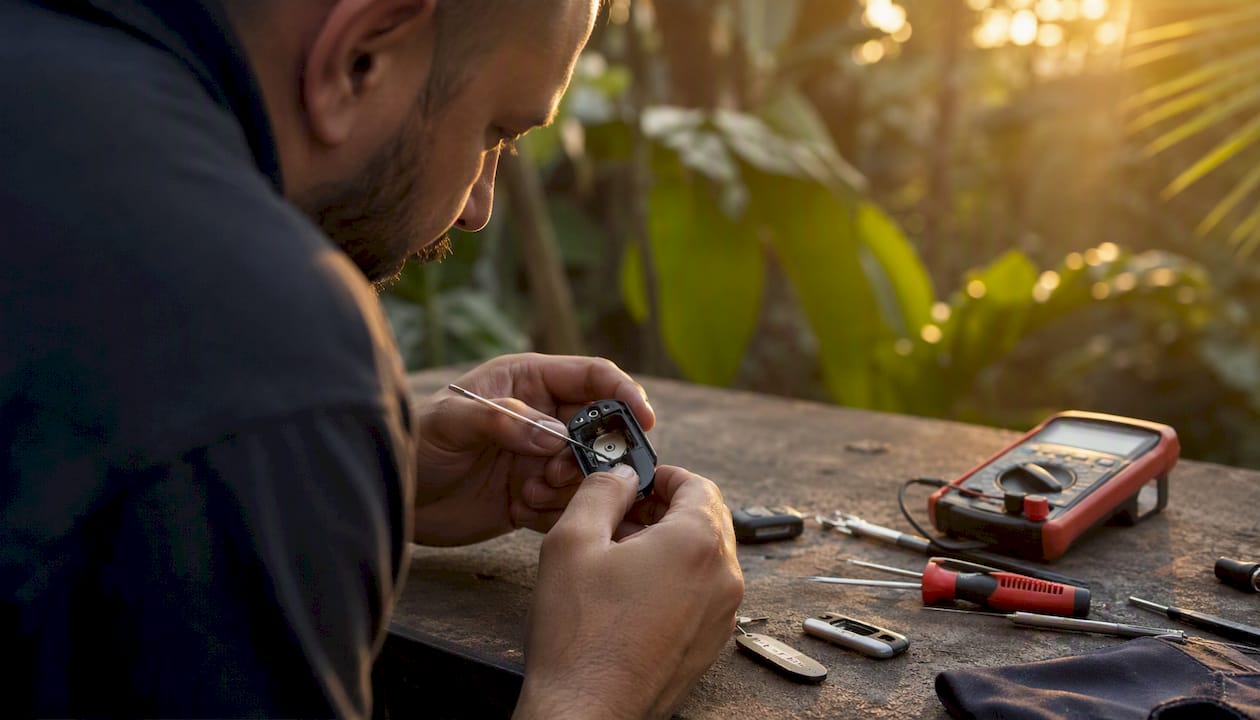
Most “key fob not detected” messages trace back to a dead or weak coin-cell battery. Replace it first. If that does not work, try these three steps before anything else:
Replace the fob battery. Most fobs use a CR2032 or CR2025 coin cell. A fresh battery costs under $5 at any pharmacy or auto parts store.
Hold the fob directly against the start button or the marked pad on the steering column. Many vehicles have a passive backup read area that can detect the fob’s chip at very close range even when the battery is dead.
Try your spare key. If the spare works immediately, the problem is the fob. If the spare fails too, the problem is the car.
**If your car won’t start and you have no working spare key, stop here and call a locksmith or your dealer. Attempting to bypass the ignition or immobilizer without the right tools can lock the vehicle permanently. On-site help is the right move.
Pro Tip: Before calling anyone, shake or tap the fob once and hold it right against the start button. Some fobs have a motion-activated sleep mode that cuts power between uses. A quick tap wakes it up.
Key Takeaways
A dead fob battery causes the majority of “key fob not detected” errors, but vehicle battery faults, signal interference, and damaged fob internals each require a different fix.
Point | Details |
Replace the battery first | Most fobs use a CR2032 or CR2025 coin cell; a fresh one costs a few dollars and fixes most cases. |
Test the spare fob early | If the spare works, the fault is in the primary fob; if both fail, the fault is in the vehicle. |
Vehicle battery matters too | A drained or recently replaced car battery can de-sync the security system and prevent key recognition. |
Know when to stop DIY | Receiver faults, immobilizer issues, and chip damage require professional diagnostic tools. |
Progressive Locksmith - Cerrajero Miami | Provides mobile on-site fob diagnostics, programming, and emergency lockout response across Miami-Dade County. |
Table of Contents
Why your car shows “key fob not detected” — the most common causes
The car key not detected message is almost always one of these seven things:
Dead or weak fob battery. The coin cell drops below the voltage threshold the receiver needs. The fob may still lock doors at close range but fail the push-button start’s longer-range read.
Fob motion sensor in sleep mode. Some smart keys power down between uses to conserve battery. The fob won’t transmit until it detects movement.
Signal interference. Phones, wireless chargers, dash cams, and other electronics sitting next to the fob can block or scramble its radio signal, producing intermittent “not detected” messages even with a fresh battery.
Damaged fob internals. A dropped or moisture-exposed fob may show inconsistent behavior even with a new battery. The transponder chip or circuit board may be cracked.
Low or recently replaced vehicle battery. A drained or disconnected car battery can de-synchronize the security system from the fob. Recognition may fail until the system is re-synced.
Blown fuse or antenna/receiver fault. The keyless entry antenna or its fuse can fail independently of the fob. A symptom: doors unlock fine but push-button start won’t detect the key.
Valet mode, software glitch, or manufacturer TSB. Some vehicles ship with a valet mode that disables keyless start. Manufacturers also publish technical service bulletins (TSBs) for known keyless-start defects that require a software update or hardware fix at the dealer.
Pro Tip: Test the spare fob first. If it works, the fault is in your primary fob. If neither works, the fault is in the vehicle. That single test cuts your diagnostic time in half.
Step-by-step troubleshooting — work through these in order
Follow this workflow from fastest to most involved. Stop as soon as the car recognizes the key.
Wake the fob. Tap or shake it once, then hold it directly against the start button. If the car starts, the fob was in sleep mode.
Replace the fob battery. Open the fob (usually a small slot on the edge), note the battery number, and swap it for a fresh one. See the table below for common sizes.
Check polarity and contacts after replacement. Battery fitted backwards or bitter child-safe coatings on some coin cells are the most common reasons a fob still fails after a new battery. Wipe the metal contacts with a dry cloth and confirm the positive side faces the correct direction.
Test the spare fob. If the spare works, your primary fob needs repair or replacement. If neither works, move to the vehicle.
Remove interference sources. Take your phone, wireless charger, and any other electronics out of your pocket and off the center console. Move away from high-traffic areas with dense wireless signals and retry.
Check the vehicle battery. A low car battery can mimic a fob fault. If the dash lights are dim or the engine cranks slowly, jump-start or charge the battery and retry key recognition.
Try the emergency start spot. Hold the fob against the steering column, center console, or any marked pad and press start. Your owner’s manual shows the exact location for your model.
Inspect the fob for visible damage. Cracks, corrosion on the battery contacts, or a loose key shell are signs the fob needs professional repair or replacement.
Check the keyless entry fuse. Your owner’s manual lists the fuse box location and the fuse labeled for the keyless or BCM system. A blown fuse is a $1 fix, but if it blows again, there’s a deeper electrical fault.
Attempt a re-sync if your manufacturer allows it. Some vehicles let you re-pair the fob by inserting the mechanical key into the door lock or following a specific ignition sequence. Check your owner’s manual or the manufacturer’s TSB database before attempting this.
Common fob battery sizes
Battery Size | Typical Vehicles | Notes |
CR2032 | Toyota, Honda, Ford, Chevrolet, Nissan | Most common; 3V lithium |
CR2025 | Subaru, Mazda, some Hyundai | Slightly thinner than CR2032 |
CR2016 | Some BMW, Lexus slim fobs | Thinner; confirm before buying |
Safety notes: Never short the battery terminals by touching both poles with a metal tool. Use the correct size only; a slightly thicker cell can crack the fob shell. Avoid DIY ignition or immobilizer work. If the fuse fix doesn’t hold or the re-sync fails, stop and call a professional.
Pro Tip: If the fob has a bitter coating (some child-safe batteries ship with one), it can leave a residue on the contacts that prevents a clean connection. Wipe both the battery and the contact clips with a dry cloth before closing the fob.
How to start the car when the fob isn’t detected
The method depends on whether your vehicle uses a push-button start or a traditional keyed ignition.
Push-button start systems
Locate the passive read area. Most manufacturers place it on the steering column, the marked pad on the dash, or the center console cup holder area. Check your owner’s manual for the exact spot.
Hold the fob flat against that spot with the key’s logo or flat face touching the surface.
Press the brake pedal and push the start button while keeping the fob in contact.
If the car starts, drive to a safe location and address the fob battery before turning the engine off again.
Keyed ignition systems
Use the physical blade key hidden inside the fob (press the small release button on the fob to extract it) to unlock the door manually.
Insert the key into the ignition and start normally. If the transponder chip is still functional, the car will start. If the immobilizer blocks it, the chip may be damaged and you’ll need a locksmith.
A note on driving with the warning active: If your car starts despite the “key not detected” message, most vehicles will continue running until you turn them off. Do not turn the engine off until you are parked somewhere safe and have a plan to address the fault. Restarting may not be possible.
Safety tip: Never attempt hot-wiring or any bypass of the ignition or immobilizer. Modern immobilizers are designed to permanently disable the starter if tampered with incorrectly. Call a licensed locksmith instead.
When to call a locksmith or dealer — and what to expect
Some situations are beyond a battery swap. Call a professional when:
Both the primary and spare fob fail on a freshly charged vehicle battery.
The fob was dropped, submerged, or shows physical damage.
The car battery was recently replaced or disconnected and the vehicle won’t recognize any key.
The keyless entry antenna or receiver is suspected (doors unlock but push-button start won’t detect the fob).
The vehicle requires dealer-only programming (certain OEM systems, especially newer luxury models).
A manufacturer TSB or recall applies to your model’s keyless-start system. If your vehicle has a documented defect, lemon law or warranty remedies may cover the repair cost.
Locksmith vs. dealer: which to call
A mobile locksmith can handle on-site diagnostics, fob reprogramming, key cloning, and replacement for most mainstream vehicles. Mobile locksmiths frequently resolve on-site “key not detected” calls without dealer intervention by using professional diagnostic tools and programming equipment. They’re faster and typically less expensive than a dealer visit.
A dealer is the right call when the repair requires OEM-only software, a warranty claim, or a TSB fix that involves proprietary firmware. Dealers also handle steering lock module replacements and immobilizer hardware that some aftermarket tools can’t reach.
Approximate cost ranges
Ranges are approximate. Final pricing depends on vehicle make, model, and fob complexity.
Pro Tip: Before you call, have your VIN, vehicle year/make/model, a photo of the fob, and a description of any recent events (battery replacement, jump-start, drop, or water exposure) ready. That information cuts the diagnostic call time significantly and helps the technician arrive with the right equipment.
How to prevent future detection failures
A few simple habits keep this problem from repeating:
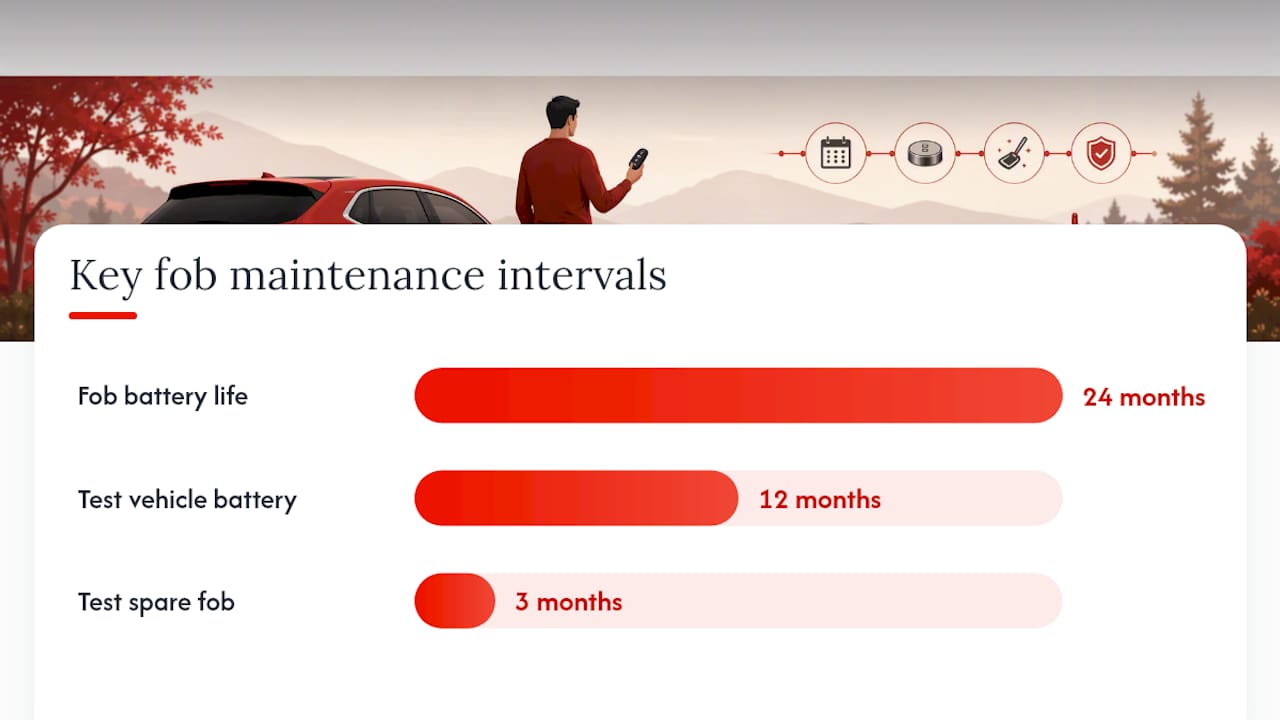
Replace the coin cell proactively. Most fob batteries last 1–3 years. Don’t wait for a failure; swap it when you notice the range shortening.
Keep a working spare key. Store it somewhere accessible but secure, and test it every few months.
Avoid storing the fob next to other electronics. Phones, wireless chargers, and metal key rings can interfere with the fob’s signal or physically damage the shell over time.
Clean contacts after every battery change. Residue from bitter-coated batteries or oxidation on the clips causes post-replacement failures.
Keep the vehicle battery healthy. A weak car battery is a common hidden cause of intermittent keyless entry not working. Have it tested annually, especially in hot climates where heat accelerates discharge.
Check for TSBs periodically. If you see recurring smart key not recognized errors, search your VIN on the NHTSA database or ask your dealer whether a software update applies.
Pro Tip: Set a calendar reminder to test your spare fob every quarter. A spare you haven’t touched in two years may have a dead battery too, which defeats its purpose entirely.
Quick troubleshooting checklist — scan this when you’re stranded
Work through these in order. Check each one off before moving to the next.
Tap or shake the fob and hold it against the start button. Does the car start?
Replace the fob battery with the correct size (CR2032 or CR2025 for most vehicles). Check polarity and clean contacts.
Try the spare key. Does it work?
Remove all electronics from your pockets and the center console. Retry.
Check the vehicle battery. Are the dash lights bright? Does the engine crank normally?
Hold the fob against the steering column or marked emergency read pad and press start.
Check the keyless entry fuse in the fuse box (see owner’s manual for location).
If none of the above work, call a licensed locksmith or your dealer. At this point the fault is likely in the vehicle’s receiver, antenna, immobilizer, or the fob’s internal chip — all of which require professional diagnostic tools.
Steps 1–4 resolve the majority of detection failures. If you reach step 8, do not attempt further DIY work on the ignition or immobilizer.
What locksmiths actually see in the field
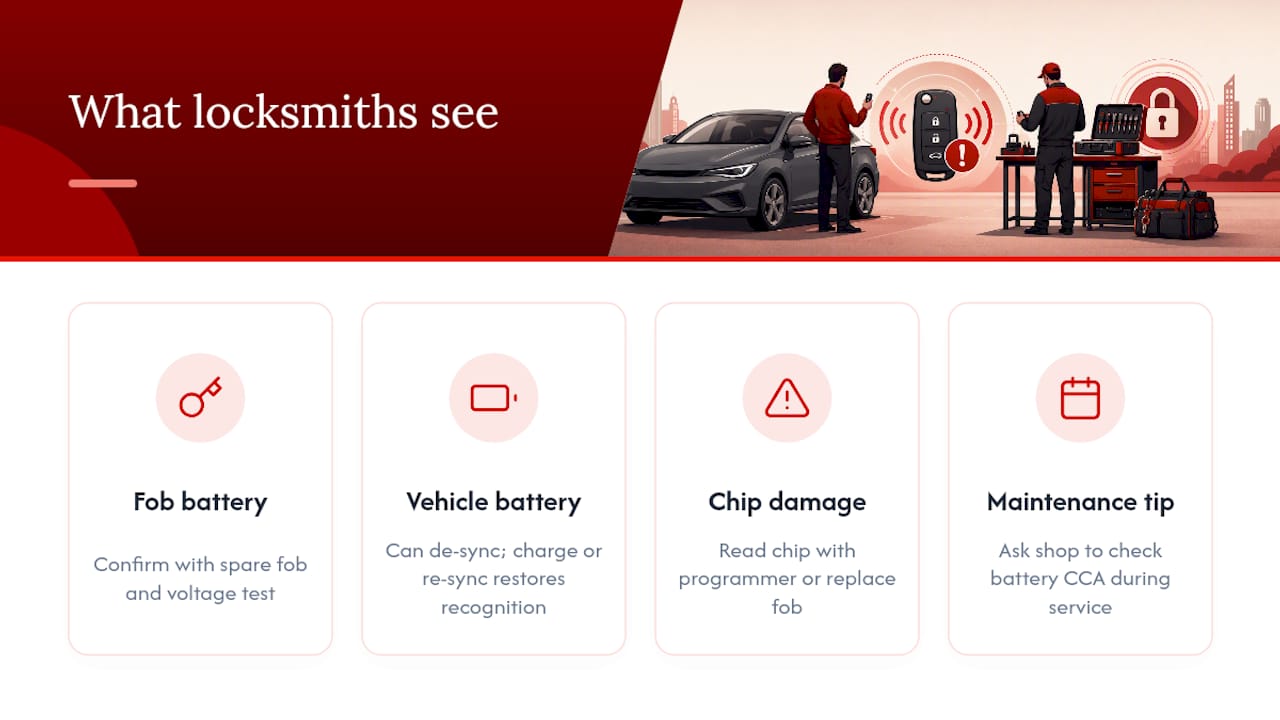
The reality of “key fob not detected” calls is less dramatic than most owners expect. The dead battery is, by far, the most frequent culprit. A technician arriving on-site will confirm this in under two minutes by testing the spare fob and checking the fob’s voltage with a simple meter.
What surprises people is how often the vehicle battery is the hidden cause. A car that’s been sitting in South Florida heat for a week, or one that was jump-started recently, can lose its security system sync without any obvious warning. The fob is fine. The car just forgot it. After a proper battery charge or a re-sync procedure, recognition returns immediately.
The calls that require real diagnostic work are the ones where the fob was dropped hard onto pavement or soaked in water. The transponder chip inside is fragile. Even with a fresh battery and a clean shell, a cracked chip produces exactly the same “not detected” message as a dead battery. The only way to confirm it is to test a known-good spare or read the chip with a programmer. If the chip is gone, the fob needs replacement and reprogramming, which is a straightforward job for a mobile locksmith equipped with the right tools.
One practical habit worth adding to your routine: every time you have your vehicle serviced, ask the shop to check the car battery’s cold-cranking amps. A battery that tests weak in January is the same battery that will de-sync your keyless system in July.
Progressive Locksmith - Cerrajero Miami handles key fob faults on-site
When the checklist above doesn’t get your car started, the fastest path forward is a mobile locksmith who arrives with diagnostic equipment already loaded.

Progressive Locksmith - Cerrajero Miami provides mobile automotive key diagnostics and on-site fob programming across Miami-Dade County, including Homestead, Cutler Bay, Coral Gables, and surrounding areas. The technicians carry professional programming tools that cover most domestic and import vehicles, so fob reprogramming, key cloning, and transponder replacement happen at your location, not at a shop.
Before the technician arrives, have your VIN, proof of ownership, and a description of any recent events (battery replacement, jump-start, physical damage to the fob) ready. That preparation means the job starts faster and finishes sooner.
For emergency situations where you can’t enter or start the vehicle, auto lockout assistance is available 24/7. Call or contact Progressive Locksmith - Cerrajero Miami to get a technician dispatched to your location.
Sources
Recommended
Comments