

Lock Bumping Prevention: Secure Your Home Now

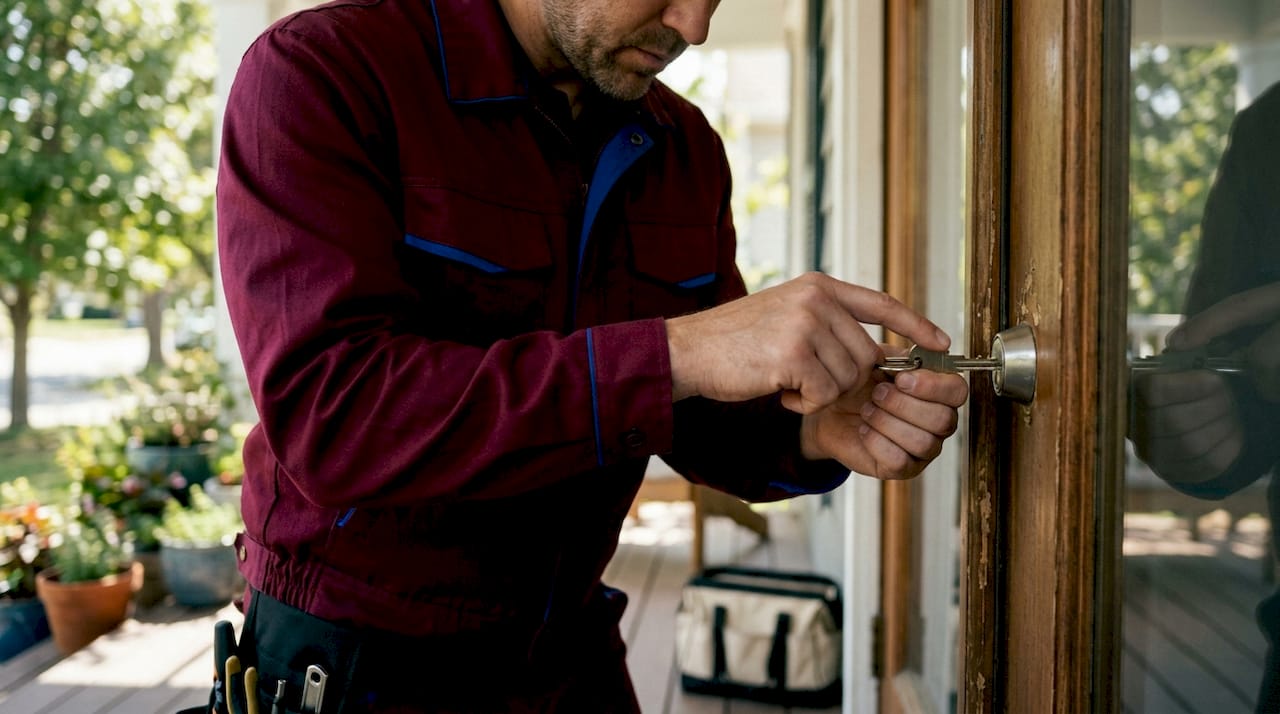
Replace your standard pin-tumbler cylinders with certified bump-resistant locks today. That single step is the most reliable fix for lock bumping prevention, and you can act on it before the end of the week. Here is your immediate checklist:
Inspect your front and rear deadbolts first. Builder-grade cylinders on most residential doors are vulnerable by design.
Check for a secondary deadbolt or thumb-turn guard on any door without one. These add a physical barrier while you plan a full upgrade.
Move any spare keys hidden outside (under mats, in fake rocks) indoors immediately.
Call a licensed locksmith to assess your doors and recommend certified cylinders like Medeco or Mul-T-Lock.
Pro Tip: Rekeying a standard cylinder does NOT make it bump-resistant. The mechanical architecture of the cylinder determines resistance, not which key operates it. A rekey only changes the key profile.
Key Takeaways
Upgrading your primary entry door cylinder to a certified bump-resistant model, combined with strike plate reinforcement, is the single most cost-effective way to close the majority of your bumping risk.
Point | Details |
Cylinder type is the core fix | Standard pin-tumbler cylinders are vulnerable; replace with Medeco, Mul-T-Lock, or BiLock for genuine bump resistance. |
Rekeying does not help | Changing which key operates a standard cylinder does nothing to its bump resistance. |
Frame reinforcement matters | A bump-resistant cylinder on a weak strike plate still leaves the door vulnerable to force. |
Temporary steps buy time | Thumb-turn guards, longer strike plate screws, and motion lighting reduce risk while you plan a full upgrade. |
Locksmithfromiami covers Miami-Dade | Professional cylinder installs, on-site audits, and post-installation bump testing are available same-day or next-day. |
Table of Contents
How lock bumping works and why it bypasses standard locks
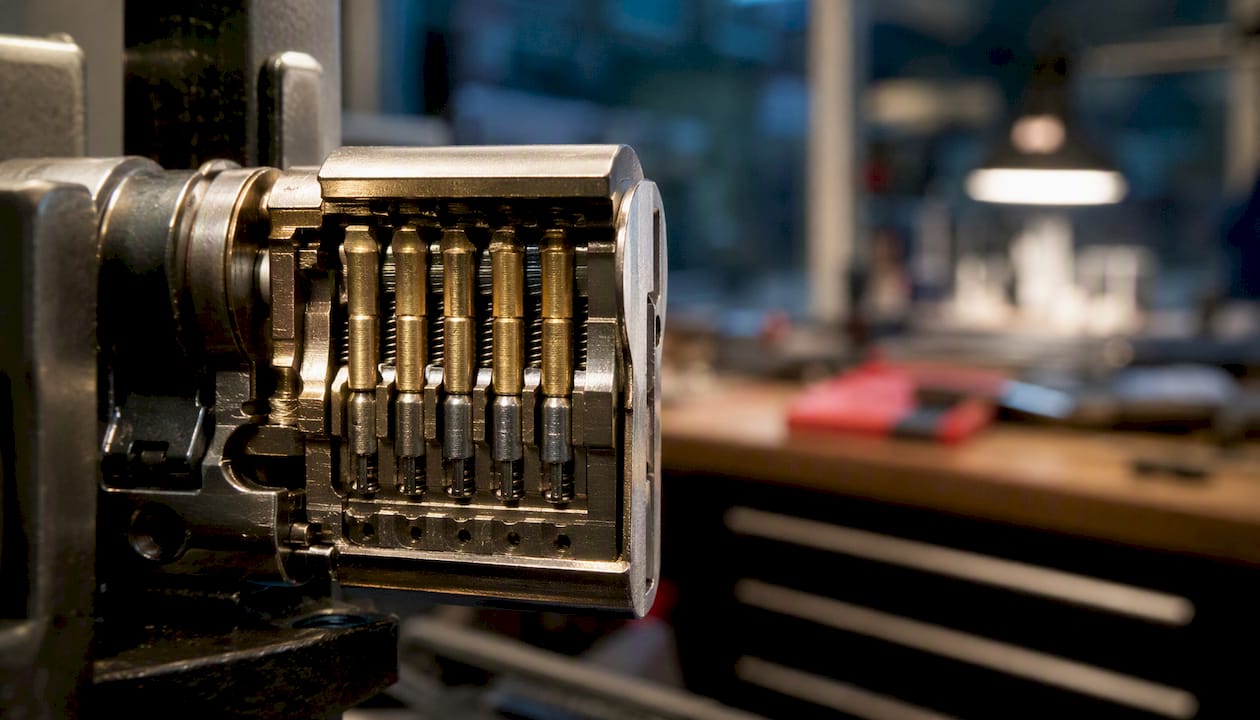
Lock bumping exploits a fundamental design feature of pin-tumbler cylinders, the most common lock type in American homes. A bump key, cut to the maximum depth on every tooth, is inserted one notch out and struck sharply while light rotational pressure is applied. That impact transfers kinetic energy through the key into the pin stacks inside the cylinder.
Think of it like a Newton’s cradle: the energy passes through the key pins and launches the driver pins upward. For a fraction of a second, all the driver pins clear the shear line simultaneously. The rotational pressure on the key does the rest, spinning the plug and opening the lock. The whole process can take under ten seconds and leaves no visible damage to the door or frame.
CAPEC-392 from MITRE classifies this as a surreptitious attack because it leaves minimal forensic evidence. A skilled attacker leaves the door looking untouched. Even well-made standard cylinders with tight tolerances can be bumped, because the vulnerability is in the spring-loaded driver pin geometry itself, not in manufacturing quality. Locks that defeat bumping do so by eliminating that geometry entirely, using sidebars, rotating discs, or telescoping pins that have no spring-loaded top pin for a bump key to exploit.
Which household locks are vulnerable and how to check yours
Most residential locks sold at big-box stores use standard pin-tumbler cylinders. That covers the majority of keyed knob locks, basic deadbolts, and older builder-grade hardware installed when a home was built. If your lock came with the house and has never been upgraded, assume it is vulnerable.
Here is what to check on each door:
Brand stamp on the cylinder face. Generic or unbranded cylinders are almost always standard pin-tumbler. Brands like Kwikset and Schlage offer both standard and upgraded lines, so the model number matters.
Loose or wobbly cylinder. A cylinder that moves when you grip it is poorly secured and easier to attack.
Sticky or gritty key operation. Worn internal components reduce resistance to manipulation of all kinds.
Visible keyway wear. Heavy scratching around the keyway suggests high use or prior tampering. Forensic analysis shows bumping leaves specific marks on pin faces and plug surfaces that differ from normal wear.
No secondary lock. A single deadbolt with no secondary barrier gives an attacker one target.
Prioritize in this order: front door, rear door, garage entry door, and any ground-level entry. Sliding glass doors need a different solution (a security bar or pin lock) since they are not pin-tumbler targets but are often the weakest point on a home.
Permanent lock upgrades that stop or greatly slow bumping
Consumer Reports testing confirms that many common residential locks perform significantly worse than high-security cylinders across multiple failure modes. The upgrade path below is tiered by cost and complexity so you can choose what fits your situation.
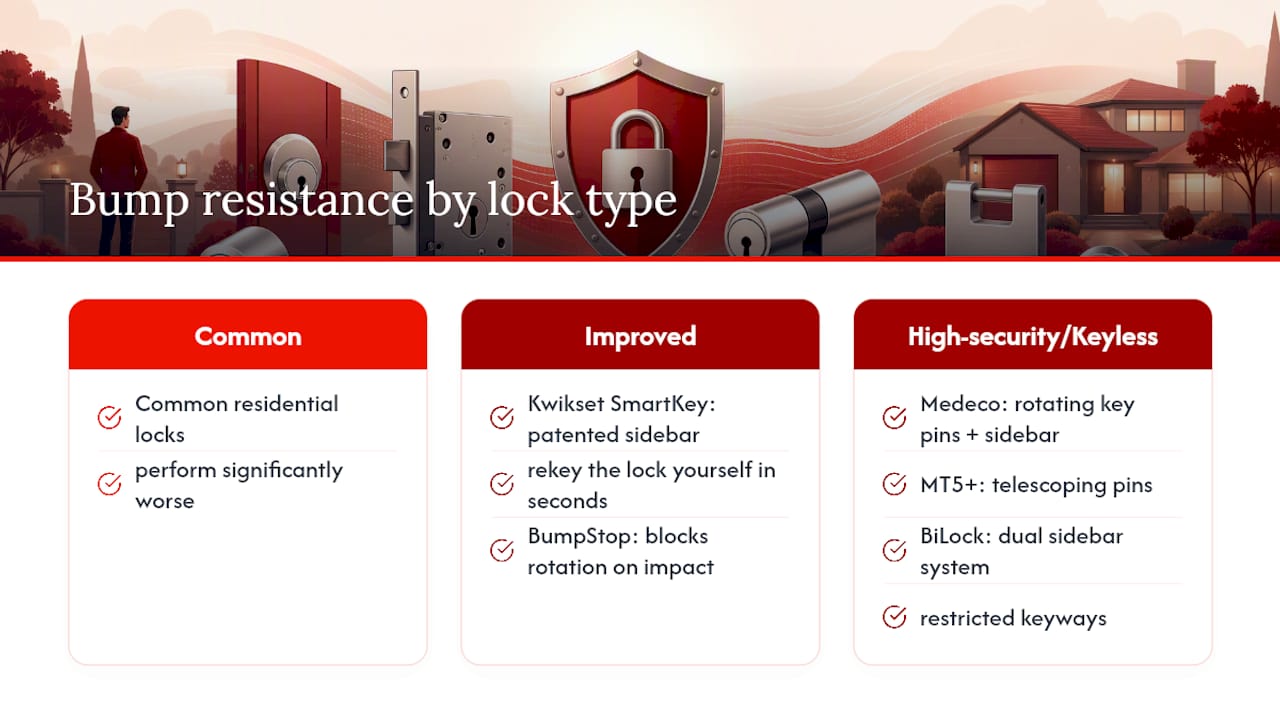
Medeco cylinders use a combination of rotating key pins and a sidebar that must align simultaneously with the shear line. A bump key cannot rotate the pins to the correct angle, so the sidebar blocks rotation even if the driver pins momentarily clear. Mul-T-Lock MT5+ adds telescoping pins inside each key pin, creating a second shear line that a bump key cannot address. Both brands offer restricted keyways, meaning duplicate keys cannot be cut without authorization.
Kwikset SmartKey uses a patented sidebar mechanism rather than standard driver pins, which changes the attack geometry compared to a basic pin-tumbler cylinder. It also allows you to rekey the lock yourself in seconds, a practical benefit for landlords or anyone who has lost track of who holds a key copy.
Master Lock’s BumpStop® technology works differently. Rather than changing the pin geometry, it interrupts force transfer from the bump key to the pins and blocks cylinder rotation during an impact event. Master Lock references ASTM testing criteria for bump resistance, giving you an objective benchmark to ask about when comparing products.
BiLock cylinders use a dual sidebar system where two independent sidebars must align before the plug rotates. A bump key addresses neither. Lockey mechanical keyless deadbolts eliminate the keyed cylinder entirely, removing the attack surface completely. No keyway means no bump risk, though you trade key control for a combination or card-based entry method.
Pro Tip: Pair any cylinder upgrade with a reinforced strike plate and 3-inch screws driven into the door frame studs. A bump-resistant cylinder on a weak frame is still a weak door.
Non-lock measures that reduce your bumping risk
A cylinder upgrade is the core fix, but the surrounding door and frame determine whether that fix holds under pressure. These measures work alongside a lock upgrade, not instead of one.
Heavy-duty strike plates with 3-inch screws. Standard strike plates use short screws that anchor only into the door jamb, not the framing stud behind it. Longer screws driven into the stud increase kick resistance dramatically.
Reinforced deadbolt boxes. A steel deadbolt box welded or bolted to the frame distributes force across a wider area.
Motion-activated lighting. Burglars avoid well-lit entry points. A light that triggers at 10 PM on a dark porch changes the risk calculation for anyone considering a bumping attempt.
Visible cameras. A camera at the front door does not need to stop an attacker physically. The visible presence alone raises the perceived risk of identification.
Door and window sensors tied to an alarm. Even if a bumping attempt succeeds in rotating the cylinder, an alarm triggered by door movement creates an interruption window that most opportunistic burglars will not wait through.
Thumb-turn guards. A thumb-turn guard on the interior deadbolt prevents rotation from the outside even if the cylinder is compromised.
Security bars for sliding doors. Sliding glass doors are not bump targets, but they are often the easiest entry point on a home. A bar in the track costs under $20 and eliminates that vulnerability entirely.
DIY and temporary steps you can take today
These steps reduce your risk now, before a professional upgrade is scheduled. None of them replace a cylinder upgrade, but they raise the effort required for a successful entry.
Install a thumb-turn deadbolt guard on your front and rear doors. These are available at most hardware stores and require no tools beyond a screwdriver.
Replace strike plate screws with 3-inch screws on every exterior door. This takes about fifteen minutes per door and costs under $5 in hardware.
Move all spare keys indoors. Any key hidden outside is a potential bump key source if it can be copied and returned.
Improve exterior lighting. Add a motion-sensor bulb to any dark entry point. This is a same-day fix.
Add a secondary interior latch or chain on doors you use less frequently, such as rear entries or garage doors.
Do not attempt to modify your cylinder internally. Filing pins, adding lubricant to change spring tension, or disassembling the cylinder yourself risks jamming the lock or disabling it entirely. A jammed deadbolt on an exterior door creates both a security gap and a potential fire egress problem. If you suspect your cylinder has been tampered with, the right call is a professional locksmith, not a DIY repair.
When to call a locksmith and what a professional audit covers
Call a licensed locksmith when your front or rear door has a standard pin-tumbler cylinder, when you have multiple vulnerable entry points, after any suspected bumping incident, or when you want restricted keyways that prevent unauthorized key duplication.
These ranges are approximate and vary by location, door configuration, and cylinder brand. Ask for a written quote before any work begins.
Questions to ask your locksmith before hiring:
What certifications do you hold? Look for ALOA (Associated Locksmiths of America) membership or state licensing.
Do you install Medeco, Mul-T-Lock, or Abloy cylinders? A locksmith who cannot source these brands cannot offer the highest tier of protection.
Can you show me the part numbers for the cylinders you plan to install? Legitimate professionals document what they install.
Will you test the installed lock for bump resistance? A controlled bump test after installation confirms the cylinder performs as claimed.
Do you provide a written warranty? Any reputable installer stands behind their work.
Red flags include vague cost estimates given over the phone without a door inspection, refusal to show credentials or licensing, offers to “file” your existing keys as a security measure, or pressure to approve invasive work without a written quote.
What a locksmith sees in the field
Most homes I assess in the Miami and Homestead area have the same two problems: worn builder-grade deadbolts that have never been replaced, and strike plates held in by half-inch screws. Those two issues together mean a standard door can be compromised quickly, whether by bumping or by a simple kick.
The upgrade that delivers the best return for most homeowners is a mid-tier cylinder with security pins combined with a proper strike plate installation. That combination costs less than a full Medeco retrofit and closes the majority of the risk gap. Reserve the high-security cylinder for your primary entry door, and address the frame on every exterior door regardless of which cylinder you choose.
One thing most homeowners do not know: ask your locksmith to perform a bump test on the installed cylinder before they leave. A reputable technician will have a bump key set and will demonstrate that the new cylinder resists it. If they decline, that is a signal worth paying attention to.
Locksmithfromiami offers residential security upgrades in Miami and Homestead
Locksmithfromiami is the direct answer for homeowners in Miami-Dade County who want a professional vulnerability audit and same-day cylinder upgrade without the wait. The team installs high-security cylinders from Medeco and Mul-T-Lock, re-pins existing cylinders with security pins, reinforces door frames and strike plates, and documents every installed part number so you have a record of what protects your home.

Service windows are same-day or next-day for most residential jobs. Every installation includes a post-work bump test so you can see the result before the technician leaves. Pricing is quoted in writing after an on-site inspection, with no vague estimates. To schedule a vulnerability audit or a cylinder upgrade, visit the residential lockout and security services page or browse the full services listing to see every option available for your home.
Sources
Recommended
Comments