

Locked Out of House: Fast, Safe Steps to Get Back In

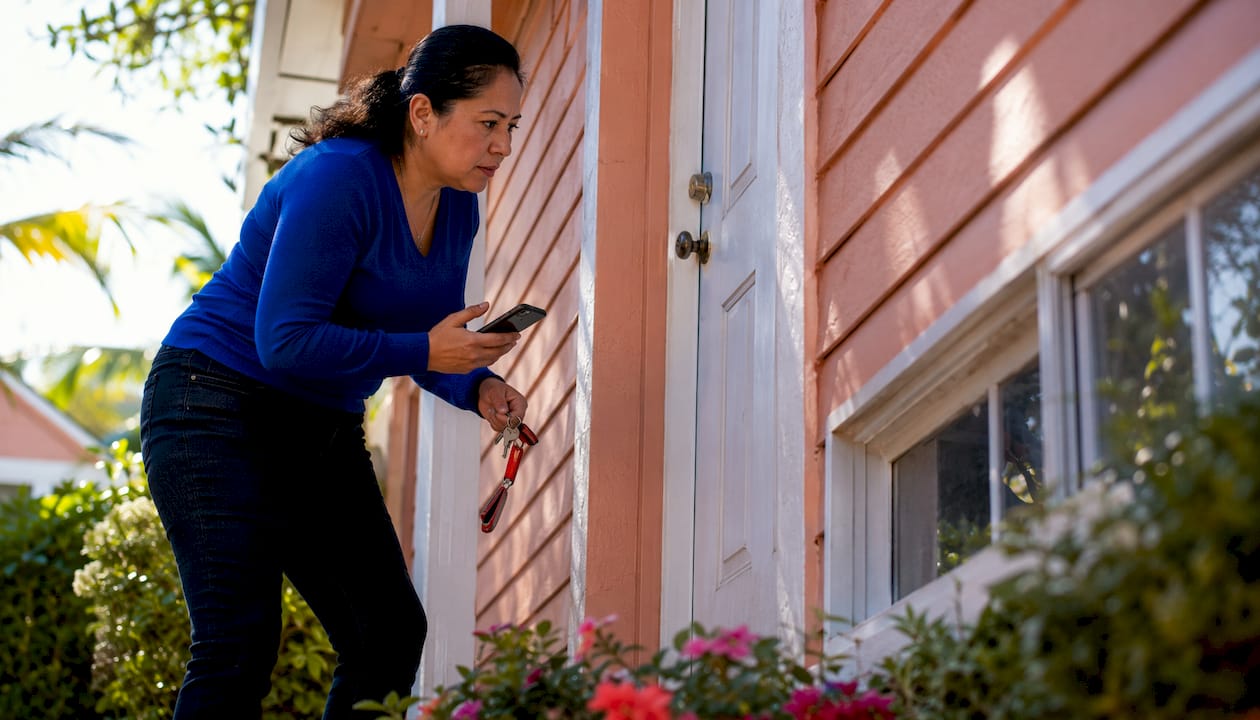
If you’re locked out of your house right now, here’s what to do: check every other accessible entry point first, call anyone who has a spare key, and call a licensed locksmith if neither of those works. Do not force the door. Do not kick it. A controlled, non-destructive entry is almost always faster and cheaper than repairing a damaged frame.
If someone inside is in immediate danger — a child, a pet in extreme heat, an elderly person, or there is a fire or gas hazard — call 911 right now and skip everything else.
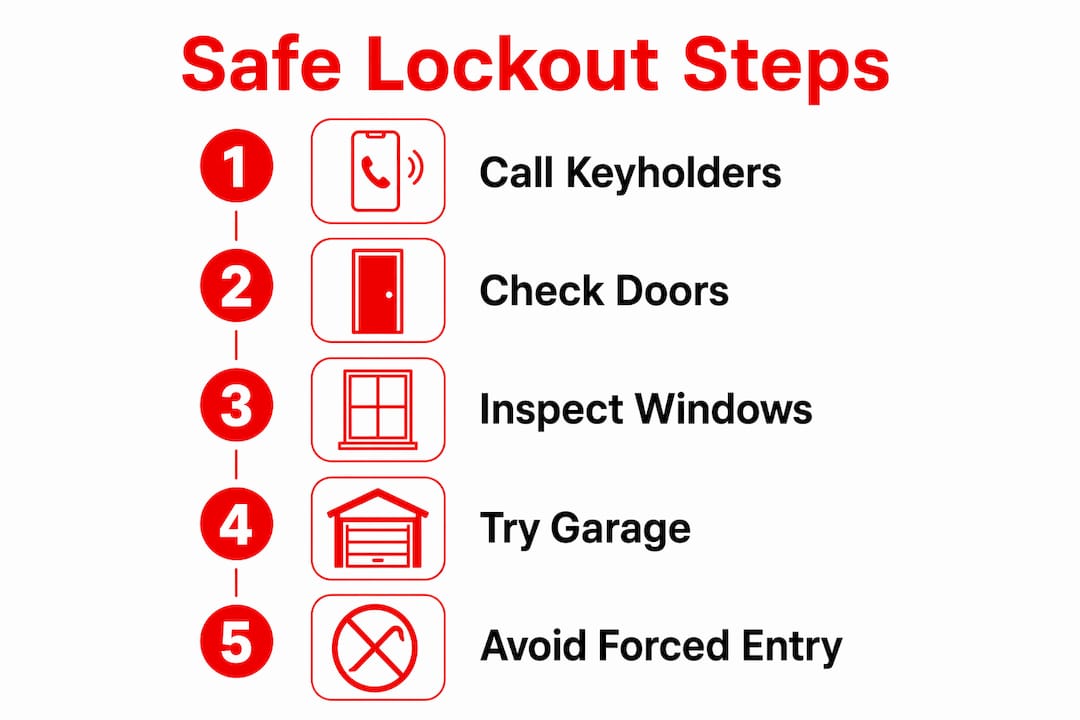
For everyone else, follow this sequence promptly:
Step 1: Call a household member, roommate, or anyone who may have a spare key.
Step 2: Check every other entry point — back door, side door, garage entry, ground-level windows.
Step 3: If you rent, call your landlord or property manager. They often hold a spare or have an emergency protocol.
Step 4: If no safe entry is available, call a licensed locksmith for non-destructive professional entry.
Step 5: If cost or wait time is a concern, ask for a firm all-in price before anyone dispatches.
Table of Contents
When is a lockout actually an emergency?
Most lockouts are inconvenient, not dangerous. But a few situations require 911, not a locksmith.
Call 911 immediately if:
A child is locked inside, especially in hot weather.
An elderly or medically vulnerable person is inside and unresponsive.
You smell gas or see smoke.
A pet is trapped in extreme heat or cold.
There is any active threat to life inside the home.
Emergency responders have the authority and training to force entry safely when lives are at risk. A locksmith does not have that authority in a true emergency, and calling 911 is the only correct response when someone inside is in immediate danger.
While you wait for responders:
Stay visible near the front of the property so emergency services can find you quickly.
Keep eyes on any window or door where the person inside might be visible.
Do not attempt to break a window or force entry yourself — you could worsen the situation or injure yourself.
If a child is near a window, talk to them calmly and keep them away from glass.
Pro Tip: If a child is locked inside on a hot day, tell the 911 dispatcher immediately — heat emergencies escalate fast, and dispatchers can prioritize the call accordingly.
What can you safely try before calling a locksmith?
Before you spend money on a service call, run through these checks in order. Many lockouts resolve without any professional help.
1. Call everyone who might have a key. Roommates, family members, a neighbor you gave a spare to — start here. It takes only a moment and costs nothing.
2. Try every door. Walk the full perimeter. Back door, side door, garage entry door, and any secondary access point. People are often surprised to find one unlocked.
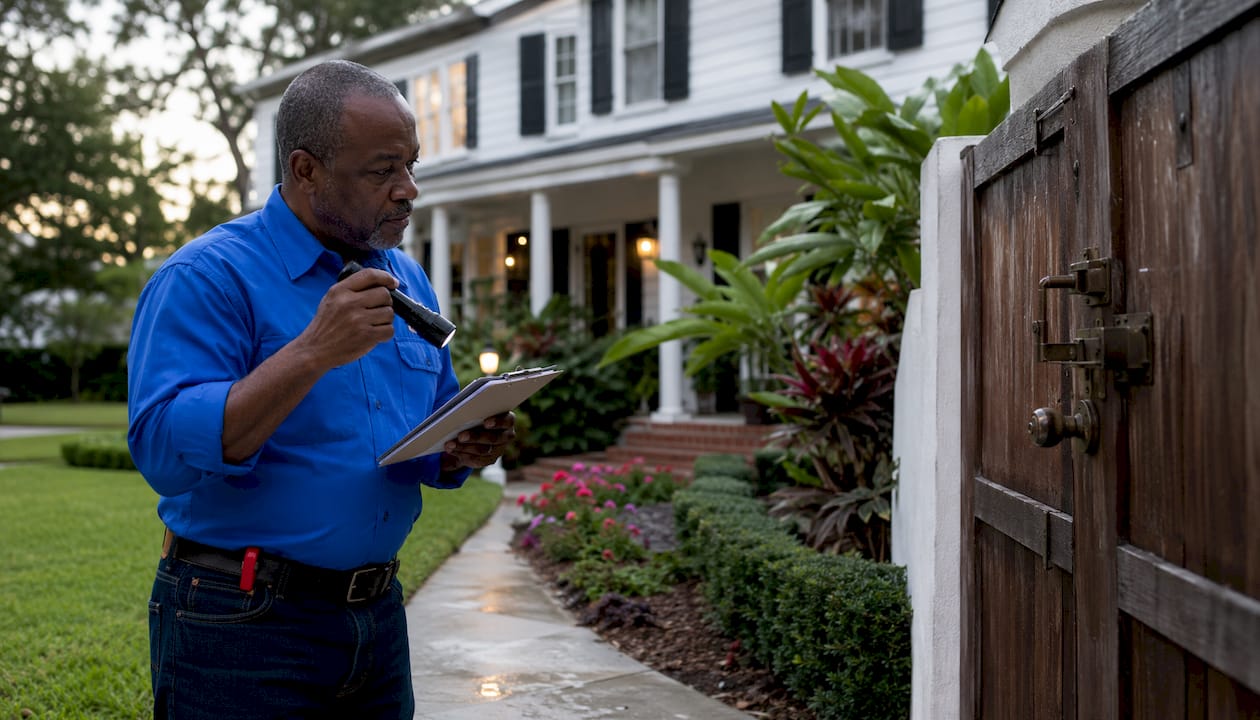
3. Check ground-level windows. A window left cracked open is a safe, non-damaging entry point. Never climb to a second-story window — the fall risk is not worth it.
4. Try the garage. If you have an attached garage with a working keypad, you may be able to enter through the garage and access the interior door.
5. Check sliding doors. Sliding glass doors sometimes have weaker latches. Lift and push gently — do not force.
Once you’ve confirmed all entries are locked, the next question is what type of lock you’re dealing with.
Spring latch vs. deadbolt: why it matters
A spring latch is the angled bolt that clicks shut automatically when you close the door. On older doors with spring latches, a flexible card (a loyalty card works better than a credit card) slid between the door and frame can sometimes push the latch back. This only works on doors where the latch is exposed, the door fits loosely, and there is no deadbolt engaged. On most modern exterior doors, this will not work.
A deadbolt requires a key or a locksmith. Full stop. No credit card, bobby pin, or paper clip will open a properly installed deadbolt without causing damage.
Panicking and reaching for a credit card or bobby pin is the most common mistake people make during a lockout. Professional locksmiths consistently report that rushed DIY attempts on modern locks cause jammed cylinders, bent latches, and scratched strike plates — damage that adds repair costs on top of the locksmith call. Controlled entry is almost always the cheaper route.
What not to try:
Kicking the door. This damages the frame, the strike plate, and sometimes the door itself — repairs can run into hundreds of dollars and may void hardware warranties.
Drilling the lock yourself. Without the right tools and technique, you’ll destroy the cylinder and still need a locksmith.
Improvised picks on high-security hardware. Modern pin-tumbler and disc-detainer locks resist amateur picking, and a jammed pin is harder to fix than a locked one.
Pro Tip: If you find an unlocked ground-level window, remove the screen carefully from outside by pressing the release tabs at the corners — do not pry or bend the frame. Climb through feet-first, and make sure the window can support your weight before committing.
When should you call a locksmith?
Call a locksmith when no safe entry point is available and no one with a spare key can reach you within a reasonable time. Other clear triggers: a key broke off inside the lock, the door is double-locked with a deadbolt, or it’s late at night with no other options.
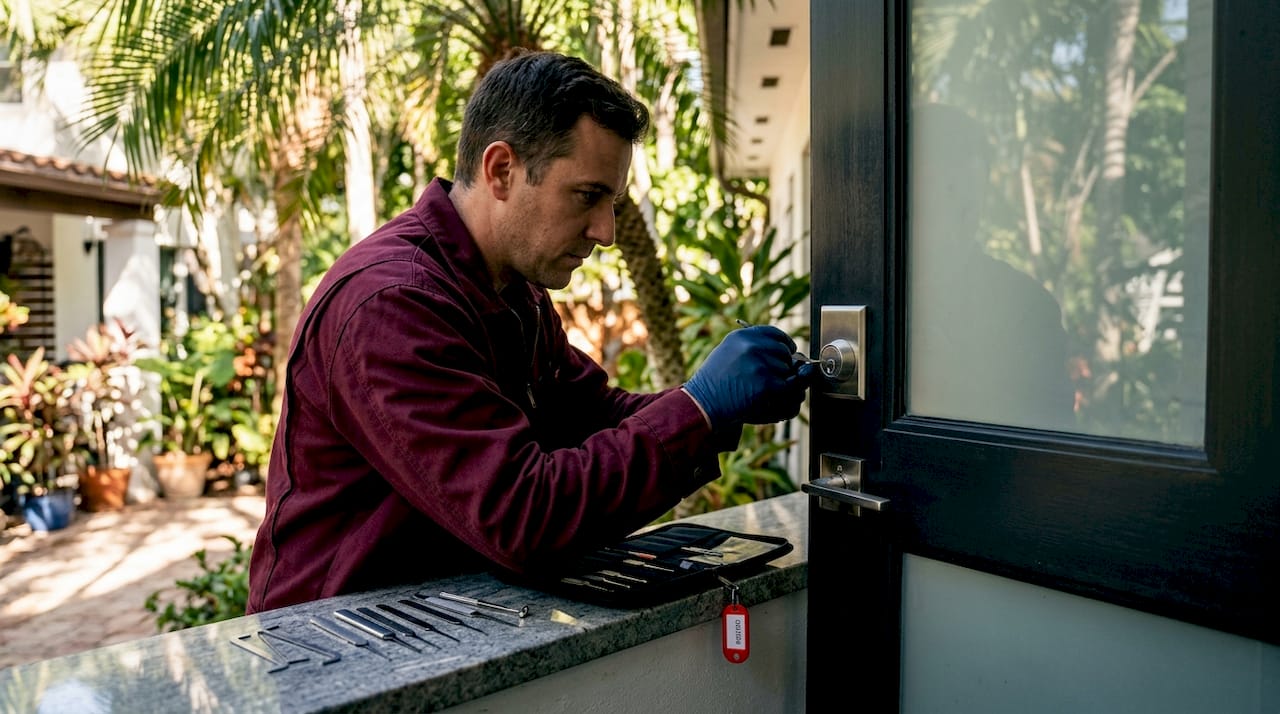
A qualified locksmith will identify the lock type first, then choose the least invasive technique — picking, bypass, or shimming — before considering drilling. Drilling is a last resort, used only when non-destructive methods have failed. After entry, a good locksmith checks the latch, bolt, and strike plate to confirm nothing was damaged in the process.
What to expect on cost and timing
Emergency locksmith fees in the U.S. vary by region, time of day, and lock complexity. After-hours and weekend calls typically carry a premium over standard daytime rates. Always ask for a firm, all-in price before anyone arrives — a reputable provider will give you one.
Before they arrive, ask:
What is the total price, including the service call and any labor?
Is drilling included in that price, or is it extra?
What is your estimated arrival time?
Can you confirm your company name, license number, and vehicle description?
When the locksmith arrives, expect:
They will ask for a photo ID and proof that you live at the address (a piece of mail, a lease, a utility bill).
They should arrive in a marked or identifiable vehicle and show their own ID.
They will attempt non-destructive entry first.
You should receive a written invoice before you pay.
Police generally do not open doors for routine lockouts. According to ADT’s consumer guidance, law enforcement responds when there is an immediate safety risk — for a standard house lockout, the correct route is a spare key, your landlord, or a licensed locksmith.
Renters: call your landlord or property manager first
If you rent, your landlord or property manager is often your fastest and cheapest option. Many hold master keys or have an established emergency protocol for exactly this situation.
Before you call a locksmith, contact:
Your property manager’s main line (check your lease for the emergency number).
Your building superintendent if you live in a multi-unit building.
A neighbor who may have the property manager’s direct contact.
That said, after-hours lockout assistance from a property manager often comes with a fee. Some leases specify that the tenant pays for locksmith work if the lockout was their own fault. Read your lease before you assume it’s covered.
Have these ready when you call:
Your photo ID.
A copy of your lease or your unit number and move-in date.
The property manager’s emergency contact number (save this in your phone before you ever need it).
Pro Tip: Before your property manager dispatches anyone, ask directly: “Is there an after-hours fee, and who pays for it?” Getting that answer upfront prevents a surprise charge on your next rent statement.
How do you prevent the next lockout?
One lockout is an accident. Two is a pattern. A few low-cost changes eliminate most of the risk.
Prevention options at a glance:
Spare key with a trusted neighbor or family member. Free, reliable, and the fastest rescue when you’re locked out. Works best for single-family homes where you know your neighbors.
Secured exterior lockbox. A combination lockbox mounted near the door holds a spare key without hiding it under a mat (where anyone can find it). Good for families and frequent travelers.
Smart lock or keypad entry. Eliminates the key entirely. You enter a code, use a phone app, or both. Ideal for people who step out frequently without their keys. Note: renters typically need landlord approval before installing one.
Key duplication. Get at least two copies made and distribute them. Key duplication is inexpensive and takes minutes.
Never hide a key under a doormat, in a fake rock, or above the door frame. These spots are the first places a burglar checks.
Building a habit that sticks
Designate one consistent spot for your keys — a hook by the door, a specific pocket, a bowl on the counter. Consistency beats memory.
Do a two-second pocket check every time you close the door behind you. Keys, phone, wallet.
If you have a smart lock, set it to auto-lock after a set interval so a forgotten lock is never the issue.
Smart keypads and secure lockboxes are repeatedly cited by industry experts as the most effective prevention tools — they remove the key from the equation entirely.
Pro Tip: For families with kids who frequently lose keys, a keypad smart lock is a better long-term investment than repeated key duplication. One code for everyone, changed whenever needed.
How do you spot a legitimate locksmith vs. a scam?
Locksmith scams are common, especially in high-stress situations. A fraudulent provider will quote a low price on the phone, then demand far more once they’re at your door. Here’s how to verify before you commit.
Verification checklist — before they arrive:
Search the company name online and check for a local address and reviews on Google or the BBB.
Ask for the company’s license number (required in most U.S. states).
Confirm the name of the technician who will arrive.
Get a firm, all-in price quote — not a “starting from” estimate.
Red flags to watch for:
The quoted price on the phone is unusually low (under $35), then jumps dramatically at the door.
The technician arrives in an unmarked vehicle with no company branding.
They cannot or will not show ID.
They insist on drilling immediately without attempting non-destructive entry.
They demand full cash payment before the work is done.
A legitimate locksmith will always ask for your ID and proof of residency before opening your door. This is not an inconvenience — it is a legal and ethical safeguard that protects you and your neighbors from unauthorized entry. If a locksmith skips this step entirely, that is a red flag, not a courtesy.
Proof-of-ownership checks matter because a locksmith who opens a door without verifying identity could be facilitating a break-in. Reputable providers take this seriously, and you should expect it.
One more warning: after-hours and weekend calls carry premium rates. Ask for the total price — including the service call, labor, and any parts — before you agree to anything. A trustworthy provider will give you that number without hesitation.
Key Takeaways
When you’re locked out of your home, the fastest and safest path back inside is a quick perimeter check, a call to anyone with a spare key, and a licensed locksmith if those fail — never a forced or destructive entry.
Point | Details |
Safety comes first | Call 911 immediately if anyone inside faces a medical, fire, or heat emergency — skip DIY entirely. |
Check all entries first | Walk the full perimeter: back door, side door, garage, and ground-level windows before calling anyone. |
Renters: call the landlord first | Property managers often hold spare keys and have emergency protocols; confirm any after-hours fees upfront. |
Verify before you hire | Ask for a license number, firm all-in price, and photo ID from any locksmith before work begins. |
Locksmithfromiami | Locksmithfromiami (Progressive Locksmith Cerrajero) provides 24/7 licensed, bonded, and insured residential lockout service in Miami and Homestead, FL. |
The part most lockout guides get wrong
Most articles about being locked out spend too much time on DIY tricks that don’t work on modern hardware and not enough time on the decision that actually matters: when to stop trying and call a professional.
Here’s what I’ve seen from the field: the readers who end up with the biggest repair bills are not the ones who called a locksmith too quickly. They’re the ones who spent 45 minutes with a credit card and a YouTube tutorial on a deadbolt, then called a locksmith anyway — with a scratched cylinder and a bent strike plate on top of the original problem.
The credit-card trick works on a narrow set of older spring-latch doors. On any modern exterior door with a deadbolt, it does nothing except waste time and occasionally damage the latch mechanism. The same goes for bobby pins. These techniques exist in popular culture because they look satisfying on screen, not because they work reliably in real life.
The smarter move is a 60-second perimeter check, one phone call to anyone with a spare key, and then a direct call to a licensed, insured locksmith if those fail. That sequence gets you back inside faster, costs less in total, and leaves your door and lock in working condition. Prevention is even better: a keypad lock or a spare key with a trusted neighbor eliminates the problem entirely.
Need immediate help? Locksmithfromiami is ready right now
When you’ve run through the checklist and still can’t get back inside, you need a professional who shows up fast and does the job right the first time.
Locksmithfromiami (Progressive Locksmith Cerrajero) provides 24/7 emergency residential lockout service across Miami and Homestead, FL. Every technician is licensed, bonded, and insured. The process is straightforward: you call, they confirm your address and give you a firm price, they arrive with ID, and they attempt non-destructive entry first. No surprise charges. No unmarked vans. No pressure to drill when a pick will do.
Whether it’s 2 AM on a Sunday or the middle of a workday, the team at Locksmithfromiami responds to house lockouts with the same standard: verify identity, protect the door, get you inside. Check the full range of locksmith services or call directly to get an ETA and a price before anyone rolls.
Useful sources
These are the primary references used to build this guide. Each one offers additional depth on a specific aspect of the lockout process.
Jack Cooper — Locked Out of House: What To Do First: Covers immediate safety triggers, when to call 911, and why forced entry creates more problems than it solves.
eufy US — What to Do If Locked Out of House: Practical walkthrough of secondary entry checks, landlord contact steps, and smart-lock prevention options.
Lock Docs Locksmith — Locked Out of Your House? Here’s What to Do: Professional locksmith perspective on why panicked DIY attempts fail and how locksmiths approach non-destructive entry.
Zillow Learn — Locked Out of Apartment: Renter-focused guidance on landlord protocols, after-hours fees, and lease-term considerations.
ADT — What to Do If You’re Locked Out of Your Home: Explains the role of police in lockouts (limited to safety emergencies) and the recommended non-emergency sequence.
Checkatrade — Locked Out of Your House: Details locksmith service capabilities including non-destructive entry, broken-key extraction, rekeying, and when drilling is appropriate.
Wikipedia — Locksmithing: Background on lock types, picking techniques, and the professional standards that govern the trade.
This article is general information, not legal or professional advice. Lockout policies, fees, and local regulations vary. Confirm current rules and costs with your landlord, local authorities, or a licensed locksmith for your specific situation.
Recommended
Comments