

Mortise Lock vs Cylindrical: Which One Fits Your Door?

For main entries and high-traffic commercial doors, choose a mortise lock. For pre-drilled residential doors and fast retrofits, choose a cylindrical lock. The deciding factor isn’t brand or price. It’s ANSI/BHMA grade, the industry’s performance benchmark, and Grade 1 is the threshold you want on any door that takes serious daily traffic or faces street-level security risk.
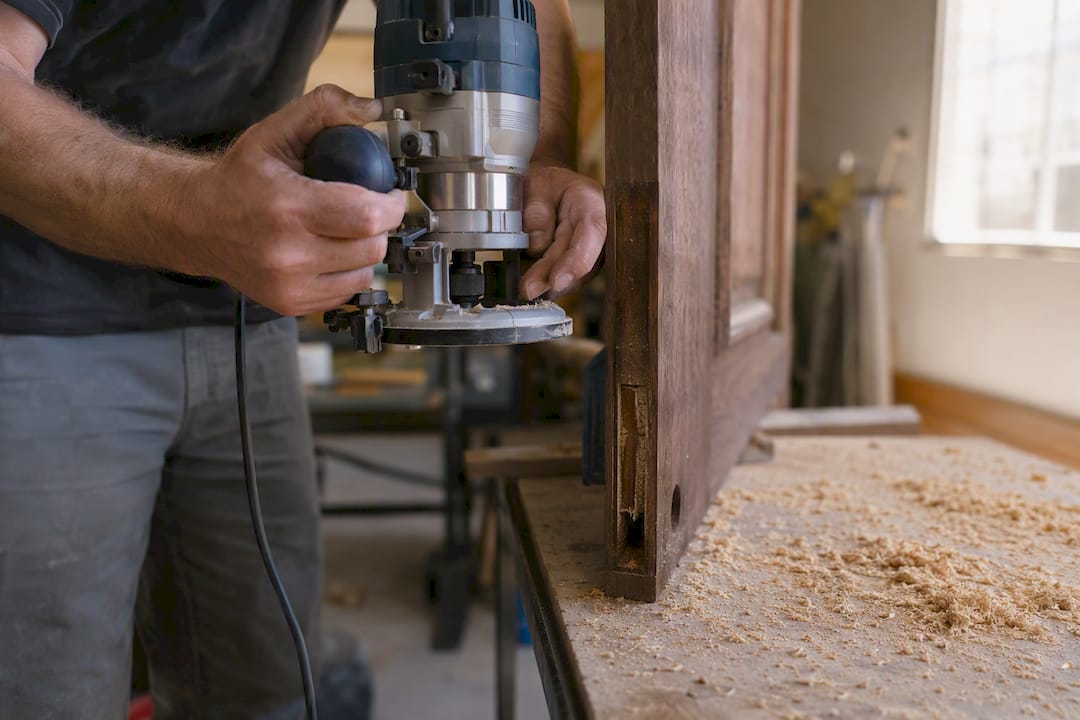
The physical difference matters too. Cylindrical locks drop into a standard 2-1/8 inch cross-bore, the same round hole you’ve probably seen on every front door in your neighborhood. Mortise locks need a rectangular pocket routed precisely into the door edge, which is a job for a professional locksmith, not a Saturday DIY project. That distinction drives almost every other decision in this comparison.
Main entry, commercial, or high-cycle door? Lean mortise, or at minimum a reinforced Grade 1 cylindrical setup.
Interior door, bedroom, office suite, or pre-bored residential door? A quality cylindrical lock does the job.
Retrofitting an older door? Check whether it’s already cross-bored or mortise-pocketed before you assume which format fits.
Key Takeaways
Choosing between a mortise lock and a cylindrical lock comes down to door function and traffic volume, with ANSI/BHMA grade and frame reinforcement mattering more than format alone.
Point | Details |
Match format to door role | Mortise for main entries and high-cycle commercial doors, cylindrical for interior and pre-hung residential doors. |
Grade beats brand | A Grade 1 rating under ANSI/BHMA A156.2 matters more than which format you pick. |
Reinforcement often beats conversion | A reinforced strike plus a Grade 1 cylindrical lock frequently outperforms cutting a new mortise pocket. |
Installation drives cost gap | Cylindrical installs in minutes on pre-bored doors; mortise requires precise professional pocket routing. |
Check the frame first | Repeated lock problems often trace back to frame and strike issues, not the lock body itself. |
Table of Contents
Mortise Lock vs Standard Cylindrical: Construction and Real-World Advantages
Cylindrical (Bored) Locks: How They Work and When They Make Sense
Mortise vs Cylindrical Locks: Security, Cost, and Electrification Compared
Choosing Between Mortise and Cylindrical: Your Decision Checklist
Why the “Just Pick the Stronger Lock” Advice Misses the Point
Mortise Lock vs Standard Cylindrical: Construction and Real-World Advantages
A mortise lock is built around a solid steel box case that sits inside a pocket cut into the door edge. That case houses the latch, deadbolt, and often an anti-friction latch mechanism together in one unit, with a faceplate visible on the door edge and separate cylinders and trim mounted through the face. It’s a more complex assembly than most homeowners picture when they think “door lock.”
That complexity pays off structurally. Because the mortise case is boxed steel recessed into the door itself, forced entry attempts to distribute impact across a wider section of the door rather than concentrating stress at a single bore point. That’s a core reason mortise locks are commonly specified for high-traffic commercial doors, from apartment lobbies to hotel corridors to storefronts that see hundreds of openings a day.
Mortise locks also offer functional range that cylindrical locks can’t always match:
Separate control of latch and deadbolt, useful for offices that need push-button privacy without full locking
Trim options (levers, knobs, escutcheons) that swap independently of the lock body
Electrification options, since the boxed case has room for solenoids and motors without weakening the mechanical structure
Pro Tip: If you’re specifying a mortise lock for a business entry, ask your locksmith whether the trim and cylinder can be replaced independently down the road. That’s often cheaper than replacing the entire lock body when a key format changes or trim wears out.
The tradeoff is installation. Cutting a mortise pocket requires precise routing, alignment with the strike, and door prep that most hardware stores can’t sell you a fix for on the spot. Expect to hire a locksmith for a proper mortise install, and expect the labor bill to reflect that precision.
Cylindrical (Bored) Locks: How They Work and When They Make Sense
A cylindrical lock, sometimes called a bored lock, works through a much simpler mechanism. The lock chassis passes through a cross-bore drilled through the door face, with a smaller bore on the door edge for the latch. That’s the standard 2-1/8 inch hole you’ll find on nearly every pre-hung residential door sold today.
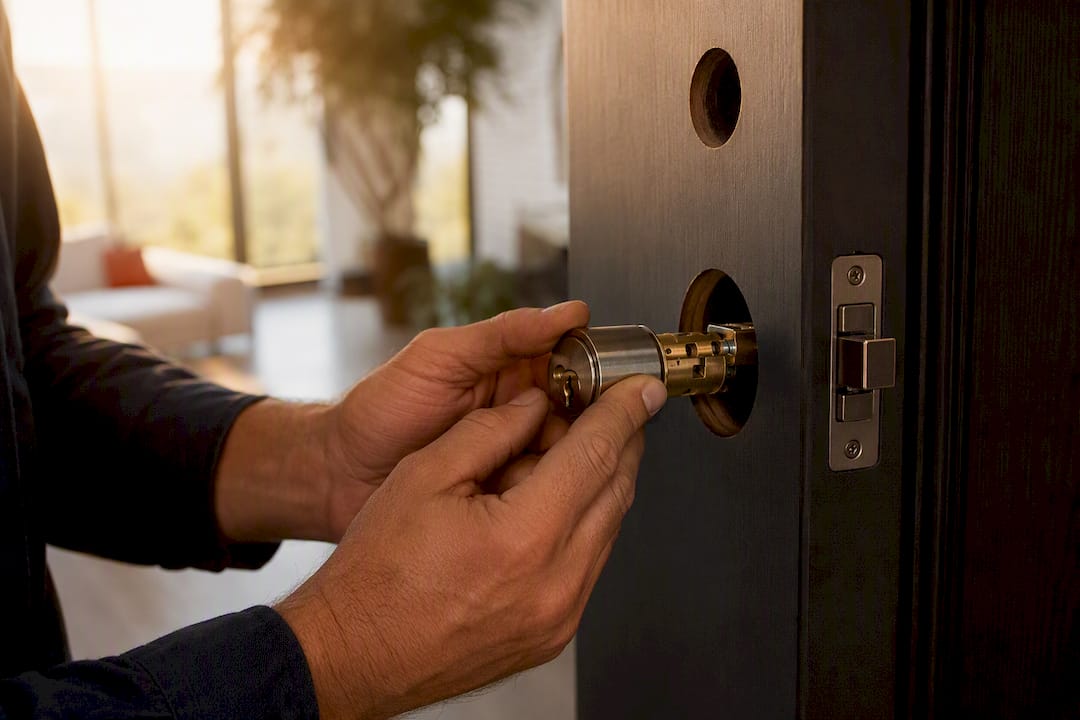
Grade matters more here than with mortise locks, because cylindrical hardware spans a wider quality range. ANSI/BHMA grading runs from Grade 1 (commercial and high-security use) down through Grade 2 (light commercial or upgraded residential) to Grade 3 (standard residential). A Grade 1 cylindrical lock closes a lot of the security gap with mortise hardware, though it’s worth remembering that comparing Grade 1 mortise to Grade 1 cylindrical is comparing two different engineering solutions, not two versions of the same product.
Cylindrical locks earn their popularity through practical benefits:
Fast installation on any pre-bored door, often without specialty tools
Lower hardware cost across most grade tiers
Easier field service since chassis components are largely standardized
Broad compatibility with smart lock and keyless entry retrofits
For interior doors, apartment units, and most single-family homes, a well-specified Grade 1 or Grade 2 cylindrical lock is the practical, cost-effective choice. It’s also the format that dominates smart lock and connected home hardware, since bored openings were designed with that retrofit market in mind.
Mortise vs Cylindrical Locks: Security, Cost, and Electrification Compared
Security starts with the case, not just the grade sticker. A mortise lock’s boxed steel case ties into a wider section of the door structure, which is why it tends to resist kick-in attempts better than a cylindrical chassis that concentrates stress near the bore. But grade and strike quality can narrow that gap significantly. A Grade 1 cylindrical lock paired with a reinforced strike plate and long screws into the frame stud can outperform a poorly installed or lower-grade mortise setup. Installation quality is often the bigger variable than format alone.
Durability plays out over years, not just a spec sheet. Grade 1 hardware is tested to cycle-life minimums under ANSI/BHMA A156.2, and on a high-cycle commercial door, that difference shows up as fewer service calls over a decade. Mortise locks also tend to age well on the labor side: because trim and cylinders are replaceable without swapping the whole case, lifetime labor costs on high-cycle doors often come in lower than repeatedly replacing a full cylindrical chassis.
Cost tells a different story upfront. Cylindrical hardware and installation labor both run lower across the board, since there’s no pocket to route. Mortise pocketing adds meaningful labor time regardless of hardware grade.
Electrification favors mortise for complex access control. The boxed case has physical room for solenoids and motors, giving broader integration options for card access and electronic entry systems. Cylindrical locks can absolutely be electrified, and many smart lock products are built specifically for that bore size, but the mortise format still offers more flexibility for complex commercial access control setups.
Security: Mortise case distributes force; cylindrical closes the gap with Grade 1 hardware and a reinforced strike.
Durability: Mortise trim is replaceable; cylindrical chassis often needs full swaps on high-cycle doors.
Cost: Cylindrical wins on hardware and labor upfront; mortise can win on lifetime service cost.
Electrification: Mortise offers more room for access-control hardware; cylindrical covers most smart lock use cases.
Installation and Retrofit: What to Expect on Your Door
Installing a cylindrical lock on a door that’s already cross-bored is fast work, often done in around 20 minutes by anyone comfortable with a screwdriver. Mortise installation is a different category entirely. Routing a clean, properly aligned pocket into a door edge takes precision tools and experience, which is why it belongs to a professional locksmith rather than a weekend project.
Check door construction first. Solid-core wood doors and hollow metal commercial doors both accept mortise pockets, but hollow metal doors often arrive pre-prepped from the manufacturer for one format or the other.
Confirm existing prep before ordering hardware. A pre-hung residential door almost always has a cylindrical cross-bore already, making a switch to mortise a full door-edge modification, not a simple swap.
Consider alternatives to full conversion. Frame reinforcement, an upgraded security strike plate, or an electrified Grade 1 cylindrical lock often solve the same security concern without cutting new prep.
Watch for installation shortcuts. Poor strike alignment, undersized screws into the frame, or skipped reinforcement at the door and frame undercut even the best hardware.
Pro Tip: Before you assume you need a full mortise conversion, ask your locksmith to inspect the frame. Half the “security upgrades” we get called for turn out to be strike and frame issues, not lock format issues.
Cost and Lifecycle: What You’re Really Paying For
Grade 1 mortise hardware typically costs more upfront than Grade 1 cylindrical hardware, and mortise pocketing adds a real labor premium on top of that gap. That combination is exactly why so many property managers default to cylindrical locks for interior and secondary doors.
But upfront price isn’t the full picture. On a high-cycle commercial entry, a mortise lock’s replaceable trim and cylinder often mean the lock body itself never needs full replacement, which trims lifetime labor costs even though the initial install cost more.
Grade 1 mortise: higher hardware and labor cost, longer service life on the lock body itself
Grade 1 cylindrical: lower hardware and labor cost, more predictable full-chassis replacement cycles
Reinforced Grade 1 cylindrical plus upgraded strike: often the smarter budget move for a retrofit project rather than cutting a mortise pocket into an already-prepped door
For most residential retrofits and light commercial interiors, that last option, a Grade 1 cylindrical lock with a properly reinforced frame, delivers the best return per dollar spent.
Choosing Between Mortise and Cylindrical: Your Decision Checklist
Estimate daily cycles on the door. A door opened 200+ times a day needs Grade 1 hardware regardless of format; a bedroom door doesn’t.
Inspect the existing door prep. A cross-bored door favors cylindrical; an already-mortised door favors staying mortise unless you’re doing a full door replacement.
Check door material and thickness. Solid-core wood and hollow metal doors both accept either format, but confirm your installer has worked with your specific door type.
Ask about backset and faceplate fit. Mismatched backset measurements are a common cause of sloppy installs and later lock failures.
Confirm electrification compatibility. If you’re planning access control down the road, ask whether the format you’re choosing supports it without a full hardware swap.
Get warranty and rekeying details in writing. Ask specifically how cylinders are rekeyed and what’s covered if the lock fails within the warranty period.
Watch for red flags. Vague “Grade 1” claims without a spec sheet, undersized strike plates, or an installer who brushes off frame reinforcement are all signs to get a second opinion.
If a mortise install is on the table, bringing in a locksmith who can walk the door prep with you beforehand saves you from mismatched hardware orders and return trips.
What We Check Before Recommending a Format
, and one pattern holds across almost every job: the door and frame tell you more than the customer’s stated preference does. Before recommending mortise or cylindrical, we check the door core, the frame condition, and a realistic estimate of daily cycles.
Most repeat service calls we get aren’t lock failures at all. They’re frame and strike problems that never got addressed the first time around. A Grade 1 cylindrical lock on a reinforced frame will outlast a poorly installed mortise lock every time.
and both reflect how often frame reinforcement, not lock replacement, solves the actual problem a customer called about.
Why the “Just Pick the Stronger Lock” Advice Misses the Point
Most guides frame this choice as mortise versus cylindrical, full stop, as if one format wins on paper and that settles it. That framing ignores what actually causes lock failures in the field: bad strikes, thin frames, and rushed installs. A Grade 1 cylindrical lock on a properly reinforced frame beats a cheaply installed mortise lock, every time.
The conventional advice also undersells retrofit reality. Most homeowners have a cross-bored door, and converting it to mortise means real door-edge surgery, not a quick swap. For the vast majority of residential situations, the smarter move is grading up the cylindrical hardware and fixing the frame, not chasing the format that sounds more premium.
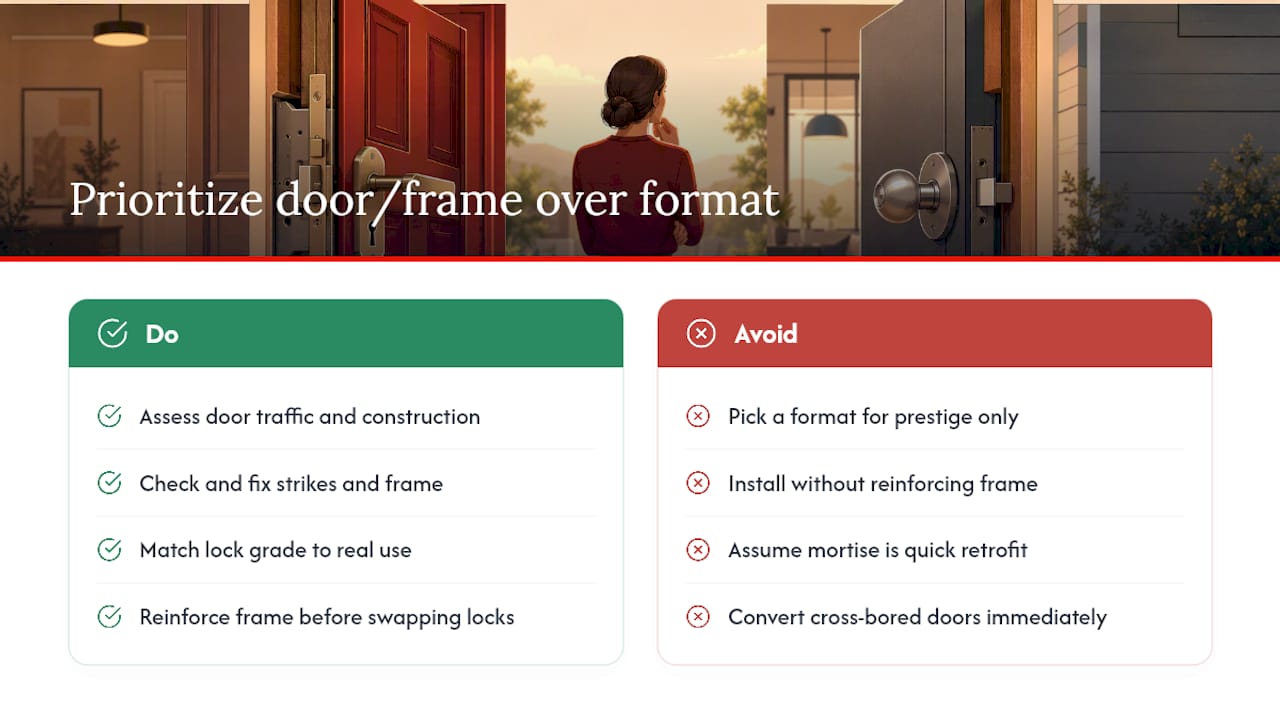
Prioritize the door’s actual traffic and construction first. Then match grade to that reality. Format matters, but it’s the second decision, not the first.
Sources
Recommended
Comments