

Back Inside in 15–30 Minutes: Miami Non Destructive Entry Locksmith Steps

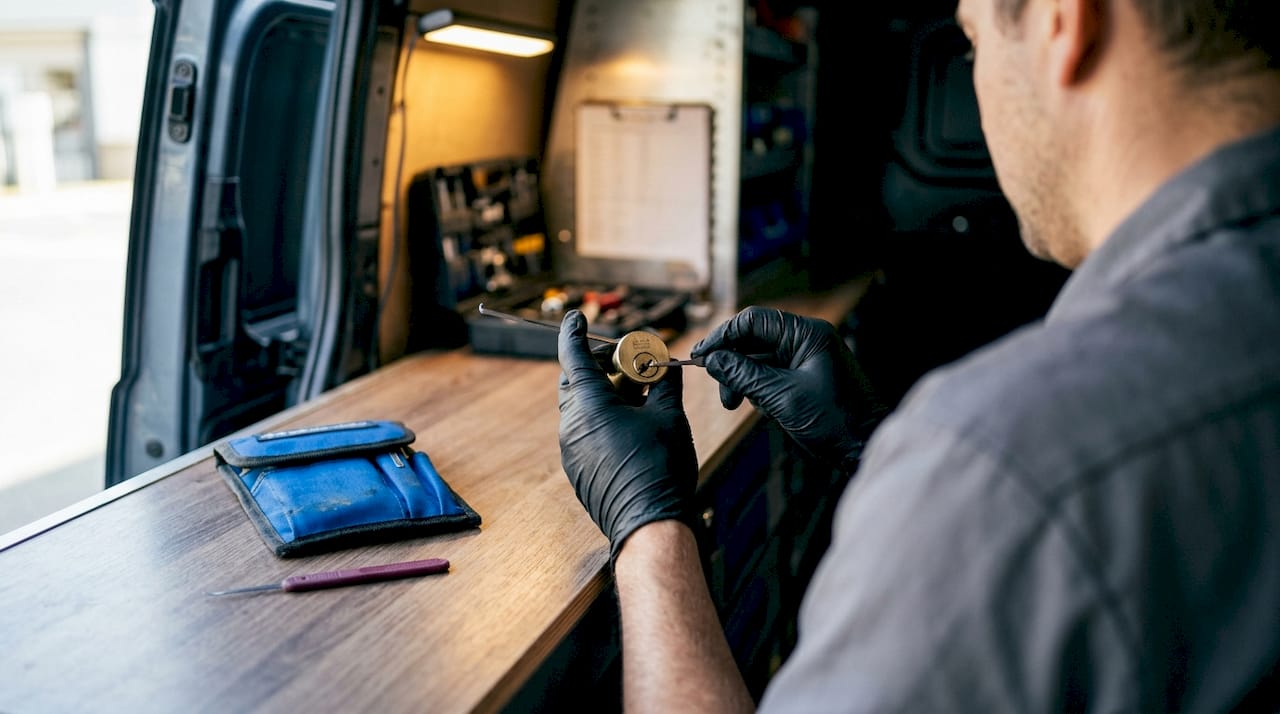
A non-destructive entry locksmith opens locked doors, cars, and cabinets without drilling, cutting, or otherwise ruining your hardware. Call one when you’re locked out but the lock itself is undamaged. Before you hire anyone, ask if they try non-destructive methods first and only recommend drilling as a last resort. A properly trained technician will explain their plan before touching your lock, not after.
TL;DR:
Non-destructive entry methods like lock picking and bypassing mostly work on healthy, standard locks and can save costs and prevent hardware damage.
Lock picking and decoding tools are common, but a professional should explain their initial method before attempting drilling to avoid unnecessary damage.
High-security cylinders, seized locks, or jammed multi-point systems often require invasive methods, and technicians should diagnose these limits upfront.
Verifying credentials, insurance, and asking about the planned method beforehand help ensure a qualified technician will prioritize non-destructive techniques.
Smart locks and keyless systems are shifting the approach toward electronic diagnostics, but fully digital models with no backup key may leave no non-destructive options.
Table of Contents
How to Vet a Non-Destructive Entry Locksmith Before They Arrive
Non-Destructive vs. Destructive Entry: Choosing the Right Approach
Legal Considerations Around Locksmithing and Non-Destructive Entry
Why “Try Everything Else First” Should Be the Standard, Not the Exception
Call Progressive Locksmith - Cerrajero Miami Before You Call a Drill
What Non-Destructive Entry Actually Means
Non-destructive entry, often shortened to NDE, is the practice of regaining access to a locked door, vehicle, or cabinet without harming the lock, the frame, or the surrounding hardware. The goal is simple: get you back inside while leaving your existing lock fully functional afterward. Techniques like lock picking, bypassing, decoding, and impressioning all fall under this umbrella, and they preserve your lock’s integrity when the mechanism allows it.
The appeal comes down to three things:
Cost savings. You skip the price of a new lock or door repair.
Speed. Most residential lockouts resolve in minutes once a technician is on-site.
Less disruption. You keep your original keys, your existing hardware, and your home’s appearance intact.
Picture a locked front door with the key sitting on the kitchen counter, a car door locked with the fob inside, or an office manager who lost the master key to a filing cabinet. All three are textbook NDE situations. The lock isn’t broken. It’s just locked, and someone qualified needs to work around that without wrecking it.
The Tools and Techniques Locksmiths Actually Use
Knowing the names of the tools your technician might use helps you tell a professional apart from someone winging it with a coat hanger.
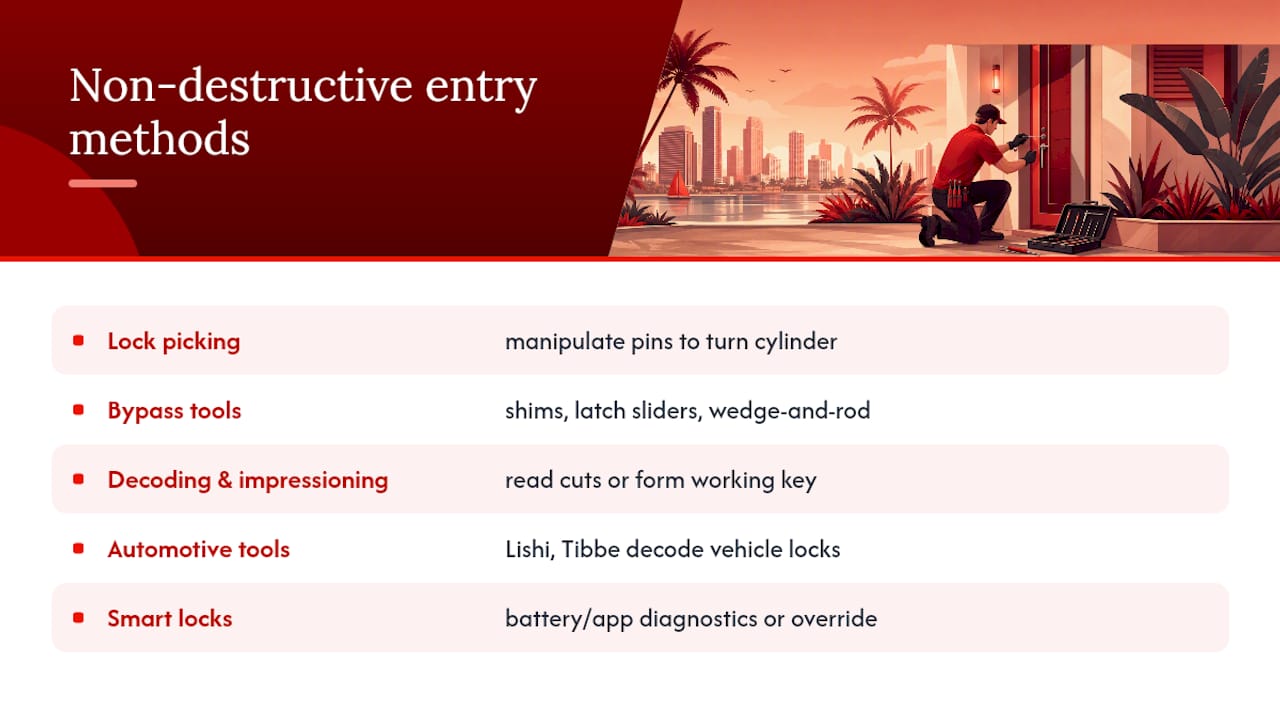
Lock picking remains the foundation of NDE work. A technician manipulates the pins inside a standard pin-tumbler lock using pick sets, tension wrenches, and sometimes electric pick guns, coaxing the cylinder to turn without a key.
Bypass tools skip the lock mechanism entirely. Shims slide past spring latches, latch sliders reach through door gaps to trip a bolt, and wedge-and-rod tools work through small openings on certain vehicle doors. These methods work fastest on doors and cars with predictable hardware.
Decoding and impressioning let a technician determine a lock’s exact cut pattern, either by reading the pins directly or by creating a working key from a blank pressed into the lock. This takes more time but avoids opening the mechanism at all.
Automotive-specific tools like Lishi picks and Tibbe extractors have become standard in the field, letting technicians decode and open vehicle locks without trimming panels or drilling ignition cylinders. Most emergency automotive locksmiths lead with these before considering anything more invasive.
Smart locks and keyless systems need a different approach entirely, often involving battery checks, app diagnostics, or manual override features built into the hardware rather than traditional picking.
Pro Tip: Ask your locksmith which method they plan to try first. If they can’t name one before they’ve even looked at your lock, that’s a sign they’re guessing rather than assessing.
When NDE Works, and When It Doesn’t
NDE succeeds most often when the lock itself is healthy but simply engaged. A working deadbolt, a car door with an intact lock cylinder, or a filing cabinet with standard hardware are all good candidates.
It fails, or becomes impractical, in a handful of predictable situations:
Seized or corroded mechanisms. Years of rust or dried lubricant can lock pins in place no amount of manipulation will free.
Snapped keys. A key broken flush inside the cylinder sometimes needs extraction tools before picking is even possible.
High-security cylinders. Locks with sidebar mechanisms or restricted keyways are built specifically to resist picking and bypassing.
Multi-point gearbox failures. European-style multi-point locks that jam mid-cycle often require partial disassembly rather than pure NDE.
A professional should explain these limits honestly, on-site, before reaching for a drill. If a technician wants to drill within thirty seconds of arriving without trying anything else, ask why.
One more thing: if someone is trapped inside, if there’s a fire or gas smell, or if a pet or child is in danger from heat, call 911 first. Locksmiths solve lock problems. Emergency services handle life-threatening ones, and every minute matters more than the door.
How to Vet a Non-Destructive Entry Locksmith Before They Arrive
A few questions on the phone tell you almost everything you need to know about who’s about to show up at your door.
Start with credentials. Ask whether the technician is certified through the Associated Locksmiths of America (ALOA), which maintains training and standards programs across the industry. Ask if the company carries insurance and if the technician will arrive with photo identification and a marked vehicle. These aren’t formalities. They’re how you avoid handing your address to someone unqualified.
Then get specific about the job itself:
What’s your estimated arrival time?
What’s the call-out fee, and does it change based on time of day?
What method will you try first, and will you ask before switching to drilling?
Will I get a written estimate before work begins?
Reputable providers won’t promise a guaranteed outcome over the phone. A trustworthy technician will explain what’s likely, what might change once they inspect the lock, and what your cost options are rather than quoting a flat number blind. Pricing typically shifts based on time of day (late-night and holiday calls usually carry a surcharge), the complexity of the lock, and whether parts need replacing afterward.
The ALOA’s certification framework exists precisely because “locksmith” isn’t a protected title everywhere, and anyone can claim it. Verifying credentials before the truck pulls up costs you thirty seconds and saves you a much bigger headache later.
What Happens When the Technician Arrives
A legitimate visit follows a predictable shape, and knowing it helps you spot a rushed or careless job.
Identity and authority check. Expect to show ID or otherwise confirm you have the right to access the property or vehicle.
Quick inspection. The technician examines the lock type, condition, and likely method before touching a tool.
Method selection. Picking, bypassing, or decoding gets tried first, with protective pads or films used to avoid scuffing the door or frame.
Testing afterward. Once open, the lock gets tested repeatedly to confirm it still functions normally.
Timelines vary by job. A straightforward residential lockout usually wraps up in 15 to 30 minutes. Automotive lockouts often move even faster. Commercial jobs, especially with multiple locks or older hardware, can take longer. Before leaving, a good technician cuts replacement keys on request and flags any upgrade worth considering, like a worn cylinder that’s due for replacement soon.
Who’s Behind This Guide
This guide was written by Julio Borroto for readers dealing with real lockouts, not hypothetical ones. Progressive Locksmith - Cerrajero Miami operates as a 24/7 locksmith service covering emergency lockouts, key duplication, and lock repair for homes, vehicles, and businesses in the Miami and Homestead, FL area. The approach follows the same principle laid out throughout this guide: try non-destructive methods first, explain the plan clearly, and treat drilling as a last resort rather than a default. Fast response times and straightforward pricing matter just as much as the technique used once the technician is on-site.
Staying Safe During a Non-Destructive Entry Job
Picking and bypassing carry real, if modest, risks worth understanding before someone starts working on your lock.
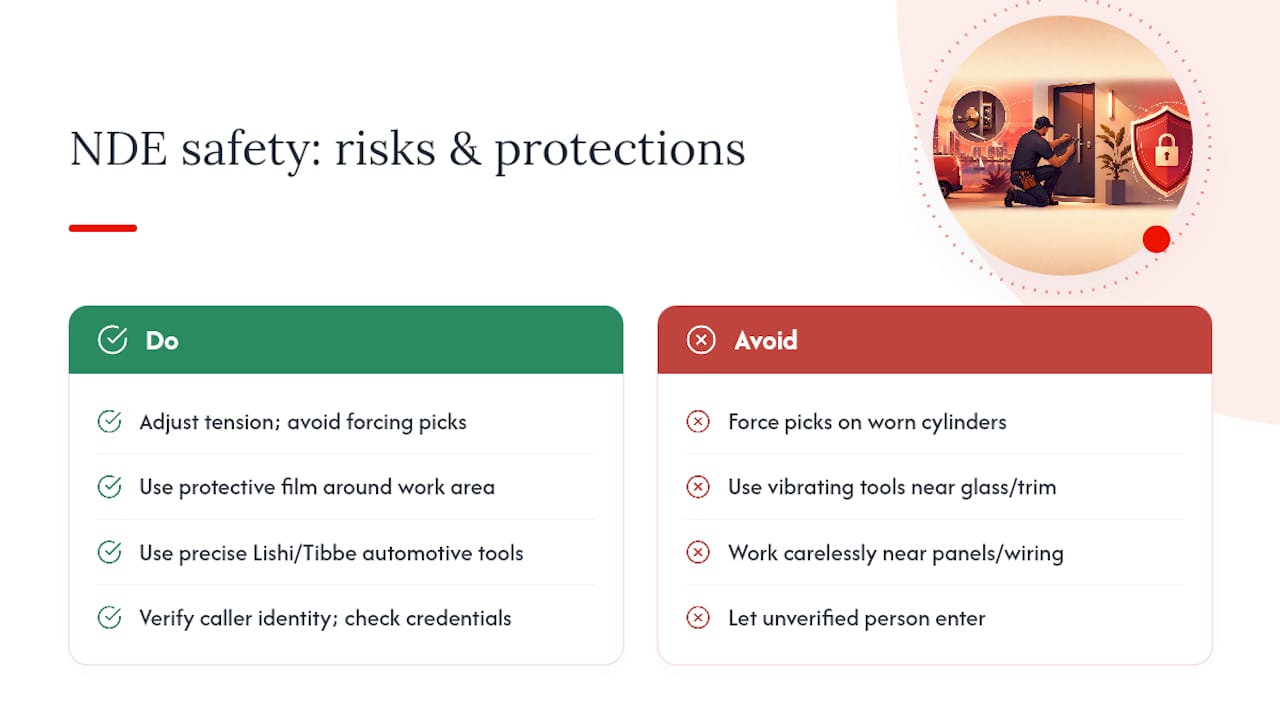
The biggest risk isn’t to you. It’s to the lock itself if the wrong technique gets applied with too much force. Aggressive picking on a worn cylinder can snap a pin or damage the springs inside, turning a simple lockout into a lock replacement. That’s why an experienced technician adjusts pressure based on what they feel through the tension wrench rather than forcing a technique that isn’t working.
There’s also a safety dimension around tool use itself. Pick guns and electric picks vibrate the lock rapidly, and improper handling near glass doors or delicate frames can crack trim or finish. Reputable technicians use protective films around the work area specifically to prevent this kind of cosmetic damage.
For vehicle lockouts, there’s an added wrinkle: airbags and electronic systems sit close to some lock mechanisms, and bypass tools used carelessly near a door panel can interfere with sensors or wiring. This is part of why Lishi and Tibbe tools have become the standard for automotive work. They’re precise enough to avoid that kind of collateral contact.
The last risk is more about trust than technique: letting an unverified person attempt entry at all. A locksmith who skips the identity check or works without visible credentials creates a security risk that has nothing to do with picks or drills. Confirming who’s at your door matters as much as how they open it.
Non-Destructive vs. Destructive Entry: Choosing the Right Approach
The difference between these two categories comes down to one question: can the lock survive the process?
Non-destructive methods, picking, bypassing, decoding, and impressioning, leave the lock fully intact and reusable afterward. They take somewhat longer in some cases but cost you nothing extra in hardware or repair. This is the right call for a standard residential lockout, a car door lock, or a functional but locked filing cabinet.
Destructive methods include drilling out the cylinder, cutting a padlock shackle, or forcing a bolt. These are faster in specific situations and sometimes the only option left. A seized deadbolt that’s rusted solid, a high-security cylinder resistant to picking, or a lock where the key snapped deep inside the mechanism may leave no non-destructive path forward.
The decision shouldn’t be made lightly or rushed. A technician who defaults to drilling to save time, when picking would have worked, is choosing convenience over your wallet. On the flip side, a technician who spends forty-five minutes fighting a corroded lock that clearly needs replacement is wasting your time and money on a lost cause. The right call depends on an honest, on-site read of the lock’s actual condition, not a blanket policy in either direction.
Legal Considerations Around Locksmithing and Non-Destructive Entry
Locksmith licensing requirements vary significantly depending on where you live, and it’s worth understanding the basics before you let anyone near your locks.
Some tools used in NDE work, including bump keys, occupy a gray area. Bump keys can be illegal to possess or use for unauthorized entry in certain jurisdictions, even though they’re legal to own in others. The distinction almost always comes down to intent and authorization rather than the tool itself. A licensed locksmith using a bump key on a property they’ve been hired to access is operating legally. Someone using the same key without permission is not.
This is exactly why verifying that a locksmith is licensed and insured matters beyond simple trust. It’s your protection against liability if something goes wrong during the job, and it’s confirmation that the person working on your property has met a baseline standard set by their local jurisdiction or a body like ALOA. Licensing rules differ by state and municipality, so what applies in one city may not apply thirty miles away.
If you’re ever asked to provide identification or proof of residency before a locksmith will begin work, that’s not the technician being difficult. It’s part of standard, responsible practice designed to prevent unauthorized entry, and it protects you as much as it protects them.
Preventing Lockouts and Choosing NDE-Friendly Locks
The best lockout is the one that never happens, and a few habits go a long way toward avoiding the next 2 AM call.
Spare key placement matters more than most people think. A hidden lockbox mounted somewhere discreet, or a trusted neighbor holding a spare, beats keeping a single set of keys as your only access point. For vehicles, a spare fob stored at home cuts your emergency-locksmith calls dramatically.
When it comes to choosing locks, not all hardware is equally friendly to non-destructive methods. Standard pin-tumbler deadbolts remain among the easiest for a technician to pick or bypass cleanly if you’re ever locked out, which keeps repair costs low. High-security cylinders with sidebar mechanisms offer excellent resistance to unauthorized picking, which is great for security but means a legitimate lockout might take longer or, in rare cases, require drilling.
If you’re upgrading locks specifically with future lockouts in mind, ask your locksmith which models balance strong security with reasonable serviceability. A door hardware specialist can also help address frame or hinge issues that make doors prone to sticking or jamming, which causes a surprising number of “lockouts” that are really hardware problems in disguise.
How Smart Locks and Keyless Systems Are Changing NDE
Keyless entry has moved from novelty to mainstream fast, and it’s reshaping what “non-destructive entry” even means.
Keypads, fobs, and mobile credentials are now common in commercial buildings, and cloud-managed access systems give businesses audit trails, remote management, and role-based permissions that traditional locks never offered. For a business owner, this means a lockout might no longer be a locksmith problem at all. It might be a battery, a software glitch, or an expired credential, all of which call for troubleshooting rather than picking.
This shift moves part of the job from purely mechanical work toward electronic diagnostics and credential management. A technician handling a smart lock failure needs to know how to check power sources, reset Bluetooth pairing, or verify network connectivity, alongside traditional lock skills for any mechanical backup cylinder built into the device.
For homeowners, smart locks with a physical key override still benefit from traditional NDE if the electronics fail but the mechanical backup remains intact. Fully keyless models without any physical override, however, sometimes leave no non-destructive path if the electronics die completely, which is worth considering before you install one.
Why “Try Everything Else First” Should Be the Standard, Not the Exception
Here’s what the data on this topic keeps circling back to: the technician’s approach matters more than any single tool in the bag. Anyone can buy a pick set. The judgment to know when picking is the right call, and when it’s a waste of everyone’s time, is what actually separates a good locksmith from a bad one.
The conventional advice tends to fixate on tools, teaching readers to recognize a Lishi pick or a tension wrench. That’s useful, but it misses the bigger point. The real signal of quality isn’t what’s in the toolkit. It’s whether the technician inspects before acting, explains the plan before starting, and treats drilling as a genuine last resort rather than the fastest way to bill and leave.
Readers should prioritize one thing above all else when vetting a locksmith: ask what happens if the first method fails, before it fails. That single question forces a technician to reveal whether they actually have a plan B or whether they’re going to escalate straight to your wallet. A provider willing to walk through that scenario upfront, calmly and specifically, is telling you something a certification badge alone never fully will.
— Julio Borroto
Call Progressive Locksmith - Cerrajero Miami Before You Call a Drill
One option is to choose a locksmith service that prioritizes your lock’s survival. While some providers reach for a drill because it’s faster to bill, our approach leads with non-destructive methods and only escalates when the lock itself leaves no other path, which keeps your existing hardware and your wallet intact.

When you call, you get a real assessment, not a script. Some locksmith services offer 24/7 availability for residential, automotive, and commercial lockouts in the Miami area, with technicians who explain their method before proceeding. Many locksmith providers also offer on-site key duplication and key programming to resolve lockouts efficiently. A professional locksmith will explain the need for lock replacement, if necessary, before proceeding.
Ready to get back inside without wrecking your door? Visit our workshop page to see how we work, or head straight to our home lockout services page to request help now.
Sources
For certification standards, check ALOA’s certification programs. For keyless system context, see the Kisi guide to keyless access.
FAQ
Are Bump Keys Illegal?
Bump keys are legal to own in many places, but using one for unauthorized entry can be illegal depending on your jurisdiction. The safest approach is hiring a licensed, insured locksmith rather than worrying about the tool itself.
What’s the Average Call-Out Fee for a Locksmith?
Call-out fees vary by location, time of day, and job complexity, with late-night or holiday calls typically carrying a surcharge. Always ask for the fee structure before the technician leaves for your address.
How Can I Open a Safe If I Lost the Key?
Safe entry depends heavily on the model and lock type, and a qualified locksmith will inspect it on-site to determine whether decoding or manipulation can open it without damage. Some older or damaged safes may require drilling as the only remaining option.
What Kind of Lock Can a Locksmith Not Open Non-Destructively?
Severely corroded or seized mechanisms, certain high-security cylinders with sidebar systems, and locks jammed by a snapped key deep inside the mechanism often resist non-destructive methods. In these cases, a professional will explain why drilling or lock replacement is the realistic path forward.
Recommended
Comments