

Pay $20 to $125, Not Hundreds: Rekey vs Replace Locks for Homeowners

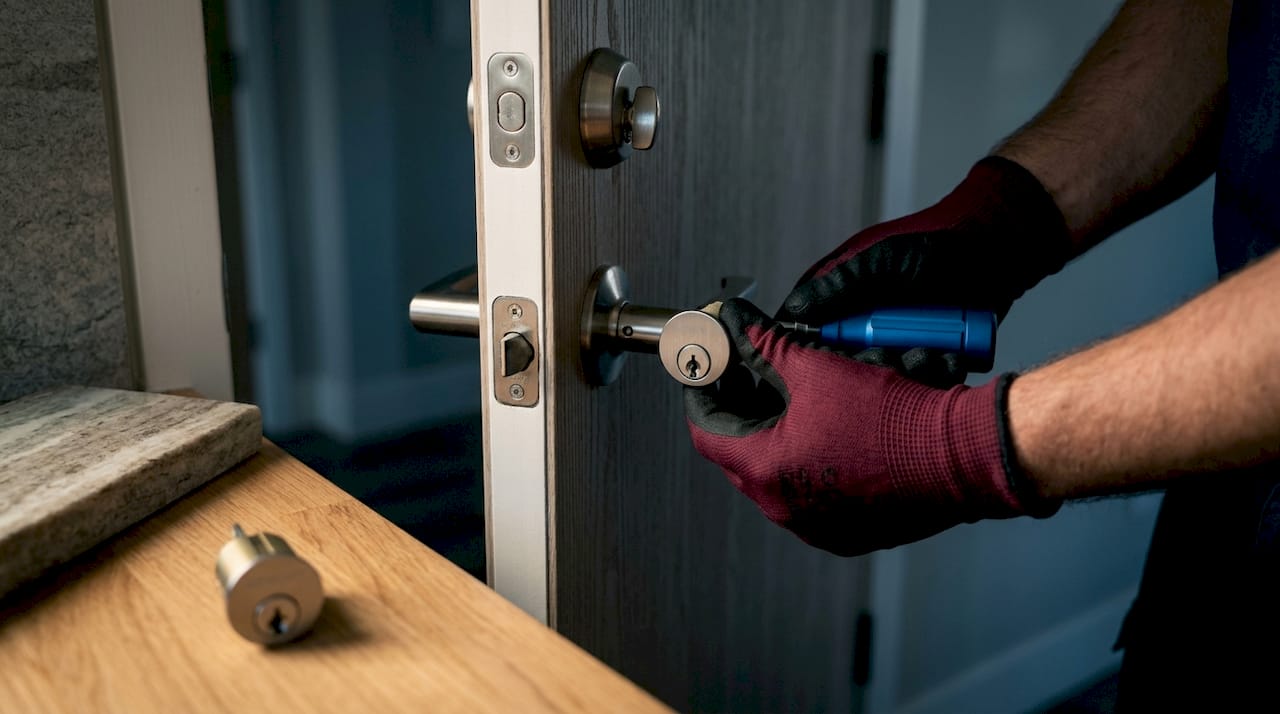
Rekey when your locks still work fine but you need to cut off old keys. Replace when the hardware is worn, damaged, or you want a real security upgrade. Rekeying runs cheaper and faster, typically $20 to $125 per cylinder, while replacement costs more because you’re paying for new hardware, not just labor. A locksmith can tell you which one your door actually needs in about ten minutes.
TL;DR:
Rekeying is ideal when hardware is intact but you need to revoke old keys or streamline access, typically costing $20 to $125 per cylinder.
Replacing locks is necessary when the hardware is worn, damaged, or you seek higher security, with costs often exceeding a few hundred dollars per door.
Most homeowners should rekey all compatible locks to one key if they want convenience and cost efficiency, especially after moving in or losing keys.
DIY rekeying is possible but risky; professional locksmiths use specialized tools and inspections to ensure security and proper installation.
An on-site technician can usually determine whether rekeying or replacing is best during a single visit, saving time and money on multiple service calls.
Table of Contents
Rekeying vs Replacing Locks: What Actually Changes
Rekeying swaps the pins inside your existing lock cylinder. Your hardware stays put on the door, but every old key stops working the moment the new pins go in. Replacing a lock means pulling the entire assembly, cylinder, bolt, and trim, and putting in a new one.
That distinction drives everything else about the rekey vs replace locks decision:
Rekeying solves a credential problem. You want certain keys to stop working, but the lock itself isn’t broken.
Replacing solves a mechanical or security problem. The lock is failing, damaged, or you want stronger hardware.
Keyed-alike setups let a locksmith rekey several compatible locks to one master key, though brand and keyway mismatches sometimes force replacement instead.
If your front door, back door, and garage entry all use compatible cylinders, rekeying the whole set to one key usually costs far less than replacing three locks to get the same convenience.
What Does It Cost to Rekey or Replace a Lock?
Money drives this decision more than most homeowners expect, and the gap between the two options is significant.
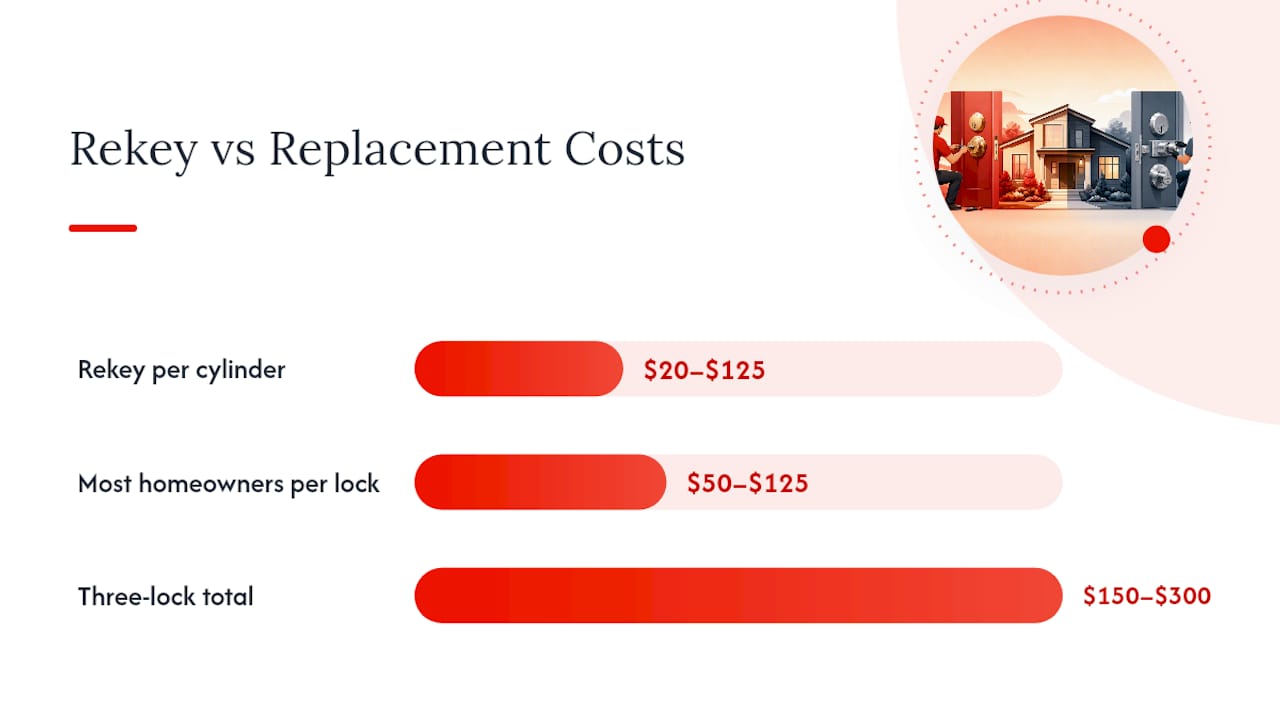
Rekeying a lock generally costs $20 to $125 per cylinder, with most homeowners paying $50 to $125 per lock once you factor in the locksmith’s service call fee. A three-lock home rekey often lands in the $150 to $300 range total.
Replacing a lock costs noticeably more because you’re buying new hardware on top of labor. Angi and other trade sources put full replacement, including a mid-range lock and installation, in the low-to-mid hundreds per door, with premium Grade 1 or smart lock hardware pushing the total higher.
Cost snapshot: A single-cylinder rekey often costs a third to a half of what full replacement runs on the same door, once you add the new hardware and matching labor time.
Emergency or after-hours calls typically carry a premium over standard daytime rates.
Regional labor rates and how many locks you’re doing in one visit both swing the final number.
Cylinder rekeying takes about 15 to 40 minutes per lock, while full replacement runs 30 to 60 minutes or more depending on the door and hardware.
When Should You Rekey Your Locks?
Rekeying makes sense any time the hardware is fine but you no longer trust who holds a key. Locksmiths generally point to four situations where rekeying is the right first move:
You just moved into a new home or apartment. You have no idea how many copies of the old keys exist or who has them.
You lost a key, had one stolen, or can’t account for one. Rekeying kills that key’s access instantly without touching the door hardware.
One lock feels compromised, but the mechanism still works smoothly. A former tenant, contractor, or ex-partner having a key is a credential issue, not a mechanical one.
You want several locks on one key. Rekeying compatible locks to a single keyway saves you from carrying five keys for one house.
Pro Tip: Rekey the day you get the keys to a new place, not the week after. Most break-ins involving a known former occupant happen in that early window before anyone thinks to change anything.
When Should You Replace Your Locks Instead?
Replacement is the right call when the problem lives inside the lock itself, not just in who holds the keys. Watch for these signs:
Sticking, grinding, or resistance when turning the key. Worn tumblers and pins wear out tolerances over time, and repeated rekeying accelerates that wear even without visible damage.
Play or wobble in the cylinder. A loose cylinder is a security gap, not a cosmetic quirk.
Evidence of forced entry or tampering. Scratches around the keyway, a bent strike plate, or a bolt that no longer throws cleanly all point to replacement, not repair.
You want higher security or key control. Upgrading to ANSI Grade 1 hardware, restricted keyways, or a smart lock requires new hardware since rekeying can’t add features a lock was never built with.
Mismatched brands across your doors. If your locks are different makes with incompatible keyways, replacement is often the only path to a single-key system.
If your door itself doesn’t close or latch properly, that’s sometimes a frame or alignment issue rather than the lock. It’s worth checking why a door won’t latch before assuming the lock is the culprit.
Can You Rekey Some Locks and Replace Others?
Most homes don’t need an all-or-nothing answer. A hybrid approach, replacing the doors that matter most and rekeying the rest, is what locksmiths recommend most often because it balances security against your budget.
Replace your front entry and any high-traffic exterior door first. These take the most wear and the most risk.
Rekey secondary doors, like the garage entry or a side door, if their hardware still tests out sound.
Ask the locksmith to inspect every lock on-site during one visit instead of guessing beforehand. That single audit often reveals which doors truly need new hardware.
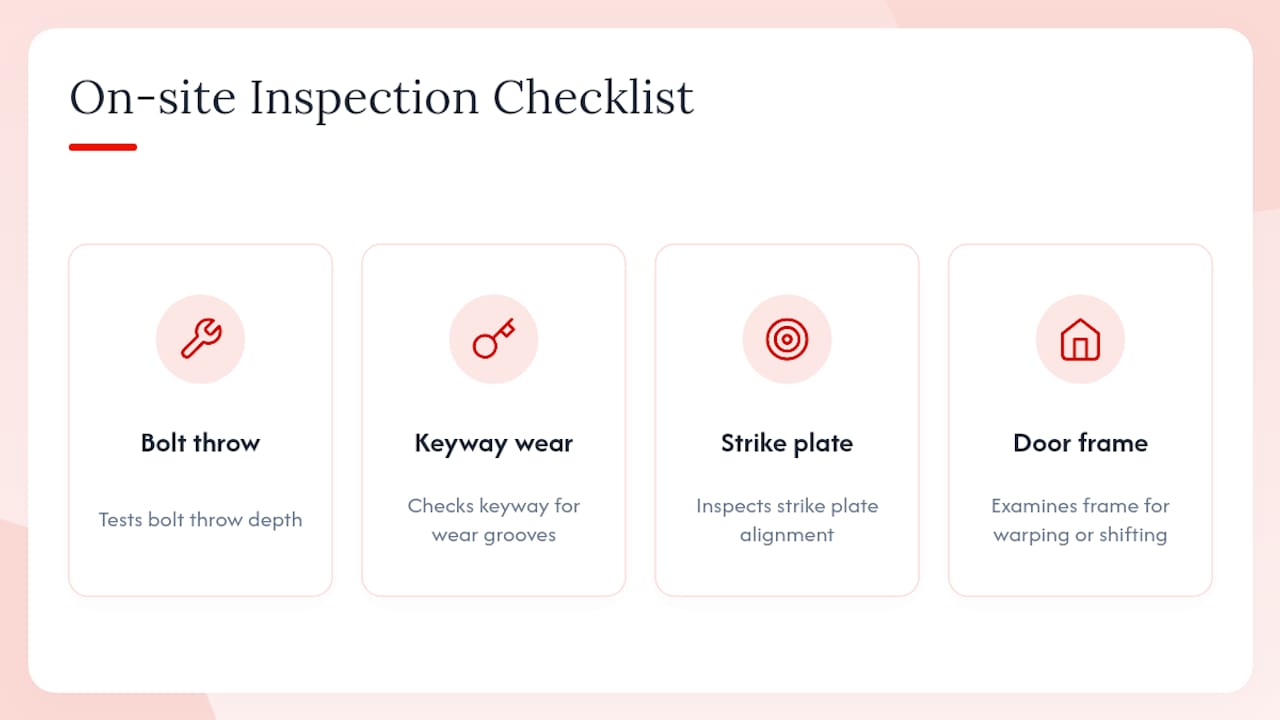
A proper inspection checks bolt throw distance, cylinder play, keyway wear, and the grade marking stamped on the lock body. Reviewing the different lock and keyway types beforehand helps you understand what the locksmith is actually checking.
Pro Tip: Have one technician handle both jobs in a single appointment. You avoid a second service call fee, and they can key your replaced locks and rekeyed locks to match.
Should You Rekey a Lock Yourself or Call a Locksmith?
Rekeying looks simple on YouTube, but the margin for error is smaller than it looks. A locksmith uses a follower tool during disassembly specifically to keep spring-loaded driver pins from launching across the room, and skipping that step is how DIY attempts turn a $20 fix into a ruined cylinder.
DIY kits cost about $10 to $25 and can work for a single, simple pin-and-tumbler lock if you’re patient and methodical.
Tools that matter: a follower tool, pin kit, and pinning tray. Without them, losing pins mid-job is common, and a lost pin means a lock that no longer secures your door correctly.
Replacement is rarely a good DIY candidate on exterior doors, since incorrect installation can leave gaps around the strike plate that defeat the whole point of upgrading.
Call a pro immediately for emergency lockouts, forced-entry damage, or any high-security or smart lock install where warranty and correct key blanks matter.
Roughly half the cost gap between DIY and professional rekeying disappears the moment you factor in a ruined cylinder, which is a full lock replacement you didn’t plan for.
Brands like Schlage have their own quirks worth understanding before you attempt a rekey, and this Schlage-specific locksmith guide covers compatibility questions that trip up a lot of DIYers.
Who’s Behind This Guide, and What Does a Real Inspection Look Like?
This guide was written by Julio Borroto, drawing on residential and commercial locksmith practice across lock mechanics, key control, and hardware security standards. This guidance is backed by real service work including emergency lockout response, key duplication, lock repair, and advanced key programming.
A proper on-site inspection isn’t a guess. The technician tests bolt throw depth, checks the keyway for wear grooves, inspects the strike plate alignment, and examines the door frame itself for warping or shifting that no lock, rekeyed or replaced, can fix on its own. That’s the difference between a quote based on a phone description and one based on what’s actually happening at your door.
What’s the One Rule I’d Give Every Homeowner?
Rekey at move-in and after any lost key. Replace the moment hardware feels suspect or you want an upgrade you can’t get from the locks you already own. Most homeowners lose money by delaying either decision, or by attempting a DIY rekey on a door that turns out to have deeper wear than it looked. If you’re not sure which category your lock falls into, that uncertainty itself is the signal to schedule an on-site audit rather than guess.
— Julio Borroto
Get Your Locks Rekeyed or Replaced the Same Day
A locksmith service can skip the guesswork this article just walked you through. Instead of diagnosing your own lock over the phone, a technician inspects it in person and tells you on the spot whether rekeying or replacing is the smarter move, then does the work in that same visit.

Services can cover rekeying, full lock replacement, keyed-alike setups across multiple doors, smart lock installation, and emergency response for lockouts across various locations. Call for a same-day estimate, or if you’ve already narrowed it down to a specific job, browse the full service catalog to see pricing and options before you book. For locked-out situations right now, the lockout service page gets a technician moving toward your address immediately.
Sources
FAQ
Is It Better to Rekey or Replace Locks?
It depends on the lock’s condition: rekey when the hardware works fine and you just need to cut off old keys, and replace when the lock is worn, damaged, or you want a security upgrade.
Does Rekeying Mean Replacing the Entire Lock?
No. Rekeying only changes the internal pins so old keys stop working, while the existing lock body, cylinder housing, and hardware stay exactly where they are.
How Much Does Rekeying Usually Cost?
Rekeying typically runs $20 to $125 per cylinder, with most homeowners paying $50 to $125 per lock once the service call fee is included.
Can You Rekey a Lock Without Changing the Lock?
Yes, that’s the entire point of rekeying. A locksmith opens the existing cylinder, swaps the pins, and hands you new keys, all without removing or replacing the lock hardware itself.
Recommended
Comments