

Glass Within 3 Feet? Which Deadbolt Keeps Homeowners Safe

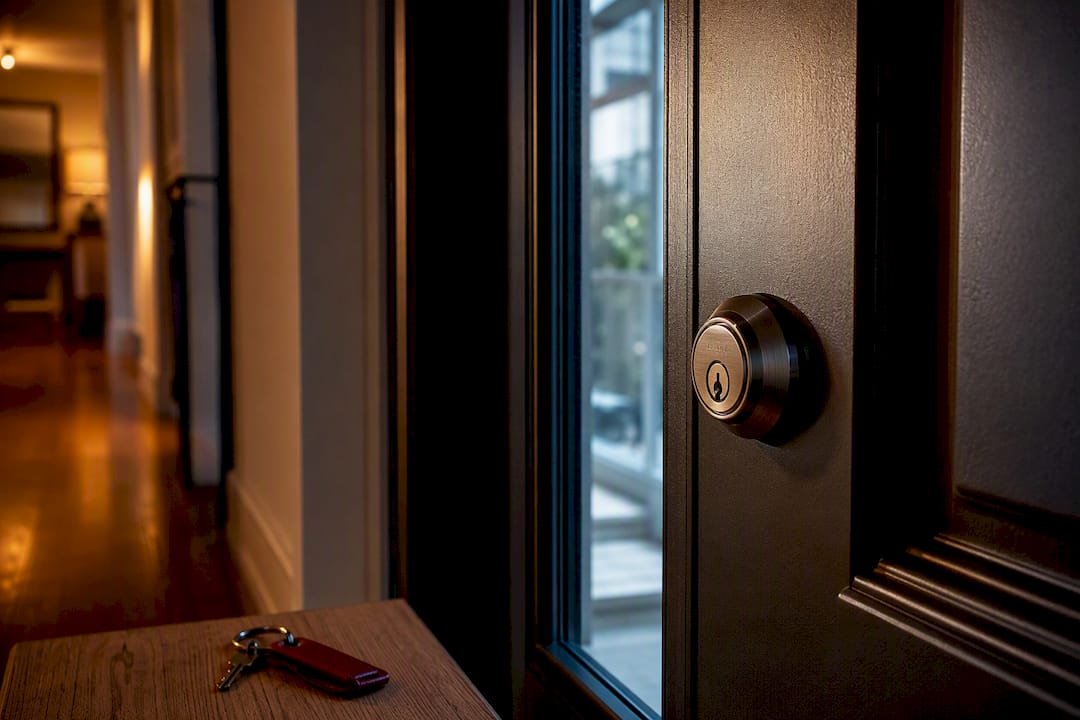
For most homes, a single cylinder deadbolt is the right call because it lets you exit fast in an emergency without hunting for a key. A double cylinder deadbolt only earns its keep in specific situations, like a door with glass close enough for someone to reach through, and even then, it comes with a real fire-safety trade-off you need to plan around. Before you install one, check your local fire code and consider whether a safer alternative solves the same problem.
TL;DR:
Double cylinder deadbolts are only advisable if nearby glass presents a reach-through attack risk, and even then, safety trade-offs must be carefully addressed.
Fire safety codes in many jurisdictions restrict or prohibit double cylinder locks on required egress doors, especially from bedrooms or primary escape routes.
Installing security measures like laminated glazing, reinforced strike plates, or hinge reinforcement offers better safety and security than relying solely on a double cylinder deadbolt.
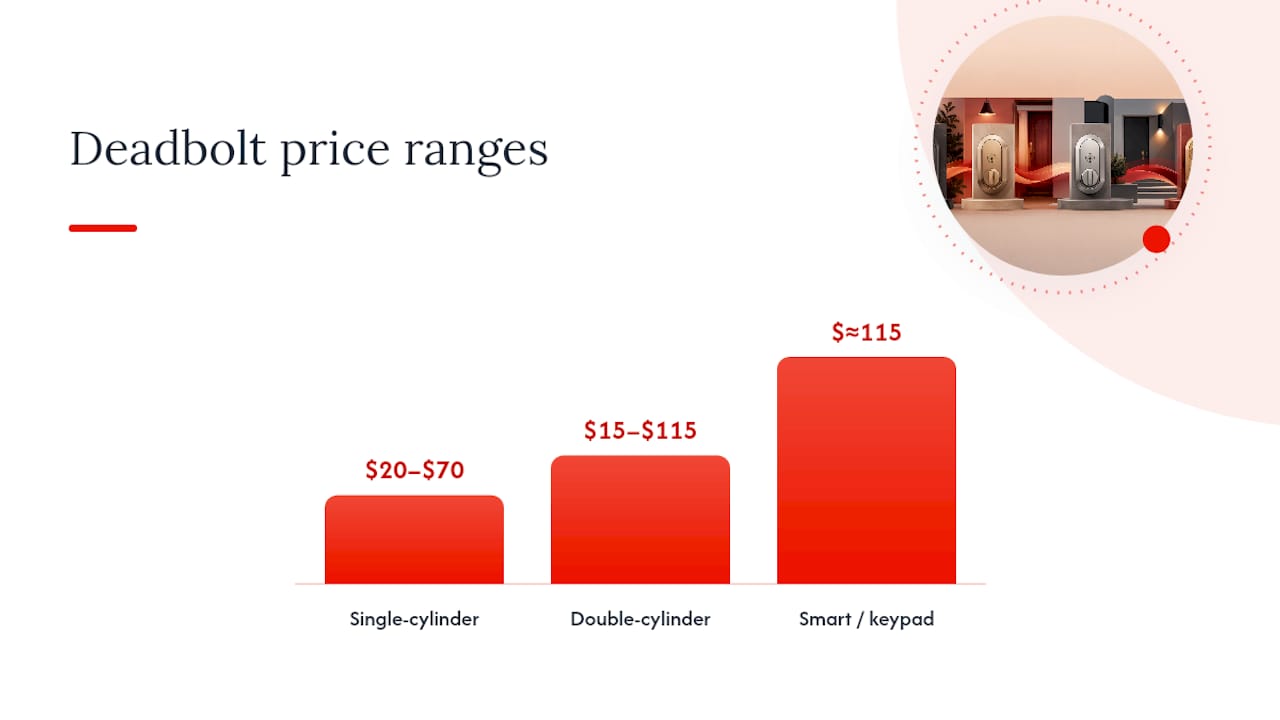
Budget costs for deadbolts range from $20 to $115, with professional installation recommended if the door has structural issues or specific code requirements.
Most homeowners and locksmiths find that single cylinder locks provide sufficient safety, ease of use, and compliance for typical residential doors.
Table of Contents
Single vs Double Deadbolt: What’s the Actual Difference?
The difference comes down to what happens on the inside of your door, not how strong the bolt is. A single cylinder deadbolt is keyed on the exterior and operated by a thumb-turn on the interior, which is why it’s the standard choice for most residential exterior doors in the United States. You twist a knob, the bolt slides back, and you’re out the door in under a second.
A double cylinder deadbolt removes that thumb-turn entirely. It requires a key on both sides, which means someone standing inside your house needs a key just as much as someone standing outside. That design exists for one reason: to stop an intruder from breaking a nearby window and reaching in to unlock the door by hand.
A few variations are worth knowing about:
Convertible deadbolts can switch between single and double cylinder configurations, giving you flexibility if your needs change.
Electronic and keypad deadbolts often preserve a keyless interior release, so you get access control on the outside without sacrificing quick exit on the inside.
Grade 1, 2, and 3 deadbolts refer to strength and durability ratings, a separate spec from the cylinder question entirely.
That last point matters more than most homeowners realize. Cylinder type controls egress and reach-through risk. It has almost nothing to do with how hard the bolt is to kick in, which depends on the door assembly itself, including bolt length, strike plate, and hinge reinforcement.
Pros and Cons of Each Deadbolt Type
Here’s how the two stack up when you weigh security against safety.
Double cylinder deadbolts:
Block the classic “break the glass, reach in, turn the thumb-latch” entry method, since there’s no thumb-turn to grab.
Make sense in commercial settings, storage rooms, or any restricted-access point where controlling both sides matters more than fast exit.
Require you to always have a key on hand, even when you’re just trying to leave your own house.
Create measurable delays during emergencies, which building and fire codes increasingly restrict on doors that serve as required exits.
Single cylinder deadbolts:
Let you exit instantly with no key required, which is why they remain compliant with egress rules in most jurisdictions.
Are simpler for every household member to use correctly, including kids, guests, and older adults.
Can be vulnerable if a window or sidelight sits within arm’s reach of the lock, since a broken pane gives an intruder a straight shot at the thumb-turn.
That reach-through risk is real but fixable with glazing upgrades or hardware changes, not a reason to abandon single cylinder locks outright.
Pro Tip: If your front door has a sidelight or glass panel within about three feet of the lock, that’s the specific scenario where a double cylinder starts to make sense, but only if you also solve the emergency-exit problem it creates.
Most locksmiths view the thumb-turn on a single cylinder lock as a life-safety feature first and a convenience second. The small theoretical security gain from a double cylinder rarely outweighs that for a typical family home.
Fire Codes and Emergency Exit Risks You Need to Know
A double cylinder deadbolt can turn a quick escape into a frantic search for keys during a fire, a break-in, or a medical emergency. That’s not a hypothetical. Fire safety codes in many jurisdictions either restrict or outright prohibit double cylinder locks on doors that serve as a required means of egress, especially bedroom exits and primary escape routes.
Local rules vary quite a bit by state, county, and even by building type, so don’t assume your neighbor’s setup is legal for your house. Before installing a double cylinder lock, call your local fire marshal’s office or building department and ask directly.
If you already have one installed and you’re not ready to swap it out, these steps reduce the risk without eliminating it:
Store a key in a quick-release container mounted near the door, positioned where it can’t be reached from outside through broken glass.
Walk every household member through the exit process, including kids and overnight guests, so nobody freezes during an actual emergency.
Avoid double cylinder locks entirely on any door that’s your only exit from a room, particularly bedrooms.
Ask a locksmith whether a Grade 1 single cylinder upgrade solves your original security concern without the egress trade-off.
How to Decide Which Deadbolt Fits Your Door
Run through this checklist before you buy anything:
Check for reachable glass. Measure the distance from your lock to the nearest window or sidelight. Anything under three feet is a genuine reach-through risk.
Confirm the door’s role as an exit. If it’s a required egress point, especially from a bedroom, single cylinder is almost always the safer and often the legally required choice.
Think about who lives there. Homes with young children, older adults, or anyone with mobility limitations benefit from the instant exit a thumb-turn provides.
Consider how often the door gets used. High-traffic doors favor single cylinder for pure convenience; low-traffic storage or utility doors have more flexibility.
Factor in rental or commercial use. Tenants and employees need to exit fast too, and commercial code requirements often mirror residential fire-safety rules.
If your main entry door has no nearby glass, stick with a quality single cylinder lock. If you’ve got a genuine reach-through threat and you’re still unsure how to solve the egress side of the equation, that’s exactly when a site visit from a locksmith pays for itself.
Better Ways to Solve Reach-Through Risk
Security experts generally recommend layering your defenses rather than leaning on a double cylinder to solve every problem. A double cylinder lock addresses one narrow threat while introducing a new one, so it’s worth exploring options that improve security without touching egress at all.
Security film or laminated glazing on nearby windows makes the glass far harder to break through quickly, neutralizing the reach-through threat at its source.
Reinforced strike plates with 3 inch screws anchor into the door frame’s structural stud, not just the trim, which meaningfully improves resistance to forced entry.
Hinge reinforcement stops the classic “kick the door off its hinges” attack that a stronger deadbolt alone won’t prevent.
Grade 1 single cylinder deadbolts combine top-tier strength ratings with safe, keyless interior egress, giving you the best of both worlds.
Electronic or keypad deadbolts let you control exterior access with codes or fobs while keeping a simple, keyless release on the interior side.
Consumer research on door hardware standards consistently points to the same conclusion: the whole-door assembly, not the cylinder type, does most of the work in resisting forced entry.
What a New Deadbolt Costs and How to Install It Right
Budget matters, but so does get the installation right. Basic single cylinder deadbolts typically run $20 to $70, while double cylinder models range from about $15 to $115 depending on grade and features. Smart and keypad versions sit at the higher end of that range.
DIY installation works fine if your door already has a properly sized bore hole and the frame is square. If you’re dealing with a warped door, a door that won’t latch correctly, or new door prep from scratch, bring in a professional instead.
Before you hire anyone, ask these questions:
Does this installation meet local egress code for this specific door?
Can you recommend a Grade 1 option in my price range?
What’s the warranty on parts and labor?
Will you upgrade the strike plate and fasteners, or just swap the lock body?
A Locksmith’s Take on Making This Call
After years of walking through Miami-Dade homes and assessing lock setups, the pattern is consistent: homeowners overestimate what a double cylinder deadbolt buys them and underestimate what it costs in an actual emergency. Every professional locksmith approaches every consultation the same way, safety first, code awareness second, added security layered on top rather than substituted for either one.
If you’re weighing a single vs double deadbolt for your own door and want a professional opinion on-site, our services team can assess your specific setup and recommend the option that actually fits your home.
— Julio Borroto
Sources
Recommended
Comments