

Steering Wheel Lock Stuck? Here's the Fastest Fix
- Elain Hernández Lee
- 6 days ago
- 12 min read

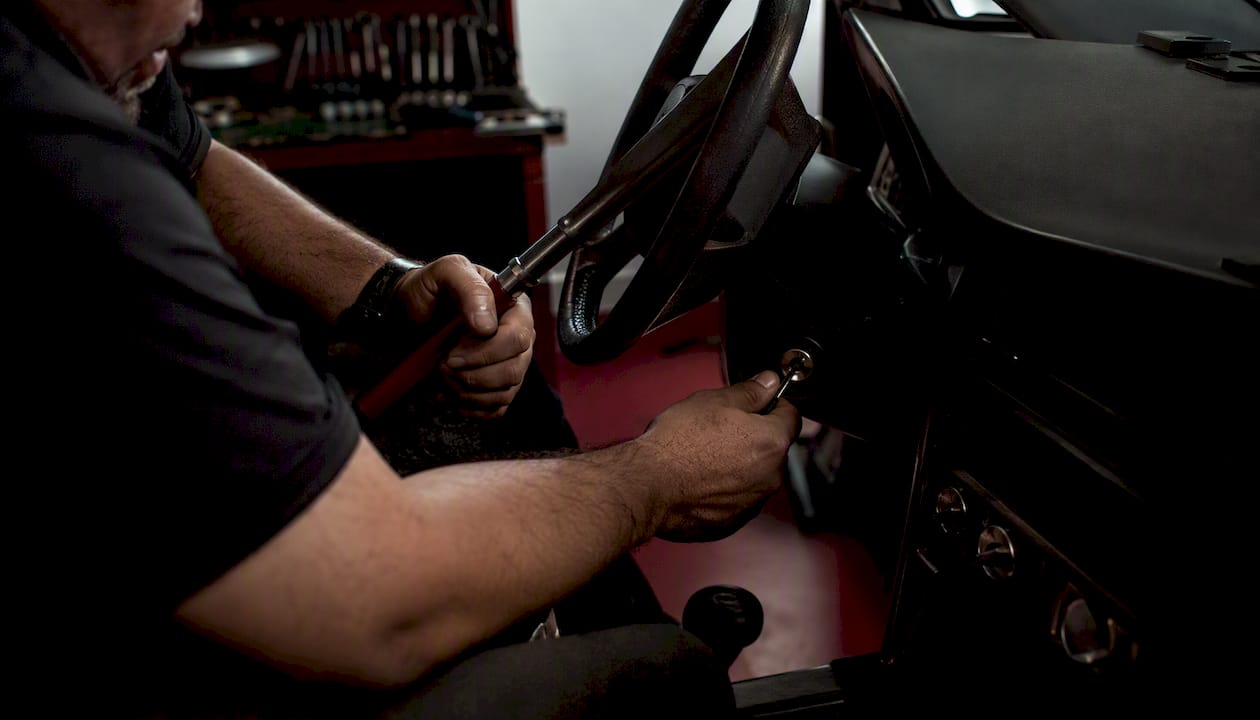
If your steering wheel lock is stuck, relieve tension on the steering lock pin while you turn the key or press the Start button. This “wiggle method” frees the mechanism in most cases because the pin is simply binding under pressure, not broken. Before you try anything else, run through these quick checks:
Confirm the gear shifter is fully seated in Park, not just close to it.
Try a spare key if you have one. Worn key grooves are a surprisingly common culprit.
On push-button start vehicles, check that your key fob has power. A weak battery can stop the electronic steering lock from releasing.
One safety note before you start: don’t force it. If the key resists strongly or won’t turn no matter the angle, stop and call a professional rather than risk snapping the key or damaging the ignition cylinder.
Key Takeaways
A stuck steering wheel almost always comes down to mechanical torque on the lock pin or a power issue with the ESCL actuator, and both have clear, safe fixes before a professional is ever needed.
Point | Details |
Try the wiggle method first | Apply gentle pressure toward the wheel’s loose side while turning the key or pressing Start. |
Rule out easy causes | Confirm Park, test a spare key, and check fob battery power before assuming a bigger problem. |
Watch for ESCL symptoms | Push-button cars need ACC mode, a working fob, and a healthy 12V battery to release the lock. |
Stop at the first red flag | Grinding, partial key insertion, or a bent key means it’s time to call a professional. |
Progressive Locksmith - Cerrajero Miami handles it on-site | Key extraction, cylinder replacement, and fob programming are done at your location without a tow. |
Table of Contents
How to Unlock a Steering Wheel Lock That’s Engaged
The mechanism causing steering lock issues is almost always mechanical, not electrical, even on modern cars. When you park with the wheels turned and lean or pull on the wheel while getting out, you put torque on the steering column. That torque jams a small pin into the steering lock mechanism, and it stays wedged until you release the pressure the right way.
Here’s the sequence that works for most vehicles:
Sit in the driver’s seat and grip the wheel firmly. Feel for the direction the wheel has slight play or “give.” That’s the side under less tension.
Apply steady, gentle pressure toward that side while simultaneously turning the key (or pressing the Start button on keyless models).
Keep the pressure light and constant. Don’t jerk the wheel. You’re trying to relieve tension on the pin, not muscle it loose.
If nothing happens after a few seconds, release and try wiggling the wheel in the opposite direction while turning the key again.
The exact process varies slightly depending on your ignition type. With a keyed ignition, you turn the key while wiggling the wheel in one continuous motion. With push-button start, press the brake pedal (or shift into Accessory mode without the brake) and press Start while applying pressure to the wheel. Some drivers find it easier to hold the key with one hand and use the other to rock the wheel, rather than trying to do both with the same hand.
If your first few attempts fail, don’t keep repeating the same motion harder. Instead, try your spare key. If the original key is old or heavily used, its grooves may be too worn to engage the tumblers even though the wheel isn’t the problem. A quick blast of compressed air into the ignition keyway can also clear out dust or debris that’s adding resistance. Double check the shifter is genuinely in Park, not resting between gears, since that alone can mimic a locked wheel.
Pro Tip: Never use pliers, a wrench, or any tool to force the key. And don’t spray liquid lubricants into the ignition keyway. If something interferes with the tumblers, oil-based sprays make it worse by attracting grit.
A few seconds of patient wiggling resolves the overwhelming majority of steering lock complaints. If it doesn’t, the cause is likely something more specific to your key, ignition cylinder, or electrical system, and that’s worth diagnosing properly before you keep trying the same fix.
Why Won’t My Key Turn in the Ignition Cylinder?
When the wheel wiggle trick doesn’t work and your key still won’t turn, the ignition cylinder itself is often the real problem, not the steering lock pin. Start by testing a spare key. If a second key turns fine, your primary key is the culprit, most likely from years of wear rounding down the metal grooves that the tumblers grip. Inspect the blade closely: a bent shaft, chewed teeth, or visibly rounded ridges are all signs it’s time for a replacement, not another attempt.
If your spare key exhibits the same resistance, the cylinder itself needs attention. Sticky tumblers usually come from years of dust and grime buildup inside the keyway. A short burst of compressed air often clears this out immediately. For more stubborn buildup, apply a small amount of graphite lubricant, never WD-40 or another oil-based spray. Oil attracts dust and dirt over time, which eventually gums up the tumblers and makes the problem worse instead of better. Graphite is dry, so it lubricates without collecting debris.
Watch for these signs that point to a failing ignition cylinder rather than a simple steering lock jam:
The key only goes in partway, no matter how you angle it.
The key inserts fully but turns with noticeable grinding or friction.
The key turns the wrong way or spins without engaging anything.
You hear a clicking or ratcheting sound instead of a smooth click into position.
Any one of these usually means the tumblers are worn or the cylinder housing has shifted. That’s a job for a locksmith or dealer technician, since replacing an ignition cylinder involves matching it to your existing key system or reprogramming a new one.
Before you assume the cylinder is bad, rule out two easy imposters. A dead 12V battery can make the key feel stiff because the steering lock actuator on newer vehicles doesn’t have enough power to retract. And a shifter that’s not fully in Park will block ignition rotation on most transmissions regardless of key condition. Both mimic cylinder failure but cost nothing to check. If your key has visible wear, comparing it to a spare or replacement key side by side usually makes the difference obvious.
Why Is My Steering Wheel Stuck on a Push-Button Start Car?
Push-button vehicles use an electronic steering column lock, or ESCL, instead of a purely mechanical pin. When you press Start, your fob’s signal gets detected, the car issues an unlock command to a small motor, and that motor physically retracts the locking pin from the column. Any break in that chain, a weak signal, low voltage, or a stuck actuator, leaves the wheel locked even though nothing is mechanically broken.
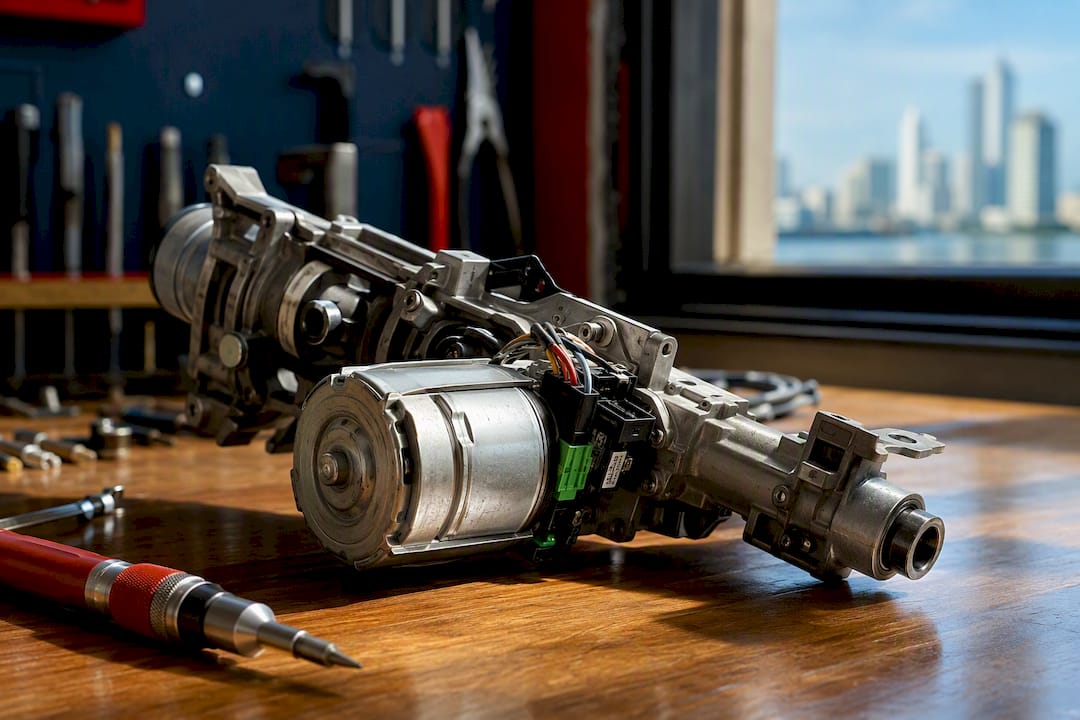
Start with accessory mode. Press the Start button once without touching the brake pedal. This powers up the dashboard electronics without starting the engine. With ACC mode active, gently oscillate the wheel side to side the same way you would on a keyed car, then press the brake and hit Start again. On some Toyota models, drivers have reported a “Steering Lock Engaged” message even after the car has technically started, and Toyota’s own service guidance recommends gently moving the wheel side to side to relax the actuator so it can fully disengage.
If ACC mode doesn’t help, suspect your fob. Hold the fob directly against the Start button or the steering column, since most vehicles have a backup inductive reader for exactly this scenario when the fob battery is weak. If that doesn’t work, replace the fob battery outright; it’s inexpensive and takes two minutes.
Power delivery matters more than most drivers realize here. A weak or dying 12V battery can starve the ESCL actuator of the voltage it needs to fully retract, even if everything else in the system is functioning. Turn on your headlights or dome light. If they’re dim or flickering, that’s your answer, and a jump start is worth trying before you assume the actuator itself has failed.
Pro Tip: As a last resort, some drivers disconnect the negative battery terminal for 15 to 30 minutes to force an electrical reset of the ESCL system. This can clear minor communication glitches between modules, but it’s not a permanent fix and shouldn’t replace a real diagnostic if the problem keeps coming back.
ACC mode plus wheel oscillation is your first move.
Fob battery and inductive backup reader come next.
A jump start rules out a dying 12V battery.
An electrical reset is a last resort, not a routine fix.
What Else Could Be Causing a Locked Steering Wheel?
Before you assume the steering lock mechanism is the problem, rule out a few common imposters that produce identical symptoms.
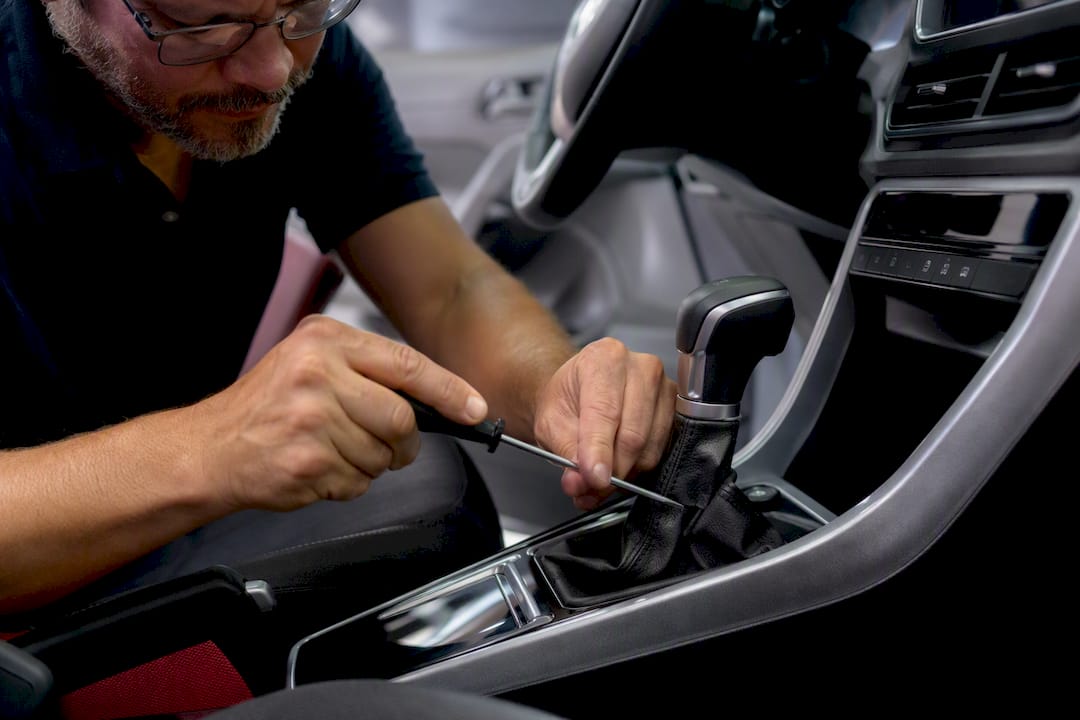
Start with the shifter. Many vehicles won’t allow the ignition to turn, or the ESCL to release, unless the transmission is fully seated in Park, not just visually close to it. Rock the shifter slightly while pressing it firmly toward Park. On some models with a stuck shift interlock, you may need to insert a small flathead into an override slot near the shifter (check your owner’s manual for the exact location) to manually release it.
Next, look at your dashboard for warning lights when you turn the key to the on position. A blinking security or immobilizer icon suggests the car isn’t recognizing your key’s transponder chip at all, which is a different problem than a mechanical or ESCL jam and usually requires reprogramming.
Battery health deserves a real test, not a guess. Turn on your dome light and accessory power. If they’re weak or nonexistent, your battery is likely too low to run auxiliary systems like the steering lock actuator. A multimeter reading under 12.4 volts at rest is a reliable sign you need a charge or jump start before troubleshooting anything else.
Finally, some signs point straight to mechanical failure rather than anything you can fix roadside:
A key that’s visibly bent, chipped, or won’t insert past the halfway point.
Grinding, clicking, or ratcheting sounds from the column when you turn the key.
The wheel feels completely rigid with zero play in either direction.
Repeated ESCL failures even after a battery replacement and fob check.
Any of these point toward a seized actuator, damaged cylinder, or broken key, all jobs for a professional rather than another round of wiggling.
When Should You Call a Professional Locksmith Instead?
Stop troubleshooting and call for help the moment you notice strong resistance that doesn’t ease up, a key that only goes in partway, grinding or clicking sounds from the column, or persistent dashboard warning lights that won’t clear. Continuing to force a stuck key rarely ends well. It typically bends or snaps the key and can damage the ignition barrel in the process, turning a simple fix into a far more expensive repair.
A locksmith or technician arriving on-site isn’t guessing. They read the actual unlock-request signal and voltage traces from the steering lock system using diagnostic tools built for that purpose, which separates a wiring or power issue from a genuinely seized actuator before any part gets replaced.
A qualified auto locksmith handles the mechanical side of this problem directly: safe extraction of a broken or stuck key, ignition cylinder replacement, on-site key cutting, and fob programming, all without pulling your car apart or requiring a tow. For electronic steering lock failures, an auto technician or dealer typically runs a full diagnostic scan, replaces the actuator if it’s physically seized, and handles any ECU registration work if the steering lock control module itself needs replacing.
When you call, have this information ready:
Your vehicle’s make, model, and year.
Exactly what happens when you turn the key or press Start (grinding, no response, partial insertion).
Whether your key is intact or damaged.
Whether your car uses a traditional key or push-button start.
That information lets the dispatcher send someone equipped for your specific situation instead of guessing on arrival.
How Can You Prevent the Steering Lock From Jamming Again?
Most steering lock jams trace back to how the car was parked, not a defect. Fixing your routine prevents the vast majority of repeat problems.
Engage the parking brake before shifting into Park. This takes the load off the transmission’s parking pawl and reduces torque transferred to the steering column.
Straighten the wheels before you turn off the engine. Parking with the wheels cranked to one side is the single biggest cause of a jammed lock pin, since it puts constant sideways pressure on the mechanism.
Replace your key fob battery roughly every two years, even if it hasn’t failed yet. A fob that’s dying slowly causes intermittent ESCL issues long before it stops working completely.
Have your 12V battery tested annually, especially before winter. A battery on its way out is one of the most common hidden causes of push-button steering lock failures.
Apply graphite lubricant to your ignition cylinder once a year if you notice any stiffness, and never oil-based sprays.
One more habit worth building: don’t yank the wheel for leverage when you’re getting out of the car. It seems harmless, but it’s exactly the kind of pressure that jams the pin in the first place, and it’s the most common preventable cause locksmiths see on service calls.
Which Car Models Have Recurring Steering Lock Problems?
Some vehicles are more prone to steering lock complaints than others, usually because of how their ESCL system or ignition cylinder is engineered. Certain Toyota models are known for the “Steering Lock Engaged” dashboard message appearing even after a successful start, a quirk Toyota’s own service network has documented and addressed with the wheel-wiggle technique described earlier. It’s not a sign of a defective car, just a sensitive actuator that occasionally needs a gentle nudge to fully disengage.
Older vehicles with traditional keyed ignitions, particularly those with well over 100,000 miles, tend to develop worn tumblers from a decade or more of the same key sliding in and out. This shows up as increasing difficulty turning the key, sometimes requiring a slight jiggle that gradually gets worse until the cylinder needs replacement.
Vehicles that spend a lot of time parked on inclines or in tight street parking, where drivers routinely leave the wheels turned, see steering lock jams more often regardless of make or model. The mechanical stress is the same no matter what badge is on the hood.
If you drive a vehicle with a known ESCL quirk, or one that’s simply logged a lot of miles on its original key and cylinder, treat the prevention habits above as routine maintenance rather than optional advice. A five second habit at the end of every drive saves you an inconvenient morning down the road.
What Can You Do Right Now While Waiting for Help?
If you’ve tried the wiggle method, checked your spare key, and confirmed the shifter is in Park without success, there are still a few things worth attempting while you wait for a locksmith or tow.
Let the car sit for a few minutes. Sometimes a marginal 12V battery needs a short rest to recover enough voltage to power the ESCL actuator, especially after repeated Start attempts have drained it further. Try once more after that pause.
If you have access to another driver in the household, ask them to bring the spare key rather than waiting entirely on roadside assistance. A spare key resolves the issue immediately in cases where your primary key has simply worn down, and it costs nothing to rule out.
Avoid repeatedly cycling the ignition or mashing the Start button. Each failed attempt on a low battery draws down what little charge remains, and repeated stress on a mechanical pin increases the odds of a key snapping under pressure.
If you’re in a parking lot or driveway and not blocking traffic, there’s no urgency to force a resolution. Take a photo of any dashboard warning lights before you call for help. It gives the technician useful diagnostic information before they even arrive, and it can shorten the on-site repair time considerably.
The Automotive-Locksmith Perspective on Steering Lock Failures
Most guidance online treats a stuck steering wheel like a single problem with a single fix, and that’s the biggest gap in the conventional advice. The wiggle method genuinely resolves most cases, but it works because it addresses one specific cause: torque on a mechanical pin. It does nothing for a dying 12V battery, a worn ignition cylinder, or a seized ESCL actuator, and drivers who keep repeating the same wheel-jiggling motion for twenty minutes on an electronic failure are wasting time they don’t need to lose.
What gets underestimated is how often the real problem is preventable in the first place. Straightening your wheels before you shut off the engine and testing your 12V battery once a year would eliminate a large share of the service calls locksmiths run. The technical fixes matter, but the five-second parking habit matters more.
If your key resists at all, stop. A snapped key or a scored ignition cylinder costs far more to fix than a fifteen-minute service call would have.
— Julio Borroto
Get Fast, On-Site Help From Progressive Locksmith - Cerrajero Miami
Progressive Locksmith - Cerrajero Miami gets you back on the road without the wait or guesswork of towing your car to a dealership for a steering lock issue. When the wiggle method, spare key, and battery checks haven’t worked, a technician comes to you with the diagnostic tools and parts needed to solve it on-site the first time.

The team handles the full range of situations covered here: safe extraction of a broken or stuck key, ignition cylinder replacement, on-site key cutting, and key fob programming for push-button vehicles. Response times are built around getting a technician to your location quickly, whether you’re stuck in a driveway in Homestead or parked in Miami-Dade County traffic. Every job starts with the same safety-first approach outlined above, ruling out battery and shifter issues before anything gets replaced, and escalating to dealership-level diagnostics when an ESCL actuator or steering lock ECU needs specialized attention.
If your steering wheel is locked right now and none of the DIY steps have worked, visit the auto locksmith services page to request on-site help and get a technician headed your way.
Sources
Recommended
Comments