

24 Hour Tenant Lock Change Rights in Florida: SB 142 Steps and Docs

Florida landlords cannot lock out a tenant to force them out or collect rent. State law bans that outright under Florida Statute §83.67. Tenants, in turn, generally need written landlord permission before changing locks, with one major exception written into law for victims of domestic violence and stalking. The sections below walk through the statute, the exception, and exactly what to do if you’re facing a lockout or a lock dispute right now.
TL;DR:
Landlords in Florida cannot change locks, shut off utilities, or remove belongings to force tenants out, except through a court-ordered eviction with a sheriff’s involvement.
Tenants generally need landlord permission to change locks unless they are victims of domestic violence or stalking, in which case they can act under SB 142 with proper documentation.
If illegally locked out, tenants can pursue damages, court-ordered access restoration, and legal fees, but must document police reports, notices, and locksmith visits.
Landlords are responsible for repairing broken locks or doors promptly, with written requests recommended to maintain a clear repair timeline.
Licensed locksmiths must document their work carefully, as well-kept records often determine the outcome in lock disputes or legal claims.
Table of Contents
What Does Florida Law Say About Landlord Lockouts?
Florida Statute §83.67 spells out what’s called “prohibited practices” in plain terms. A landlord cannot change your locks, install a bootlock, remove your front door, shut off your electricity or water, or haul away your belongings as a way to force you out. These tactics are sometimes called “self-help evictions,” and Florida shut that door decades ago.
Only one entity can legally remove a tenant from a rental property: a county sheriff acting on a writ of possession issued after a formal eviction case. A landlord who skips that process and just changes the locks isn’t exercising a shortcut. They’re breaking the law and exposing themselves to a lawsuit.
The penalties are specific. Under the statute, a tenant harmed by an illegal lockout can recover:
Actual and consequential damages or a statutory amount of damages as provided under Florida law
Court costs
Attorney’s fees
An injunction ordering the landlord to restore access
A landlord who locks out a tenant without a court order and a sheriff isn’t taking a shortcut. They’re committing a statutory violation that can cost three months’ rent or more, plus legal fees.
Can Tenants Change the Locks Without Landlord Permission?
Generally, no. Most Florida leases include language requiring tenants to preserve the landlord’s ability to access the unit for repairs, inspections, and emergencies, and swapping the locks without asking cuts against that obligation. Legal guidance on this point is consistent: unauthorized lock changes typically count as a lease violation, not a tenant right, according to a Florida real estate attorney who covers the issue in detail.
If your landlord does agree to a lock change, expect these conditions to come with it:
You’ll likely need to provide a copy of the new key or the access code right away
Your lease may require restoring the original locks (or handing over new ones) when you move out
Changing locks without asking can trigger a lease breach, exposing you to eviction proceedings or a fight over your security deposit
Some property managers build a written addenda process into the lease specifically for security upgrades, spelling out who pays for the hardware and whether it needs to come out at move-out. If your lease is silent on the issue, ask before you act. A five-minute email asking permission is far cheaper than a deposit dispute six months later.
Can Victims of Domestic Violence Change Their Locks?
Yes, and Florida built specific protections for this exact situation. Under SB 142, a tenant who is a victim of domestic violence, dating violence, sexual violence, or stalking can request that the landlord change the locks. The bill text requires the landlord to make that change within 24 hours of a documented request.
If the landlord doesn’t act in time, the tenant is authorized to change the locks themselves, provided a few conditions are met.
The new lock must be of similar or better quality than the one it replaces
The tenant must notify the landlord of the change within a reasonable window
The tenant must provide the landlord a key unless doing so would compromise their safety
Acceptable documentation includes a protection order, a police report, or other qualifying evidence named in the statute, with confidentiality protections built in for the tenant’s information
A tenant who follows the SB 142 process correctly, meaning documented request, 24 hour window, matching lock quality, and landlord notification, is acting within the law even without the landlord’s sign-off. Skipping any one of those steps weakens your legal footing if the landlord later disputes the change, so keep every receipt, text message, and copy of your documentation.
What Should a Tenant Do Right After a Break-In or Threat?
Move fast, but move in the right order. Here’s the sequence that protects both your safety and your legal position.
Call 911 if you’re in immediate danger. If the threat has passed but you still need a record, call the non-emergency police line and file a report. Write down the report number before you hang up.
Put your request in writing. Whether you’re asking a landlord to change locks under SB 142 or reporting a break-in, a dated written notice, email or text works, that names the incident, attaches the police report number, and states what you’re requesting (a lock change, a repair, or a specific timeline) is far stronger evidence than a phone call.
Only bring in a locksmith after you have permission or you’re acting under a documented safety exception. Calling a locksmith on your own outside those two scenarios can put you in breach of your lease, even with good intentions.
Document the locksmith visit. Save the invoice, take photos of the new hardware, and keep a copy of any paperwork the technician provides, according to tenant-rights resources covering Florida break-in situations.
Keep everything organized in one file. Police report, written notices, photos, and receipts all matter if the dispute ends up in county court or you need to request injunctive relief.
Pro Tip: Text your written notice to the landlord instead of just emailing it. Text messages carry timestamps that are harder to dispute later, and most people check texts faster than email, which matters if you’re on a 24 hour clock under SB 142.
Who Fixes a Broken Lock, the Landlord or the Tenant?
Florida’s habitability standards put the burden on landlords to keep locks and doors in working order, according to FDACS’s landlord-tenant guidance. A lock that won’t latch or a door that doesn’t seal isn’t just an inconvenience. It’s a security gap the landlord is responsible for closing.
Your move is to report the problem in writing, not verbally. That creates a timestamp and a paper trail if the repair drags on.
Send a written repair request describing the exact problem and date
Check your lease and any county-specific rules for expected response windows, since these vary by jurisdiction and lease language
If the landlord ignores repeated requests, document every delay. That record supports a county court claim or a formal complaint down the line
What Are Your Options If You’ve Been Illegally Locked Out?
If you come home to find your key doesn’t work and your landlord didn’t go through the courts, you have real remedies, not just a complaint.
Call the police and file a report immediately. This creates an official record of the date and circumstances of the lockout
Contact your county court to ask about emergency motions for access; some counties have expedited processes for exactly this situation
Confirm the eviction was never properly filed. A lawful eviction requires a sheriff to execute a writ of possession. No sheriff, no writ, no legal lockout
A tenant illegally locked out can pursue actual and consequential damages or three months’ rent, whichever is greater, plus attorney’s fees and an injunction ordering the landlord to restore access, under §83.67. Lawyers who handle these cases point out that landlords sometimes assume a possession dispute justifies taking matters into their own hands. It doesn’t. Even a landlord convinced they’re in the right has to use the formal eviction process, according to a Florida landlord-tenant law firm. Preserve your evidence early. County courts move faster when you show up with a police report number and a timeline already documented, a point echoed by FloridaLawHelp’s guidance on illegal eviction remedies.
How a Licensed Locksmith Handles Lawful Lock Changes
Not every lock job is the same. Rekeying swaps the internal pins so your old key stops working while the existing hardware stays in place. Full replacement means new hardware, deadbolt and all. Adding a secondary device, like a chain guard or smart lock, layers extra security without touching the primary lock. A licensed locksmith can tell you which option fits your situation without damaging the door or frame, which matters when a landlord dispute is already in play.
Legitimate locksmiths document their work for a reason.
ID verification and proof of tenancy or a police report, when relevant
A detailed invoice listing the service performed and hardware used
Photos of the completed job, in some cases
That paperwork becomes your evidence if the lock change is ever questioned later. Progressive Locksmith - Cerrajero Miami provides emergency lockout response, residential rekey, and lock replacement across Miami-Dade County for tenants and landlords who’ve already sorted out the legal green light.
Pro Tip: Ask the locksmith for a copy of the invoice before they leave, not after. If a dispute comes up weeks later, you want that paper trail in hand already, not chasing down a company for records.
Why Documentation Matters More Than Anyone Admits
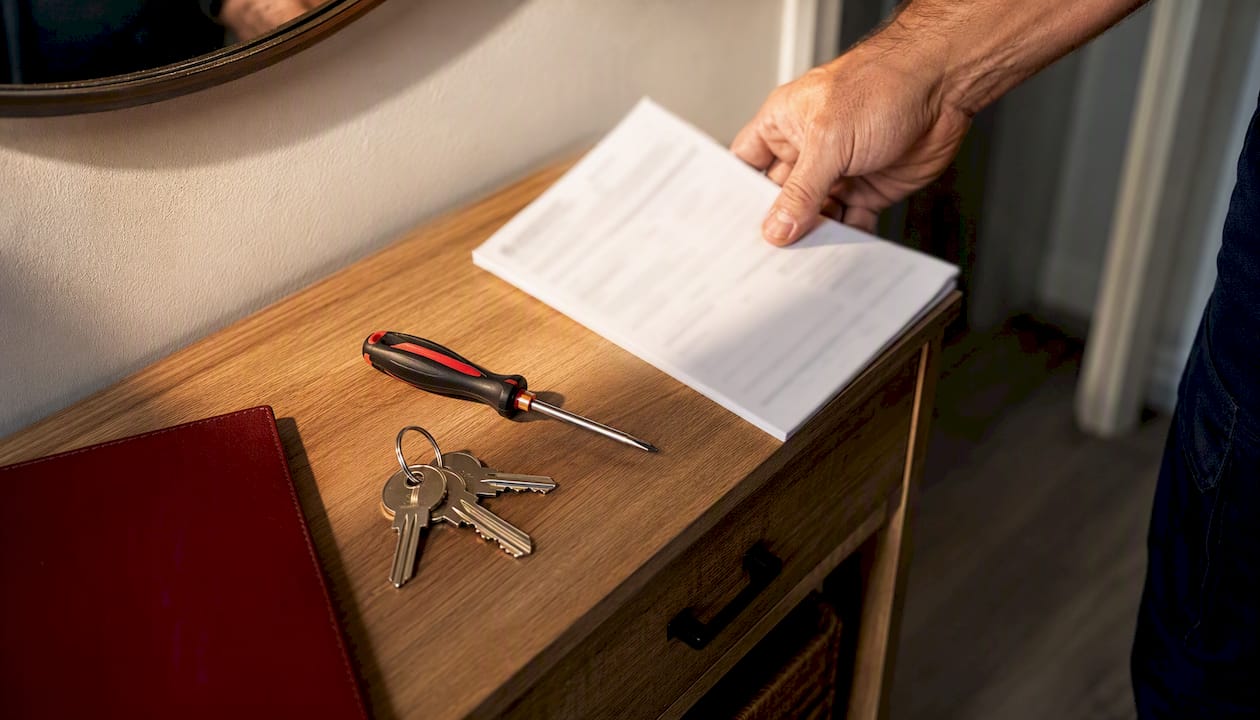
Most lock disputes in Florida don’t come down to who’s technically right. They come down to who kept better records. A tenant with a police report, a dated written request, and photos of a damaged door wins arguments a tenant with none of that loses, even when the law is on their side. If a lockout or lock dispute escalates past a phone call, talk to a tenant attorney before you act. Safety comes first, but paperwork protects everything that comes after.
— Julio Borroto
Need a Licensed Locksmith for a Lawful Lock Change?
Court filings and statute citations matter, but at some point you still need someone to physically rekey the door, and that’s where Progressive Locksmith - Cerrajero Miami fills the gap the legal process leaves open. We’re the local option for tenants and landlords in Homestead, Kendall, Cutler Bay, Doral, and across Miami-Dade County who’ve already sorted out permission or a documented safety exception and now need the hardware handled correctly and fast.
Our team handles emergency lockout response, residential rekeying, and full lock replacement, and we document every job with an invoice so you have a paper trail if a landlord or tenant dispute ever needs one. Before you call, have your ID ready, along with a police report or written landlord permission if either applies to your situation. Emergency lockout pricing typically runs $75 to $150, and we serve calls around the clock. Ready to get your lock handled the right way? Call Progressive Locksmith - Cerrajero Miami to book a licensed technician today.
Where to Verify Florida’s Lock Change Laws Yourself
Florida Statute §83.67: the primary law banning landlord self-help evictions
SB 142 bill text: domestic violence and stalking lock-change protections
FDACS landlord-tenant guidance: plain-language summaries of rights and duties
Florida Bar Lawyer Referral Service: find local tenant or landlord counsel fast
This article is general information, not a substitute for advice from a qualified lawyer. Consult a qualified legal professional about your own circumstances before acting on anything here.
Sources
FAQ
Can a renter legally change the locks in Florida?
Only with the landlord’s written consent in most cases, or without it if the tenant is a documented victim of domestic violence, dating violence, sexual violence, or stalking acting under the SB 142 process.
What are the new rental laws in Florida for 2026?
The most notable update affecting locks is SB 142, which requires landlords to change locks within 24 hours of a documented safety request and allows the tenant to do it themselves if the landlord fails to act.
Do landlords typically change locks between tenants?
Yes, most landlords rekey or replace locks between tenancies as standard practice for security, though Florida law doesn’t set a specific mandatory timeline for doing so.
What happens if a landlord locks out a tenant illegally in Florida?
The tenant can recover actual and consequential damages or three months’ rent, whichever is greater, plus attorney’s fees and a court order restoring access, under §83.67.
Who do I call if I’m locked out and it wasn’t a legal eviction?
File a police report first, then contact your county court about emergency access motions; a licensed locksmith like Progressive Locksmith - Cerrajero Miami can help once you have documentation in hand.
Recommended
Comments