

Key Fob Battery Replacement: DIY Steps in Under 10 Minutes

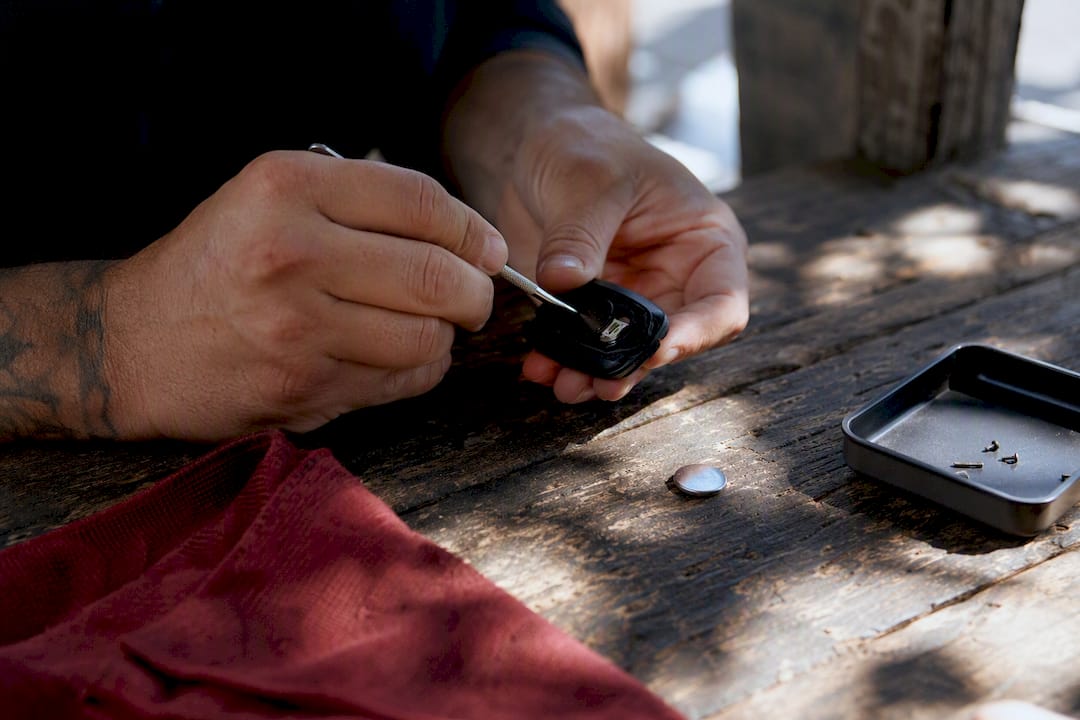
Most car key fobs run on a 3V coin cell, and CR2032 is the size you’ll need most often. Swapping it yourself usually takes less than 10 minutes with a small screwdriver and a new battery from your local store. Fob batteries typically last 2 to 4 years under normal use, so if your remote suddenly has a shorter range or the dashboard light won’t stop blinking, a fresh CR2032 is often the fix. If the swap doesn’t bring it back to life, Progressive Locksmith - Cerrajero Miami can diagnose whether it’s a programming issue instead.
Battery type: CR2032 (3V coin cell) fits most fobs; some use CR2025 or CR2016
Time needed: 5 to 10 minutes for a standard fob
Cost: $1 to $5 per battery at most retailers
Safety note: Keep coin cells away from kids and pets; they’re a serious swallowing hazard
Key Takeaways
Most car key fobs use a CR2032 battery, and a correct DIY swap takes under 10 minutes and costs less than $5, but an unresponsive fob after a fresh battery usually needs a professional diagnosis.
Point | Details |
Identify your battery | Check the code stamped on the old cell; CR2032 is most common but CR2025, CR2016, CR2450, and CR1616 also appear. |
Handle the gasket carefully | Reseat the rubber gasket fully when closing the housing to keep moisture from corroding the contacts. |
Expect a quick, cheap fix | Budget 5 to 10 minutes and $1 to $5 for the battery at stores like Batteries Plus or AutoZone. |
Know the limits of a battery swap | If the fob stays dead after a confirmed fresh battery, the cause is likely lost programming or a circuit fault, not the battery. |
Call a pro for deeper issues | Progressive Locksmith - Cerrajero Miami offers 24/7 on-site diagnostics and key programming when a battery swap alone won’t solve it. |
Table of Contents
Tools and Parts You Need Before You Open the Fob
Grab everything before you start prying. You’ll need a small flat-head screwdriver, a plastic pry tool (or a coin in a pinch), a clean flat surface, and a lint-free cloth. Tweezers help you handle the tiny battery without dropping it inside the housing, and a little isopropyl alcohol on a cloth cleans corroded contacts.
Before you pop anything open, check the old battery. Its size and voltage are usually stamped right on the face of the coin cell, or molded into the plastic inside the fob housing. Confirming that number now saves you a second trip to the store.
Small flat-head screwdriver or plastic pry tool
Replacement coin cell (matched to the old one)
Clean, well-lit workspace
Tweezers for handling the battery
Isopropyl alcohol and a lint-free cloth for contact cleaning
Pro Tip: Take a photo of the open fob with your phone before removing the old battery. That orientation shot saves you from guessing which side faces up when you install the new one.
How to Open the Fob and Replace the Battery
Expect a quick, mostly toolless job once the housing is open. Most fobs use a seam you can pry apart, though some flip keys require you to slide out the mechanical key blade first to expose a release notch.
Remove the mechanical key blade if your fob has one, using the small release button or slide latch.
Find the seam around the fob’s edge and insert your plastic pry tool or a flat screwdriver gently into the gap.
Twist slightly to pop the housing open. Work around the edge rather than forcing one spot.
Note which side of the battery faces up (usually the “+” symbol) before touching anything.
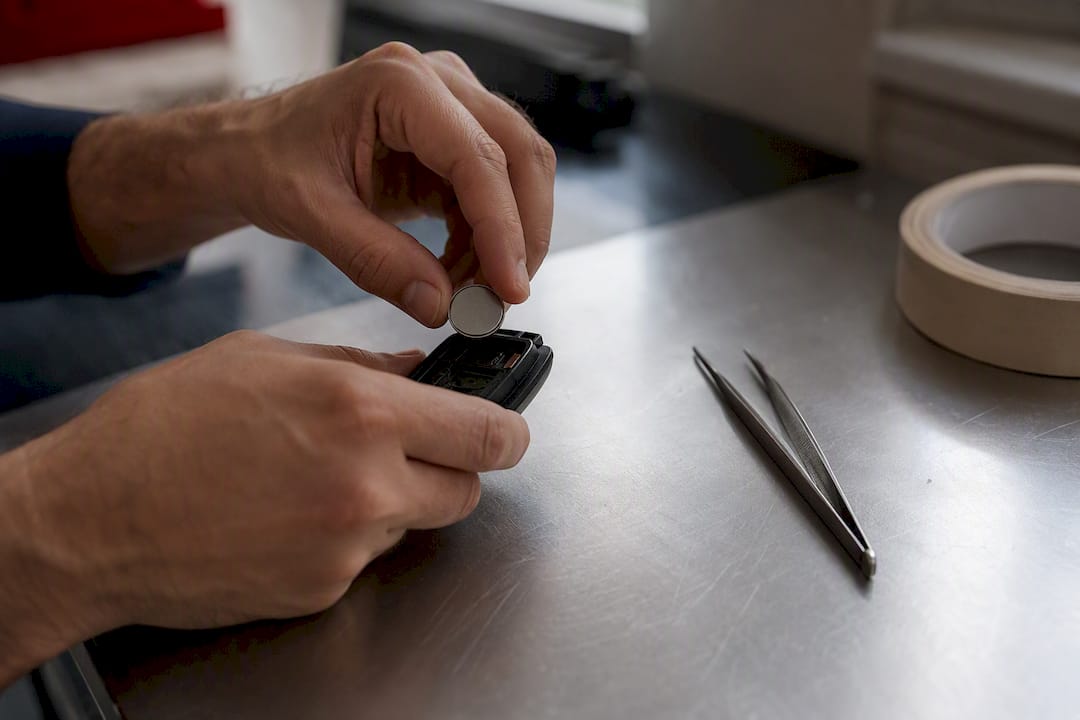
Lift out the old battery with your fingernail or tweezers.
Wipe the contacts with a cloth dampened in isopropyl alcohol if you see any white or greenish buildup.
Insert the new coin cell with the same polarity as the old one.
Reseat the rubber gasket carefully, making sure it sits flat in its groove.
Snap the housing closed, working around the seam evenly instead of pressing one corner.
Test the fob at close range, then from across the driveway to confirm signal strength.
Budget about five minutes if you’ve done this before, closer to ten for a first attempt. The gasket is the part most people damage. If it shifts out of place or tears, moisture can get in later and corrode the circuit board. A short video demonstration can help if you want to see the pry motion before trying it yourself.
Pro Tip: Hold the new battery by its edges, not its flat faces. Skin oil on the contact surfaces can interfere with the connection, and some fobs are sensitive enough to notice.
Which Coin Cell Battery Do You Need?
CR2032 covers most vehicles on the road, but it’s not universal. The most common sizes are CR2032, CR2025, CR2016, CR2450, and CR1616. They all run at 3 volts, but the diameter and thickness differ, so a battery that’s too thick simply won’t close the housing, and one that’s too thin will rattle around and lose contact.
Match the exact code printed on the old cell rather than guessing by size. A one-digit difference, like CR2025 versus CR2032, means a different thickness even though both are 20mm wide.
CR2032: Most common; 20mm diameter, 3.2mm thick
CR2025: Same width as CR2032, but thinner at 2.5mm
CR2016: Narrower profile, common in older or compact fobs
CR2450: Larger diameter, used in some SUVs and trucks
CR1616: Small, used mostly in flip-key remotes
Expect to pay $1 to $5 per battery depending on brand and where you shop. Reputable brands cost a little more but tend to hold voltage longer than bargain multipacks. Batteries Plus stocks the common sizes and will often fit the battery for you at the counter if you’d rather not open the housing yourself. AutoZone carries the same sizes alongside other auto parts, and pharmacies, big-box stores, and online retailers all sell them too.
Fob Still Not Working? Check These Before You Panic
A dead-on-arrival result after a battery swap isn’t rare, and it’s usually something simple. Run through this list before assuming the worst:
Confirm you installed the correct battery type with the polarity facing the right way
Clean any corrosion or residue off both the battery and the contact points
Reseat the housing fully. A gap left by a misaligned gasket can break the contact
Test at close range first, then walk away to check overall signal strength
If none of that works, the battery probably wasn’t the real problem. Replacing the battery won’t fix a fob that has lost its pairing with your car’s receiver, and an unresponsive fob after a confirmed fresh battery often points to lost programming or a failed circuit board. That’s a job for a locksmith or dealer, not another trip to the battery aisle. In the meantime, most vehicles have a backup way to start the car with a dead fob, whether that’s holding the fob against the start button or using the hidden mechanical key.
Coin Cell Safety and Disposal
Button batteries look harmless, but a swallowed coin cell can cause serious internal injury within hours, especially in small children. If you suspect a child or pet has swallowed one, treat it as an emergency and get medical help immediately.
Tape both terminals of the old battery before storing or tossing it
Keep spent and new batteries in a container out of reach of kids and pets
Drop old cells at a household hazardous waste site or a retailer recycling bin
Never throw coin cells in regular household trash where local rules prohibit it
Pro Tip: Most stores that sell replacement batteries, including Batteries Plus locations, also accept old ones for recycling. Bring the dead cell with you when you buy the new one.
When a Locksmith Is the Safer Call
DIY makes sense for a straightforward swap, but some situations call for a professional instead. If the housing cracks, a clip snaps off, or the gasket tears during your attempt, stop and call for help before the damage gets worse.
Housing or clips are damaged and won’t snap closed
The gasket is torn or won’t seat properly
The fob stays unresponsive even with a confirmed fresh battery
You suspect lost programming rather than a dead battery
You’re not comfortable prying open the housing yourself
A cracked fob or lost programming can turn a $3 battery job into a costly replacement if handled wrong. Progressive Locksmith - Cerrajero Miami offers 24/7 on-site diagnostics and key programming, which often saves you a tow or a dealer wait entirely.
DIY vs. calling a pro: an honest take
Most owners can replace a key fob battery themselves in under 10 minutes with no special skills. Where I’d draw the line is the moment you feel resistance you don’t understand, or the housing won’t sit flush again. That hesitation is worth listening to. A correct DIY swap saves you a service call and a wait, but a damaged fob costs far more to fix than it would have to hand off in the first place.
Prefer a Pro? Here’s What Progressive Locksmith Offers
If you’d rather skip the pry tool entirely, Progressive Locksmith - Cerrajero Miami handles the whole job on-site, often faster than a dealer appointment and without the wait. That matters most when your fob turns out to need reprogramming instead of a battery, since a dealer visit for that alone can eat half a day.

Our technicians carry the tools and replacement cells for most fob types, and they can diagnose in minutes whether your issue is really the battery or something deeper, like a failed receiver or lost pairing. Services include mobile key fob battery replacement, key programming, broken-fob repair, and emergency lockout response, all available 24/7 across Miami and Homestead. If your fob still won’t respond after a fresh battery, or the housing cracked during your attempt, get a technician out to your car locksmith service instead of risking a bigger repair bill. Our workshop also handles circuit transfers if your old fob’s housing is beyond saving.
Sources
Recommended
Comments