

What a Flashing Immobilizer Light Really Means
- Elain Hernández Lee
- 6 days ago
- 7 min read

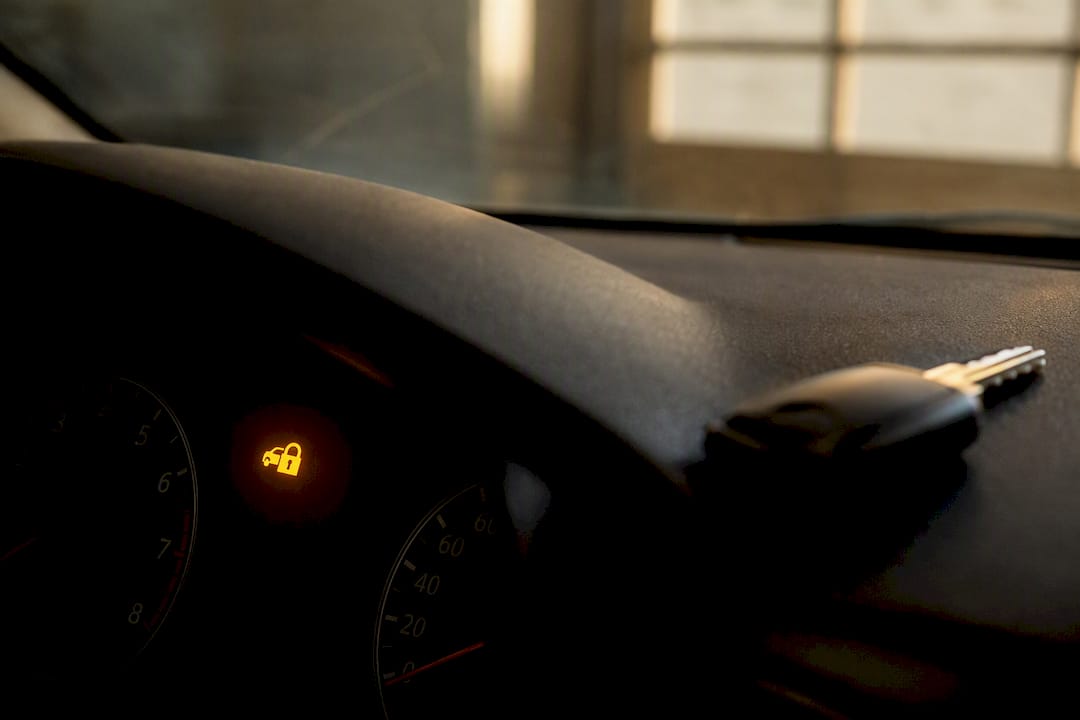
A flashing immobilizer light almost always means your car’s anti-theft system isn’t recognizing the key signal, or the system is still armed. It can block the engine from starting, but the fix is often quick. Here’s what to do right now:
Try a spare key if you have one. If it starts the car, your primary key or fob is the problem.
Swap the key fob battery before anything else. A weak battery is the single most common cause.
Stop cranking the engine repeatedly. Repeated attempts wear down the starter and won’t fix a signal problem.
Most of these cases resolve in minutes. If nothing works after a few tries, it’s time to call a pro.
Key Takeaways
A flashing immobilizer light usually signals a key recognition problem or an armed security system, and most cases resolve with a spare key, a fresh fob battery, or a quick reset before any professional visit is needed.
Point | Details |
Try the spare key first | It’s the fastest way to tell if the problem is your key or the car’s electronics. |
Check the fob battery | A weak coin-cell battery is the most common cause of a flashing immobilizer light. |
Read the flash pattern | Slow parked pulses are normal; rapid or persistent flashing signals a real fault. |
Know your escalation point | Multiple failed keys or stalling while driving means stop DIY and call a pro immediately. |
Call Progressive Locksmith - Cerrajero Miami | On-site key programming and diagnostics across Miami-Dade County, available 24/7. |
Table of Contents
Why the Immobilizer Light Blinks: Normal vs. Warning Signs
The immobilizer runs a handshake between the transponder chip in your key and the ECU or body control module every time you try to start the car. That chip sends a coded signal; the module checks it against a stored profile before letting fuel and ignition systems fire. When everything checks out, the light does its job quietly.
Here’s how to read what you’re seeing:
A slow pulse while parked is normal on many vehicles. It’s the system flexing its theft-deterrent muscle, and some owners notice it for the first time after years of ownership without anything actually being wrong.
A brief flash when you turn the ignition usually confirms the key was recognized. That’s the system saying “verified.”
Rapid, continuous flashing, or a light that stays on after ignition signals a communication breakdown. This is where you start troubleshooting.
Match the pattern you’re seeing to these categories before you touch anything else. It saves time and tells you whether you’re dealing with a five-minute fix or something bigger.
What’s Causing Your Car Immobilizer Issues?
Most immobilizer problems trace back to one of four sources, and the symptoms usually point you in the right direction before you even pop the hood.
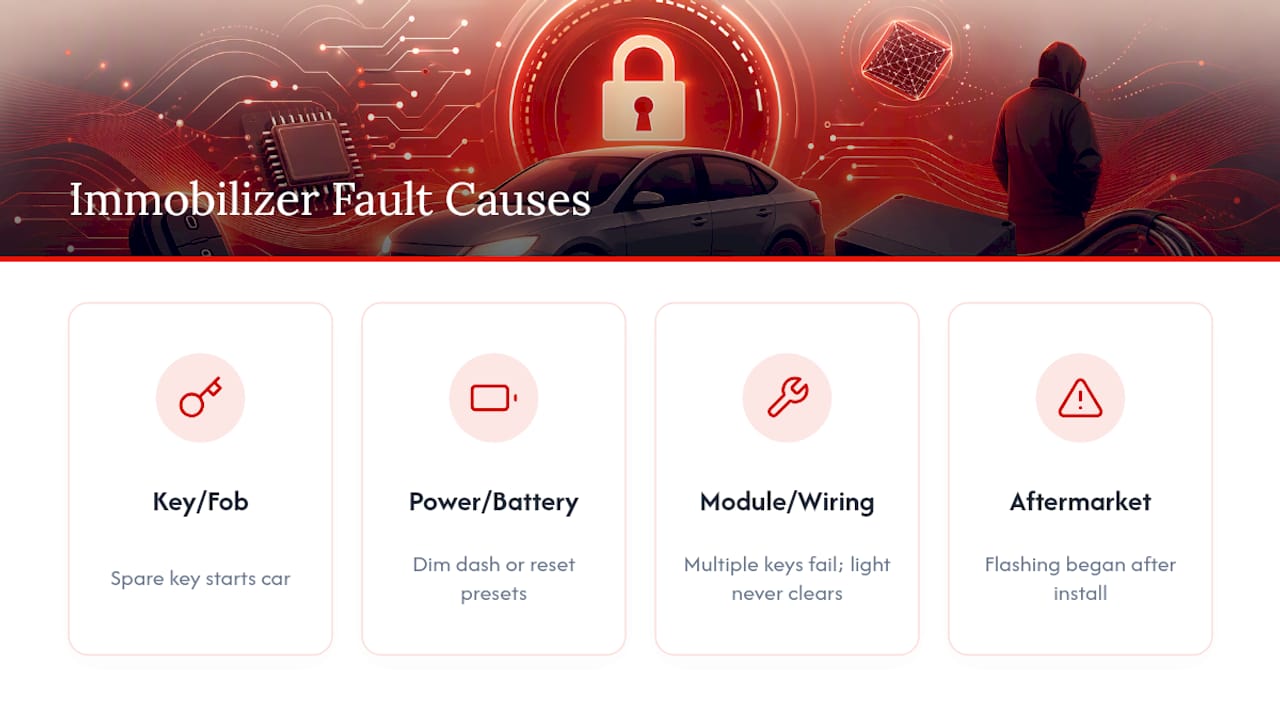
Key and fob problems are the most common and the cheapest to fix. A weak fob battery, a damaged transponder chip, or a replacement key that was never properly programmed will all trigger a flashing light. Test this by trying a spare key. If the spare starts the car without issue, your original key or its battery is the culprit, not the car itself.
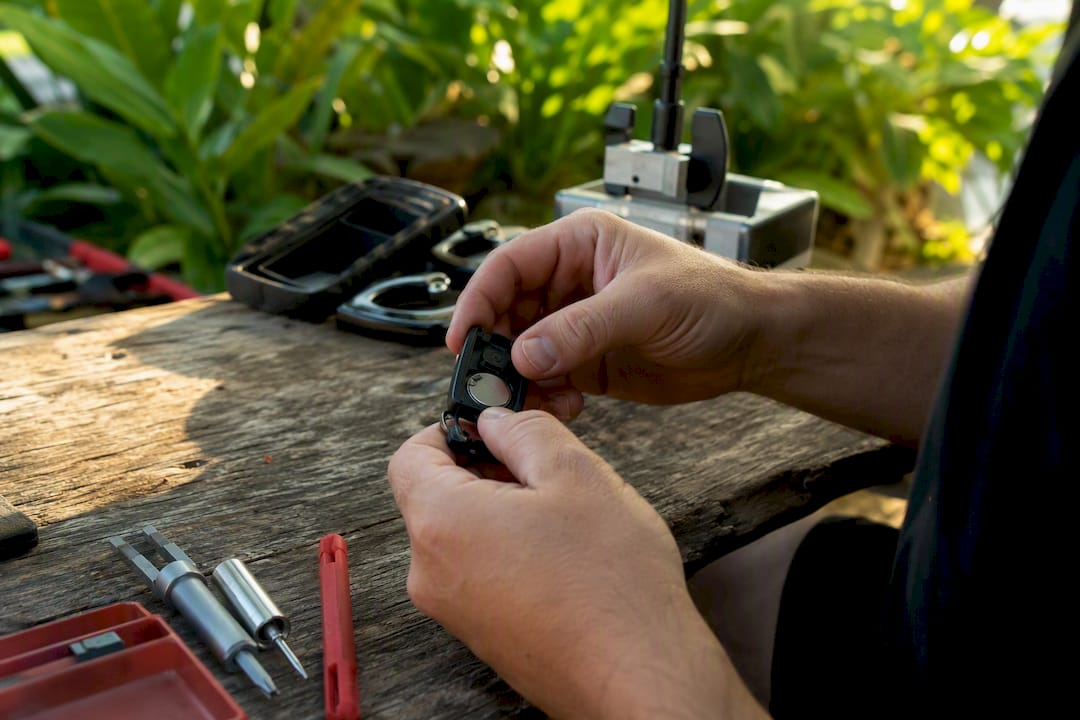
Vehicle power and battery issues come next. A low car battery or a failing alternator can starve the immobilizer module of the steady voltage it needs to complete its verification handshake. If your dash lights look dim, your radio presets have reset recently, or the car has been sitting for weeks, check the battery before assuming the worst about your key.
Module, antenna, or wiring faults show up differently: multiple keys fail to start the car, or the light never clears no matter what you try. That pattern usually means the antenna ring around the ignition barrel, the wiring harness, or the immobilizer module itself has a fault that a battery swap or spare key can’t touch.
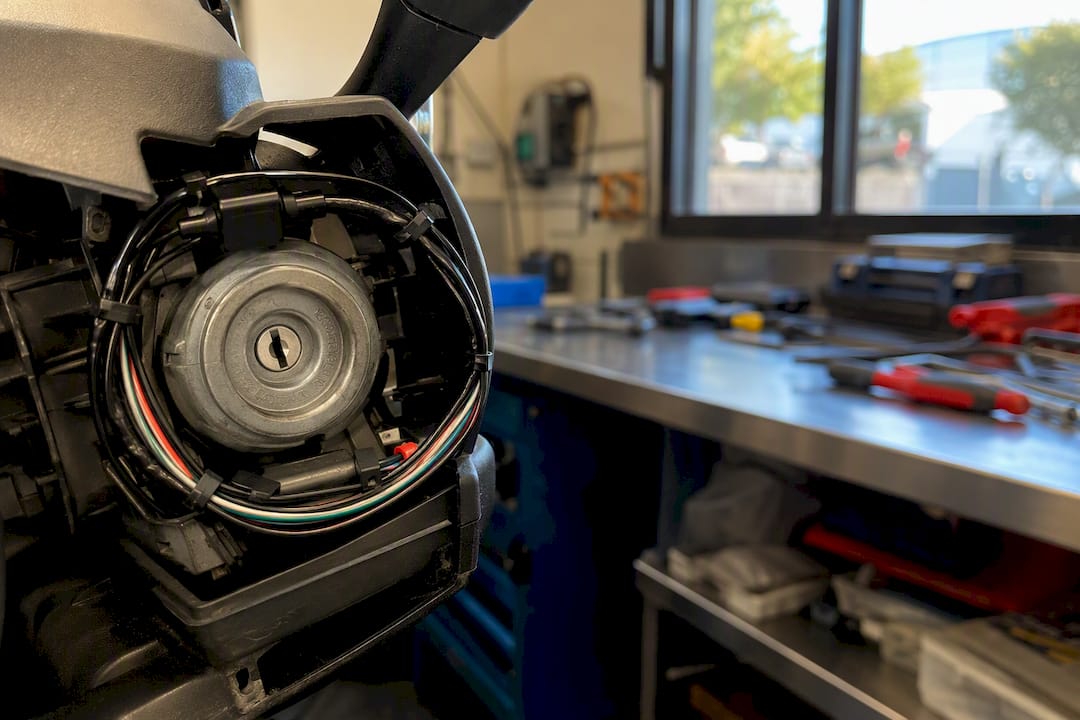
Aftermarket installs and interference deserve a mention too. Alarm systems, aftermarket stereos, or CarPlay retrofits installed near the ignition wiring can disrupt the immobilizer’s signal path. If your flashing light started right after an install, that’s not a coincidence.
Flat fob batteries and damaged transponders account for the large majority of immobilizer complaints mechanics see, while module or wiring faults make up a smaller, harder-to-diagnose slice.
Pro Tip: Keep a spare key programmed and stashed somewhere safe, like a wallet or a family member’s house. It’s the fastest diagnostic tool you own, and it costs nothing to use.
Rough cost and time expectations: a fob battery swap takes minutes and costs next to nothing. Reprogramming a key or cloning a spare through an auto locksmith typically runs a fraction of what a dealer charges and can often be done same-day. Module replacement or deeper ECU diagnosis is the most expensive and time-consuming path, usually requiring dealer-level equipment.
What to Try Before Calling a Locksmith
Work through these steps in order. Each one rules out a specific cause, and by the time you’re done, you’ll know exactly what to tell a professional if you need one.
Try your spare key first. If it starts the engine, the problem lives in your primary key or fob, not the car’s electronics.
Replace the key fob battery. Most fobs use a small coin-cell battery that’s cheap and easy to swap. If you don’t have a fresh one on hand, try holding the fob directly against the ignition barrel. Many cars can still read a weak signal at close range.
Manually lock and unlock the driver’s door with the physical key blade, not the remote. On several makes, this cycle forces the immobilizer to reset itself and re-recognize the key.
Disconnect the negative battery terminal for about 30 seconds. This soft reset clears some electronic glitches that confuse the immobilizer module. Before you do this, make sure the car is in park, the key is out of the ignition, and you’re not mid-diagnosis on anything else electrical. Reconnect, wait a moment, then try starting normally.
Pro Tip: Write down what happened at each step, spare key worked or didn’t, battery swap changed anything, door-lock reset helped. If you end up calling a locksmith, that information can cut diagnostic time significantly.
Stop the DIY approach and call a professional if any of these apply: more than one key fails to start the car, the light keeps flashing rapidly no matter what you try, or the car stalls while you’re actually driving. That last one especially isn’t a battery-swap problem. It points to a deeper electrical or module fault that needs proper diagnostic tools, and driving on it risks getting stranded somewhere worse than your driveway.
When Should You Call a Locksmith or Dealer?
An experienced auto locksmith can handle most immobilizer light flashing cases on-site: testing your transponder, reprogramming a key to match your car’s system, or cloning a working spare from your existing key. What typically needs a dealer instead is warranty-covered module replacement or deep ECU-level repair work that requires manufacturer-specific software.
Locksmiths generally diagnose using an OBD-II scanner to pull immobilizer status codes, along with transponder testers to check whether your key’s chip is transmitting correctly. A mechanic-style diagnostic approach reads these indicator patterns the same way: a quick flash on ignition means success, while continuous blinking that won’t clear points toward the module or wiring.
Fob battery replacement or basic reprogramming: usually the fastest and least expensive fix.
Spare key cloning: moderate time, moderate cost, done on-site in most cases.
Module-level diagnosis or replacement: the longest and most expensive path, sometimes requiring dealer involvement.
When multiple keys fail to start a vehicle, or the immobilizer light refuses to clear after every basic step has been tried, module-level diagnostics with dealer-grade or specialized locksmith tools becomes the next real step. There’s no shortcut around that once you reach this stage.
Before you call, have your VIN ready, a summary of what the light is doing, and whether a spare key made any difference. That single piece of information often tells a technician which of the four causes they’re dealing with before they even arrive.
The Fastest Path Back to Driving
Start with the cheap, quick checks: spare key, then fob battery. If the light keeps flashing or the car won’t start after both, that’s your signal to call in help rather than keep guessing.
Engine stalling while driving or multiple keys failing means stop troubleshooting and call a pro immediately.
Everything else, slow parked pulse, single flash on ignition, is likely normal behavior, not a fault.
DIY checks first, professional diagnosis second. That order saves you both time and money.
A Locksmith’s Take on Immobilizer Troubleshooting
Two things I’d tell any car owner: keep a programmed spare key on hand, and skip the heavy metal keychain that can interfere with fob signal strength. Also, never disconnect a car battery without confirming nothing else electrical is mid-cycle first.
— Julio Borroto
How Progressive Locksmith - Cerrajero Miami Can Get You Moving Again
Progressive Locksmith - Cerrajero Miami is the direct alternative to a dealer wait time for immobilizer light flashing issues in the Miami and Homestead area: same-day, on-site key programming instead of scheduling a service bay appointment and losing your car for a day. Our technicians carry transponder testers and diagnostic scanners to every call, so most fob reprogramming and spare key cloning gets resolved on-site, often for less than a dealer quote.

When you call, have your VIN, a quick summary of what the light is doing, and whether a spare key made a difference. That gets a technician dispatched with the right equipment the first time. Whether you need emergency key fob programming or you’re locked out entirely after a failed start attempt, our auto locksmith services cover Kendall, Homestead, Cutler Bay, Doral, Coral Gables, and the surrounding Miami-Dade County area, 24/7. If you’re also dealing with keys locked inside the car, we can handle both issues on the same visit. Reach out through our services page to book a technician now.
Sources
For deeper mechanic-style guidance, see this breakdown of immobilizer light meanings and fixes and this mechanic’s guide to blinking immobilizer lights. If you’re weighing repair costs, our guide on spare car key pricing breaks down what owners actually pay.
Symptom troubleshooting using immobilizer indicator patterns
Recommended
Comments